

How Russia’s Fuel Crisis Could Hit Kazakhstan
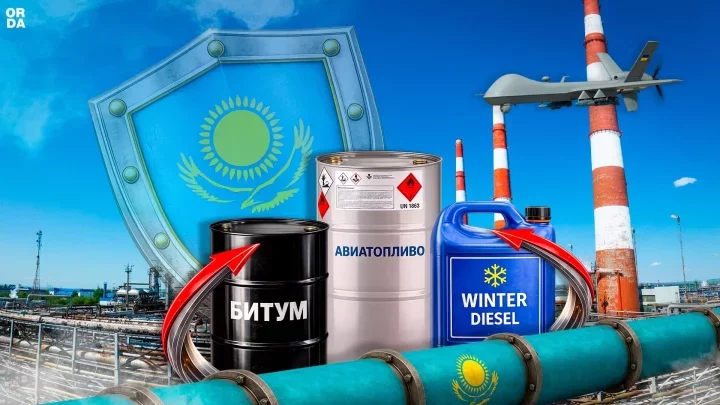 Illustration: Orda.kz
Strikes on Russian refineries and gas processing plants are increasingly affecting Kazakhstan and neighboring countries. Kazakhstani consumers are already starting to feel the consequences. Tension is growing inside the industry, processing at Kazakhstani plants is under pressure, the aviation fuel market may be at risk, and the threat of gray gasoline exports across the border has increased. Orda.kz looked into how Russia’s fuel crisis could hit Kazakhstan and what may happen next.
How Kazakhstan Felt Its Dependence
While Russian refineries recover from drone attacks, Kazakhstan is already suffering its first losses. One strike on the Orenburg gas processing plant led to a reduction in production at Karachaganak by almost a quarter.
The field sends part of its raw materials to Orenburg for processing. When the Russian plant reduces operations, the Kazakhstani field has to cut production.
After the Ukrainian attack on the Orenburg gas processing plant, Kazakhstan reduced production at Karachaganak from 34,000 to 25,000 tons per day. Energy Minister Yerlan Akkenzhenov announced the figures.
The minister said Kazakhstan is receiving gas in full and that supplies are running on schedule. But for the oil and gas industry, a drop of 9000 tons per day is a serious financial loss.
If this volume is calculated using a Brent price of $73.32 per barrel, one day of such a decline is worth about $4.8 million in the nominal value of raw materials.
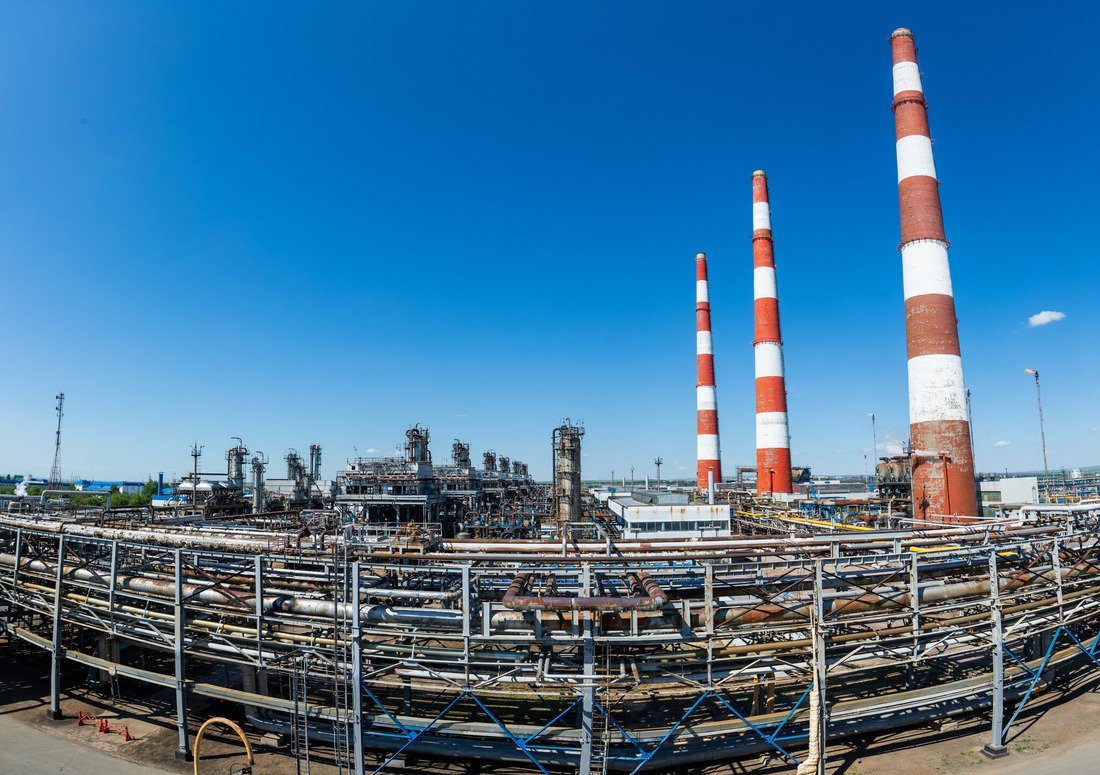 Orenburg GPZ. Photo: gazprom.ru
There Is Gas In Homes, But Private Plants Face Risks
Gas supplies are being maintained. The utility sector is receiving the necessary volumes, and the Ministry of Energy says supplies are stable. But the industry sees a different picture: part of Kazakhstan’s oil and gas chain is tied to Russian plants.
The scheme works like this: Russian enterprises receive raw materials, process them and return part of the products back. Any disruption on the Russian side affects Kazakhstani companies that need raw materials, stable processing and predictable logistics.
This risk also applies to private producers in the West Kazakhstan region. Orda.kz previously wrote that the Kondensat plant could face a shortage of raw materials after an attack on a Russian refinery. The company received oil and gas condensate from the Russian plant. If processing at Russian enterprises stops or decreases, Kazakhstani companies have to look for alternative volumes, change routes and deal with higher supply costs.
How Russian Gasoline Limits Create Risks For Kazakhstan
Orda.kz discussed the risks for Kazakhstan with oil and gas expert Olzhas Baidildinov. He sees the main threat in pressure from neighboring markets.
According to Baidildinov, Russian regions near the border are already saving fuel and introducing limits at gas stations. The expert refers to data from the InfoTEK Telegram channel, which tracks restrictions on gasoline and diesel sales in Russia.
In the Saratov region, drivers are allowed to buy up to 30 liters of gasoline per car. In the Samara region, the limit is up to 40 liters of gasoline and 100 liters of diesel. Similar rules apply in the Kurgan, Tyumen and Omsk regions: up to 40 liters of gasoline and 80 liters of diesel in cities, and up to 200 liters of diesel on highways.
Kazakhstan borders 12 Russian regions. According to Baidildinov, fuel restrictions are in place in five of them. This creates a direct risk for Kazakhstan. Shortages near the border make Kazakhstani gasoline more attractive for gray exports.
Kazakhstan has banned the road export of gasoline and diesel until November 21, 2026. The ban also applies to EAEU countries. But the fuel market reacts quickly to differences in price and availability. When neighboring regions introduce limits, Kazakhstan’s border regions come under additional pressure.
Baidildinov believes Kazakhstan should protect its domestic market in advance. Among possible measures, he names limits on fuel sales at border gas stations and separate prices for vehicles from countries outside the EAEU.
I proposed selling fuel to foreign vehicles at higher prices. This is logical: they do not pay transport tax in Kazakhstan, while we have many cars with foreign license plates. It is also possible to introduce some limits at border gas stations, where such operations mainly take place,Baidildinov said.
The southern direction adds another pressure point. Kyrgyzstan has faced a shortage of Ai-95 and Ai-98 gasoline because of reduced supplies from Russia and seasonal growth in demand. According to Baidildinov, Kyrgyzstan is almost 90 % dependent on Russian fuel.
For Kazakhstan, this means pressure from two sides at once. In the north, gasoline may flow to Russian regions where limits have been introduced. In the south, demand for Kazakhstani fuel is growing because of shortages in Kyrgyzstan.
Baidildinov also points to the price difference. According to him, Ai-95 gasoline at major network gas stations in Russian regions costs about 80 rubles per liter, while smaller stations charge up to 100 rubles. That is about 650–660 tenge per liter, almost twice the price of Ai-95 in Kazakhstan. In Kyrgyzstan, according to his estimates, Ai-95 costs more than one dollar per liter.
When there is a twofold price difference abroad, smuggling will increase, and gray exports, which already exist in Kazakhstan, will grow,the expert said.
Aviation Fuel May Become The Next Weak Point
Gasoline is not the only sensitive product. Baidildinov considers the aviation fuel market a more serious problem. According to him, Kazakhstan imports about 40 % of its aviation fuel from Russia. If Russian refineries continue to reduce processing, Kazakhstan will have to look more actively for replacements in China, Azerbaijan and Turkmenistan.
Such replacements will almost certainly be more expensive. Russian fuel is closer, routes are familiar, and contracts are already built into the market. Alternative supplies will require new agreements, different logistics and additional reserves.
Baidildinov says Kazakhstan’s own aviation fuel production is not enough to cover all needs. The market can cover domestic flights more easily, but international passenger and cargo transportation requires large volumes.
Planes do not fly to a beautiful airport. They fly where there is fuel, and where it is available at reasonable prices. This is a challenge for Kazakhstan: airports need to be supplied with fuel at normal prices so that airlines come to us,the expert said.
The Ministry of Energy is already considering possible aviation fuel imports from China and Azerbaijan. Turkmenistan is also mentioned as a possible source. Baidildinov believes more expensive imports would hit foreign carriers harder than the domestic segment.
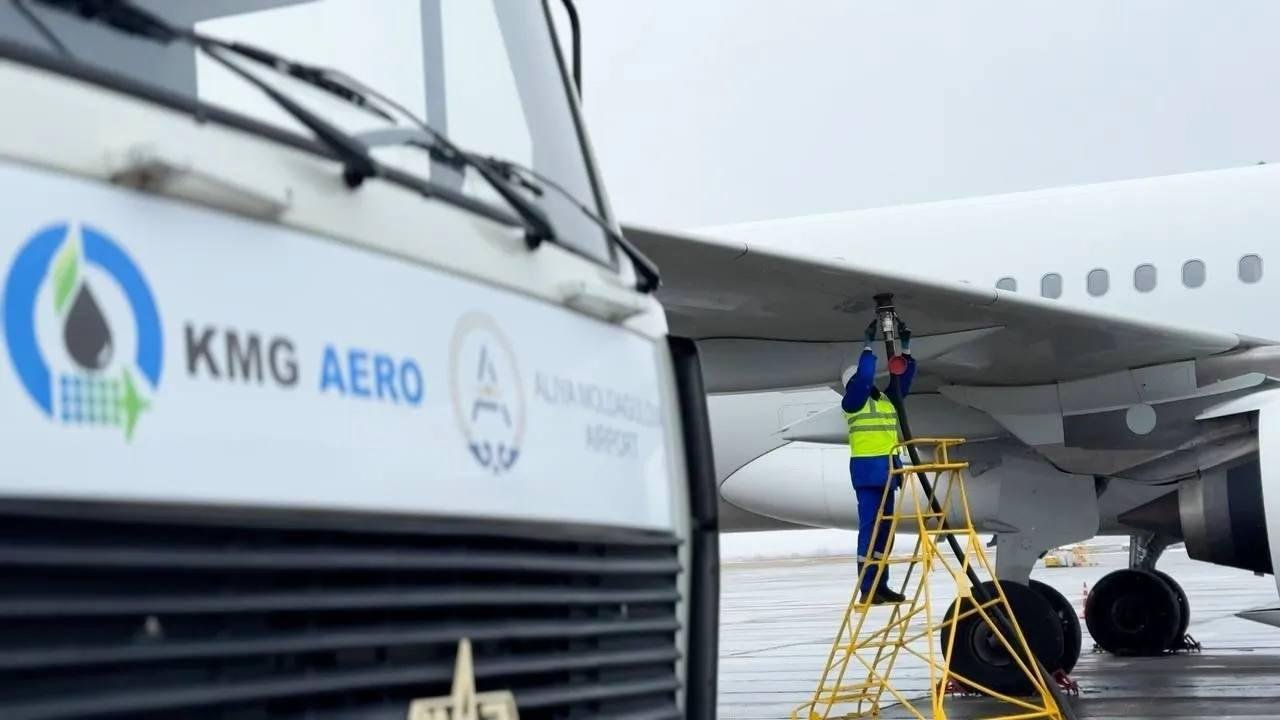 Refueling the plane. Photo: Ministry of Transport of the Republic of Kazakhstan
According to him, aviation fuel accounts for about 20 % of the price of an air ticket. Even if fuel costs rise by 10 %, ticket prices may increase by about 1–2 %, rather than jump sharply.
I do not expect a global increase in air ticket prices yet,the expert said.
Reuters reported that Russia itself is looking for additional gasoline volumes from Kazakhstan amid refinery attacks and reduced processing. The agency also reported problems at major Russian plants, including the Moscow refinery.
For Kazakhstan, this changes Russia’s usual role. For a long time, the Russian market was seen as a large and nearby source of fuel. Now Russia itself is looking for additional volumes while also imposing restrictions in its own regions.
Russia Is Reducing Processing, And Kazakhstan Needs To Protect Its Market
According to Baidildinov, Kazakhstan is now experiencing a crisis situation without an internal shortage.
There is no shortage in Kazakhstan now. Stocks have been formed, and plants are still operating as usual. I would like them to work like this all year, without breakdowns and accidents. The Atyrau refinery is under repair, but a fuel reserve has been formed there,he said.
The calm current situation does not eliminate Kazakhstan’s dependence on imports. Every year, within the EAEU framework, Kazakhstan coordinates its oil product supply balance with Russia. According to Baidildinov, Kazakhstan can import up to 1.25 million tons of oil products, while its own processing stands at about 18 million tons per year.
The expert says Kazakhstan has enough gasoline. Problems may arise with diesel fuel. Winter diesel, jet fuel and bitumen are especially vulnerable now.
The state barely regulates winter diesel prices because most of this product comes from Russia. Kazakhstan produces it in small volumes. According to the expert, it is a specific and technologically complex type of fuel.
Baidildinov estimates Kazakhstan’s dependence on Russia at about 30–40 % for bitumen and about 40 % of actual consumption for aviation fuel.
Kazakhstan’s infrastructure construction may be hit first. Bitumen is one of the main components of road pavement. At the same time, the Ministry of Energy does not see risks related to bitumen.
Baidildinov does not predict a major fuel shortage in the near future. But he allows for localized problems with some oil products by the end of summer.
By autumn, we may probably face certain shortage phenomena for some specific types of oil products,the expert said.
Prepare The Sledge In Summer: What Kazakhstan Should Do Now
Kazakhstan needs to close three weak points in advance.
The first is the operation of its own refineries. Any accident or prolonged repair would increase dependence on imports at a time when the Russian market itself is under pressure.
The second is border gas stations. The price difference with Russia and Kyrgyzstan creates an incentive for gray exports, especially at gas stations near transport corridors.
The third is imports of sensitive types of fuel. First of all, this means aviation fuel, winter diesel and bitumen.
If Russian refineries continue to operate with restrictions for months, Kazakhstan will have to look for raw materials faster, negotiate with alternative suppliers and protect its domestic market.
But this crisis may also have another side. The Russian market, which has long been seen as a source of ready-made fuel for Kazakhstan, has itself started looking for additional volumes. If this trend continues, Kazakhstan may get a chance to develop its own production of oil products.
Original author: Alexander Zhdanov
Read also:
- Kazakhstan Starts Building $1.4 Billion Wind Power Plant In South
- Kazakhstan To Borrow Nearly Half A Trillion Tenge To Cover Budget Deficit
- Kazakhstan Could Host One-Gigawatt AI Data Center From Singaporean Investor
Latest news
- Orda.kz Editorial Team to Cease Operations on September 1
- The Price of a Degree: How Students in Kazakhstan Pay for University
- Second Przewalski’s Horse Foal Born as Species Returns to Kazakhstan
- Kazakh Mining Companies Can Recalculate Purchases if Tenge Weakens
- Kazakhstan Names First Vice President in Three Decades
- What Almaty’s Bus Shelters Are Missing
- 400-Truck Queue Builds at Kazakh–Kyrgyz Border
- Kazakhstan Ready to Help Feed and Rebuild Gaza
- Tokayev Establishes New Presidential Security Body
- Almaty Takes Back Its Nearly Century-Old Hippodrome
- No More Guesswork on Savings: Kazakhstan Tightens Energy Audits for Businesses
- Public Money Could Be Used to Rescue Failing Kazakh Banks
- Third Kazakh Woman Reported Missing in Nepal-China Flood Zone
- Falconer Convicted Over 35 Protected Birds, Spared Punishment Under Amnesty
- Kazakh Citizen Detained in Yakutia in Phone Fraud Case
- Yuan Instead of Dollars? KazMunayGas Draws Record Demand in Asia
- China Gains Oil-Market Influence as OPEC+ Weakens
- Kazakhstan to Divide Smartphones Into White, Gray and Black Lists
- Kazakhstan’s Government Formally Resigns as First Kurultai Session Opens
- Rare Lynx Sighting Recorded in Northern Kazakhstan
