

Will Astana’s New Line Work As Transport, Not Just An Attraction?
 Collage: Orda.kz
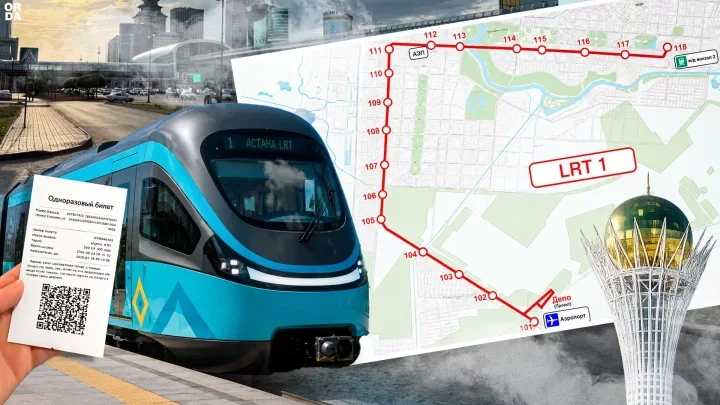
The long-awaited opening of Astana’s LRT coincided with President Kassym-Jomart Tokayev’s birthday. About two weeks have passed since the new public transport became available to residents and visitors. But in the first hours of operation, the capital’s main new transit symbol turned into something closer to an attraction. Against this background of novelty and excitement, it is important not to forget that the LRT is first and foremost transport. That means it should be treated accordingly. Whether the LRT will justify itself as part of the transport system, whether it can integrate into the city’s infrastructure, and what questions remain after the launch — these issues are explored in the Orda.kz longread.
Is Astana’s LRT Really An LRT?
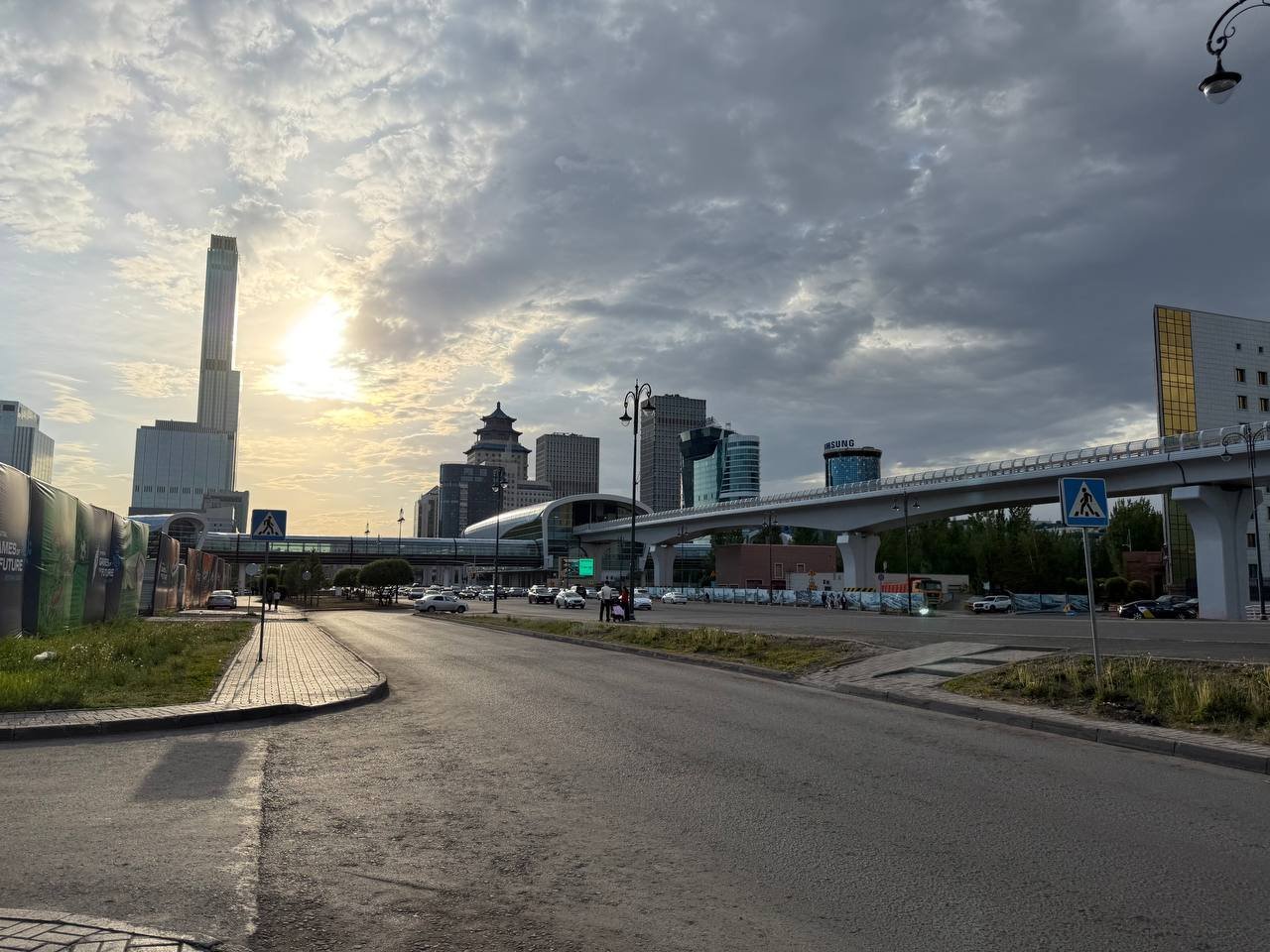
The main confusion around Astana’s LRT begins with the name. The project is commonly called light rail transport, but its characteristics make it look much more like an elevated metro.
Vladimir Valdin, deputy director of Transproject LLC and an expert in passenger transport infrastructure, believes the Astana system can be called LRT only with reservations.
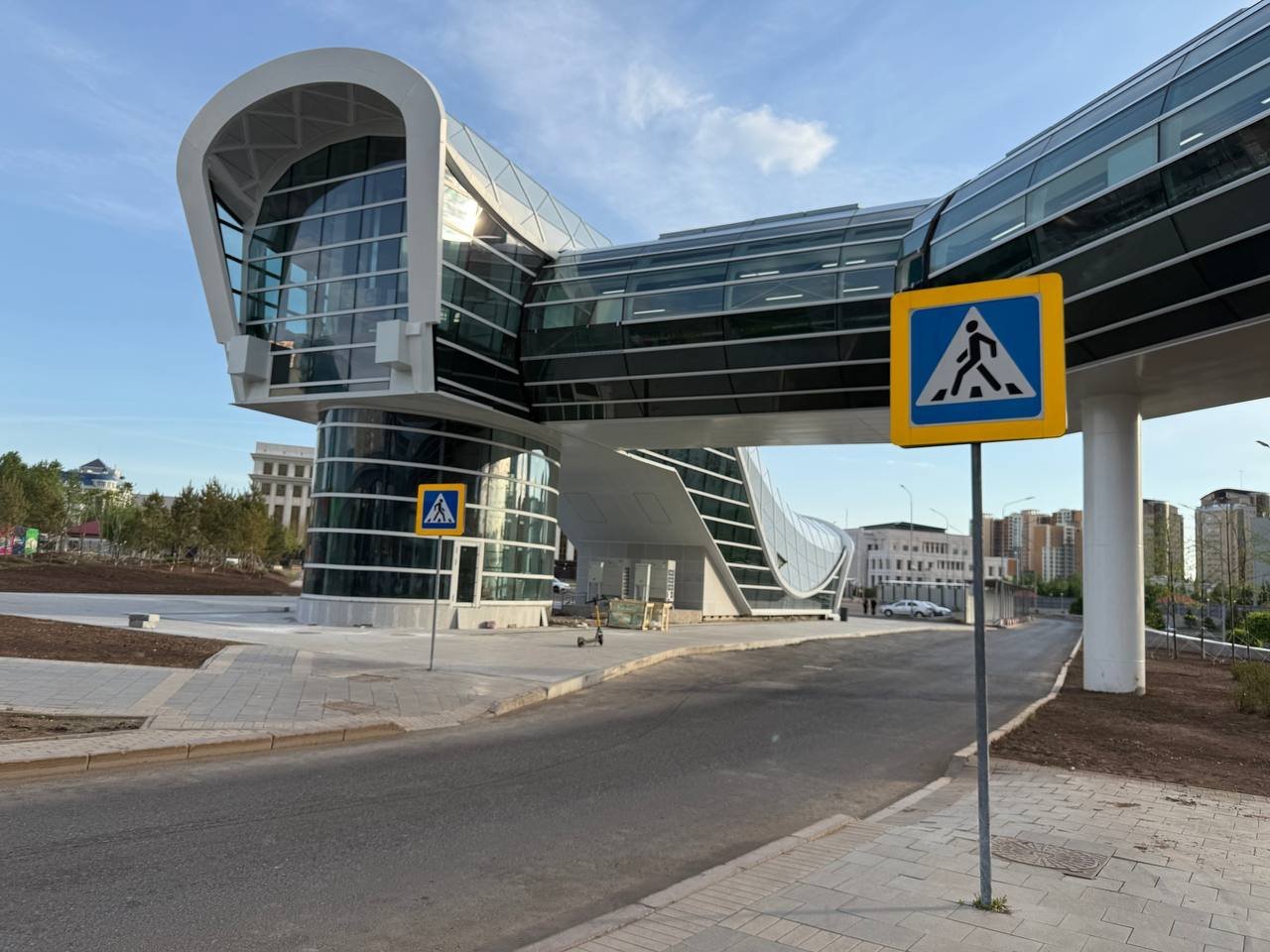
The system built in Astana was called LRT, although it has only a very distant relation to this type of transport. In my opinion, this is a full-fledged metro: a completely off-street, multi-level system, fully prioritized, and with enclosed stations. By all indications, what was built in Astana is a metro,he said.
Valdin explains that in modern transport practice, LRT is usually closer to tram technology. It is lighter rolling stock, more flexible infrastructure, and the ability to run through different types of urban environments. In one place, the line can run along a dedicated corridor, in another along a street, and elsewhere through dense development or a pedestrian zone.
Astana’s line is different. It is physically separated from the city, which makes it closer to a metro system.


You Can See Better From Above
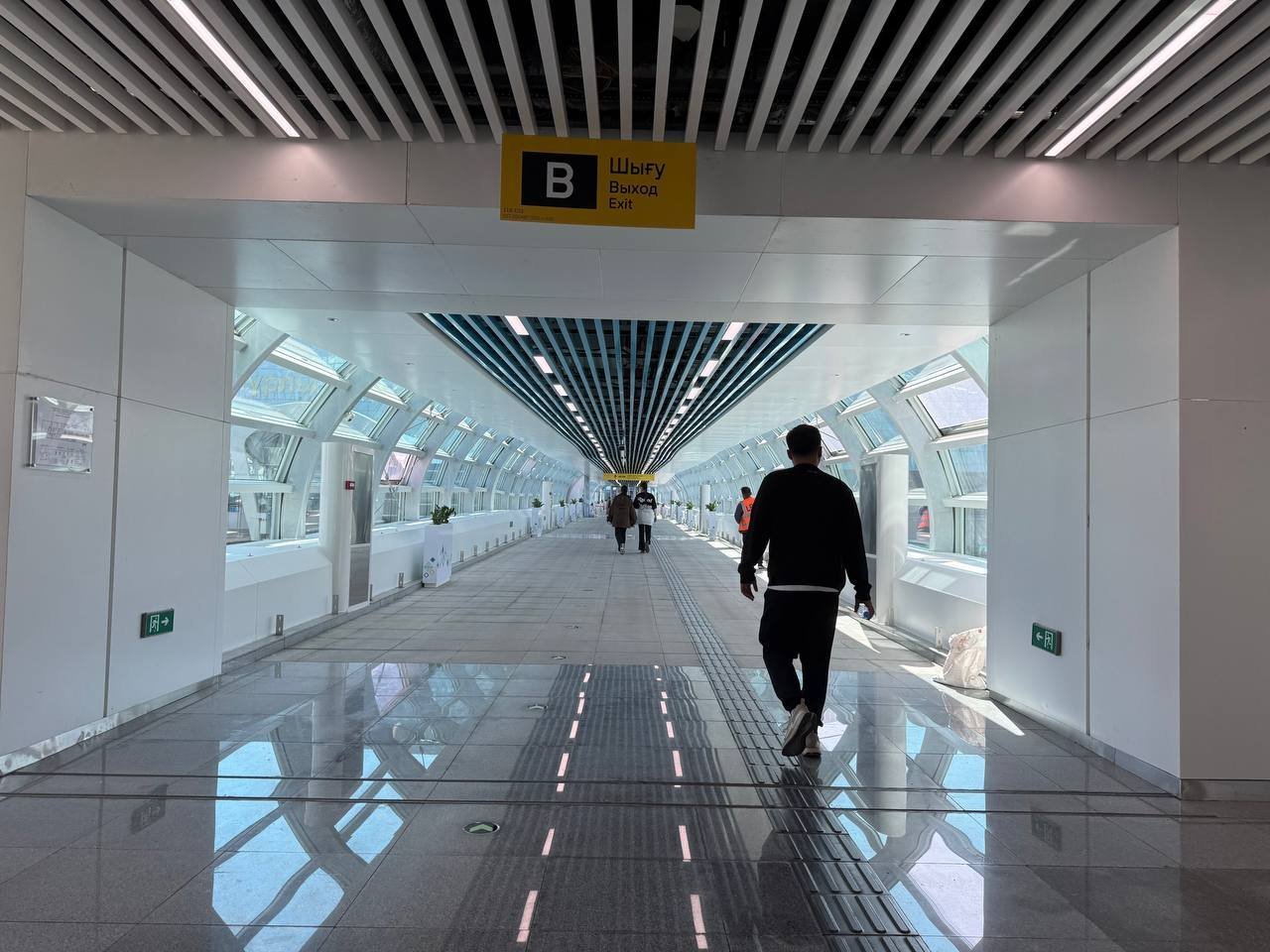
The decision to build the line on separate elevated supports has clear advantages, which city authorities were likely counting on. The train does not get stuck in traffic, does not depend on traffic lights, and does not conflict with cars at intersections. But along with these advantages, Astana also received the disadvantages of a metro: high cost, complex construction, expensive stations, and a longer route for passengers to reach the platform.
The advantages of a metro are fairly high and consistently high speed. But there are also disadvantages. The biggest one, apart from the high cost and long construction period, is that stations are less accessible to passengers. To reach the station, people have to deliberately cover extra distance and spend time,Valdin explained.
Cost remains one of the most painful issues. Astana’s LRT has been criticized for years over its price, corruption cases, and doubts about whether it will pay off. But even if the corruption history is left aside, the construction technology itself affects the cost.
Valdin does not give precise calculations. According to him, the price depends on the design, materials, distance between stations, number of stations, scope of work, and what exactly is included in the estimate.
The Astana metro costs about $80 million per kilometer, if I am not mistaken. This is comparable to the cost of building an underground metro in Madrid. Good surface lines in recent years — Aarhus, Copenhagen, Tampere — cost about $20 million to $30 million per kilometer, including basic improvements,he said.
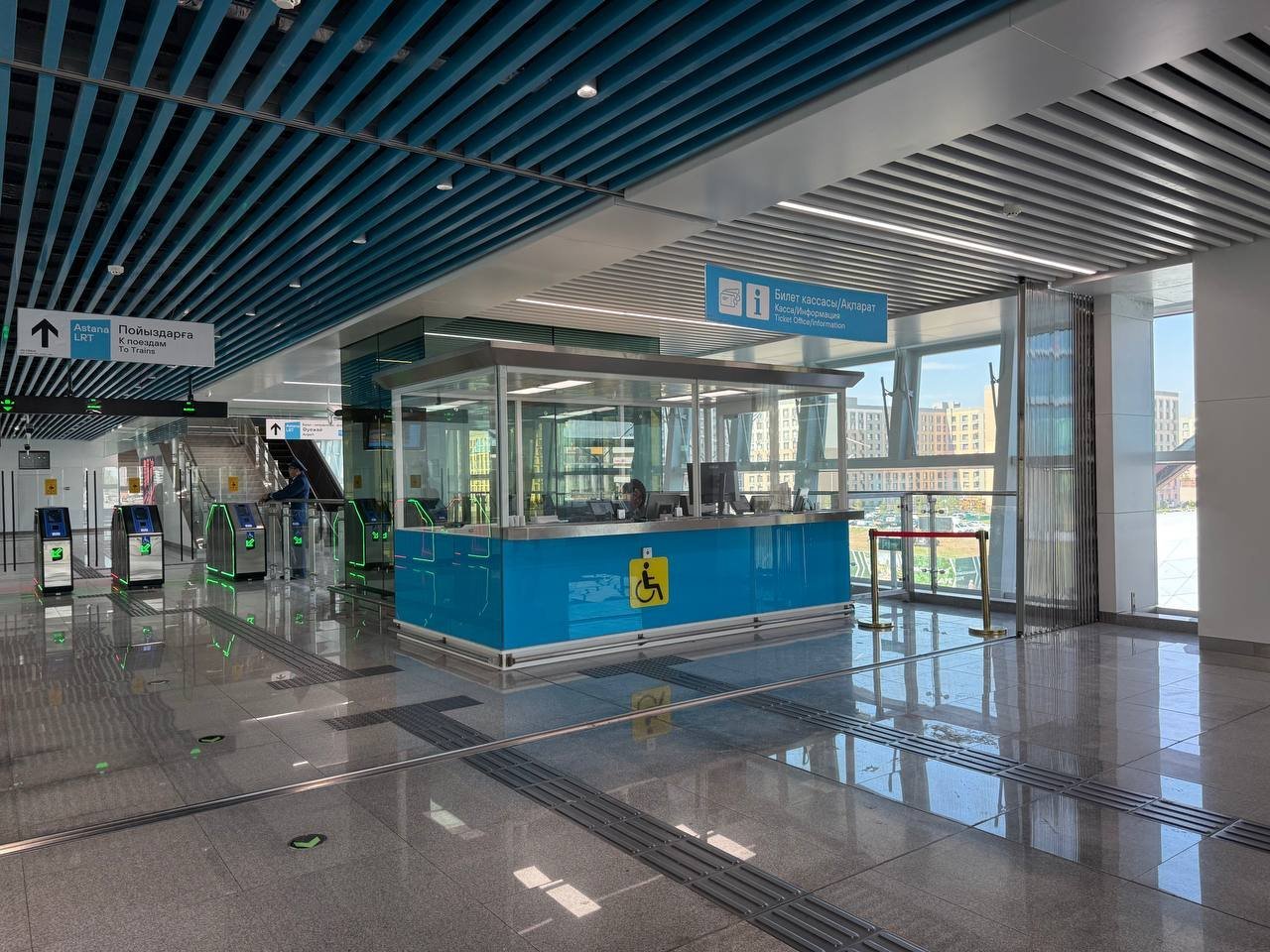
There is also another cost: passenger time. With a ground-level tram, a person usually walks directly to the platform. With an elevated system, they must enter the station, walk through corridors, go upstairs, wait for the train, and then repeat the same process in reverse.
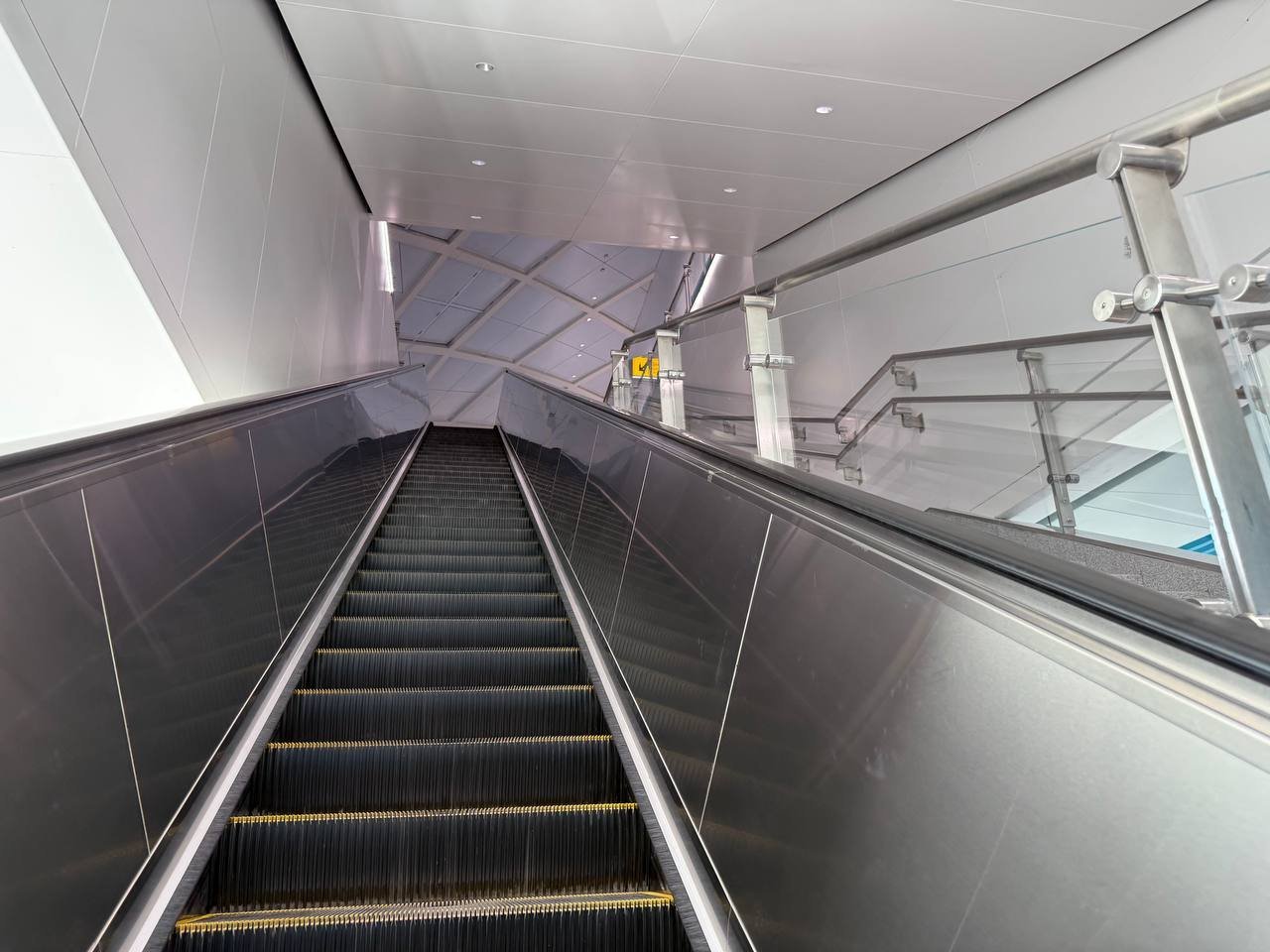
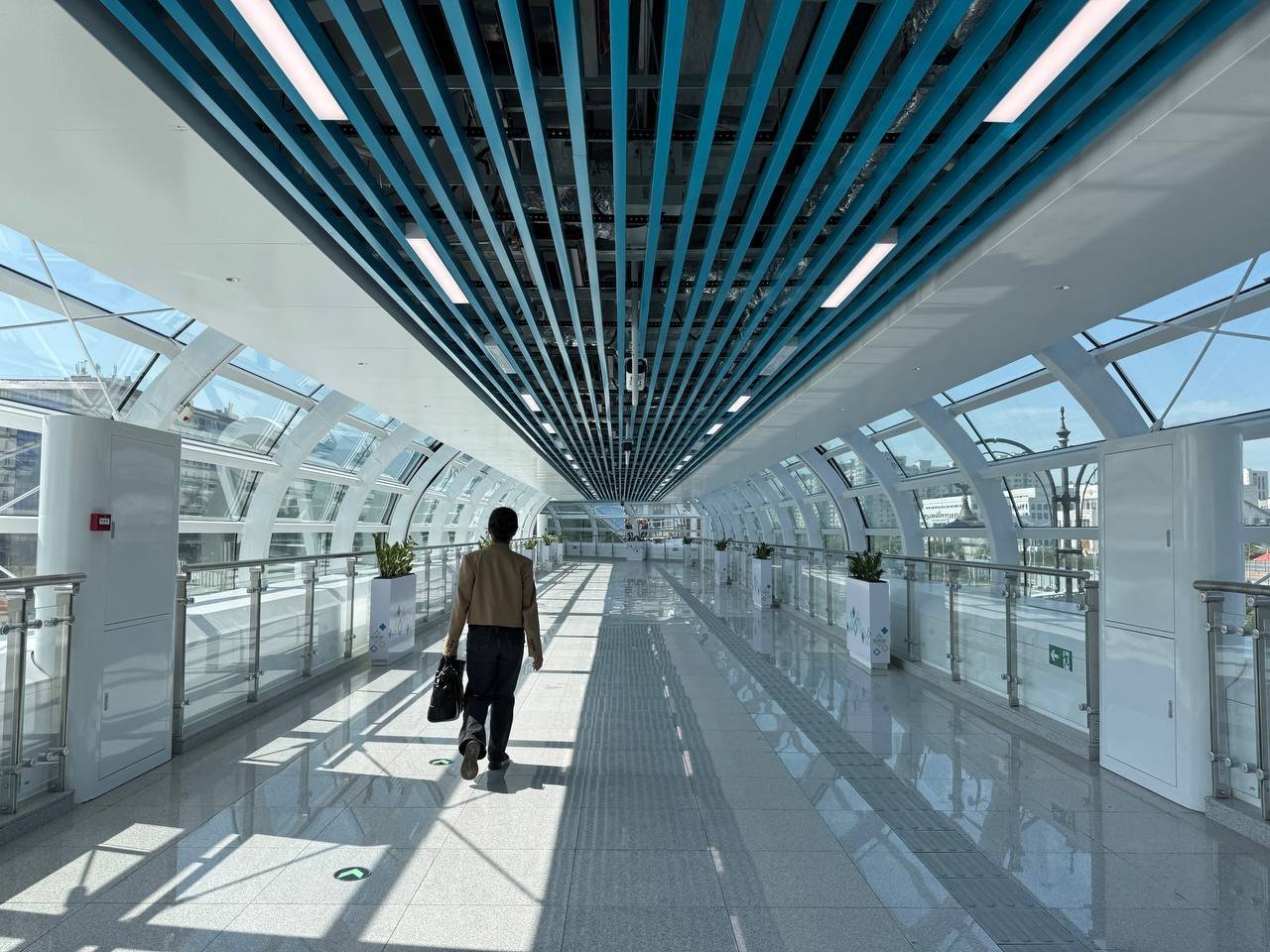
This may be acceptable for longer trips. For short ones, the situation is different. In Astana, the shortest distance between stations is only 500 meters.
Using the system for short distances becomes simply pointless, because you have to walk to the station, go through the corridors, go up, then ride, then go down. Escalator time and access time have a very significant impact on the total travel time,Valdin said.
This is already visible in the first days after the LRT launch. The trains can move quickly, but for passengers, the speed of the train itself is not the only thing that matters. If a person spends too much time on approaches, transitions, escalators, and transfers, the advantage of fast movement on the elevated line is reduced.
Pedestrians Still Have To Run Through Puddles
Officially, the elevated design is usually explained by several factors: geology, dense development, underground utilities, safety, and the desire to avoid new intersections with cars.
Valdin says such reasons can indeed influence the choice in favor of an elevated line, but not all of them are equally strong.
Key factors may include geology, building density, and underground utilities. But the role of underground utilities is minimal. When building an elevated line, they are still affected, and sometimes even more strongly, because the support structures have to be placed deep in the ground. I would first name geology and development density. Safety is minimal here,he said.
The expert separately points to the car-oriented logic around the project. In his view, Astana’s choice was shaped not only by the desire to create fast public transport, but also by the desire not to interfere with cars.
This is convenient for train movement, but almost never ideal for the urban environment.
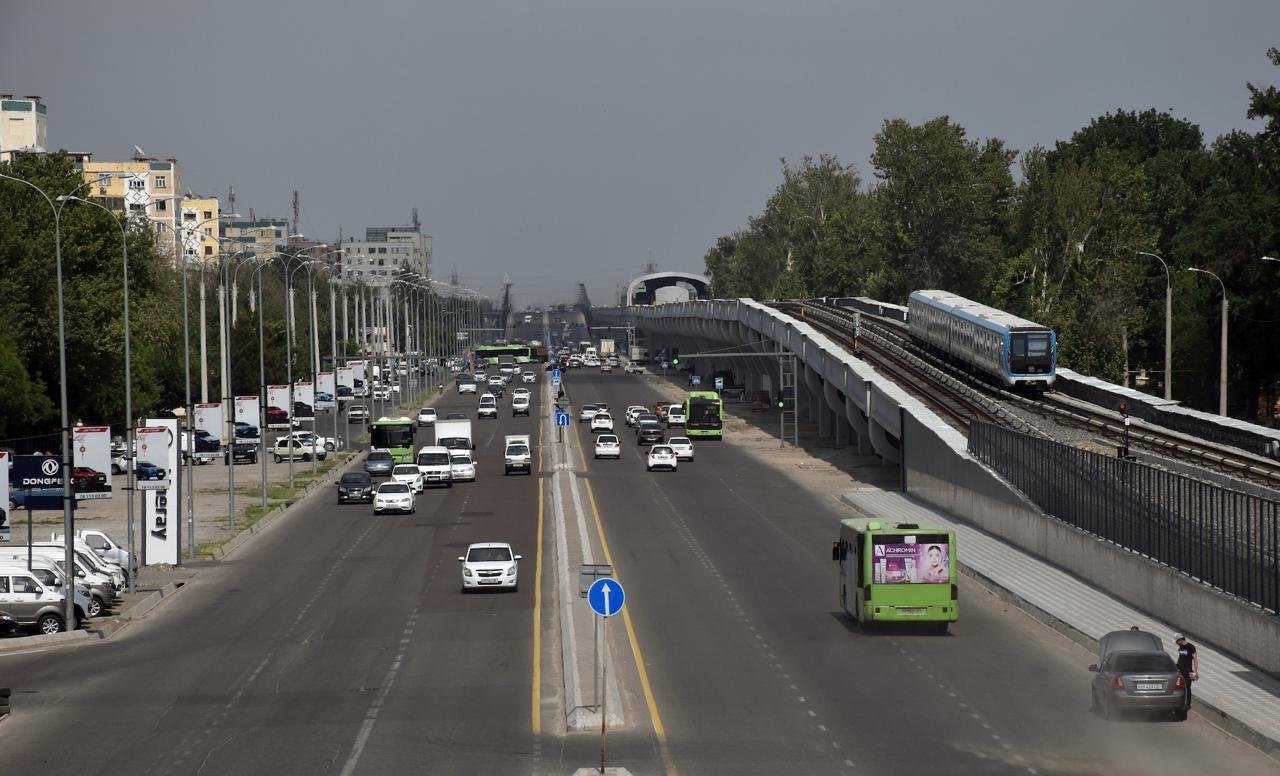
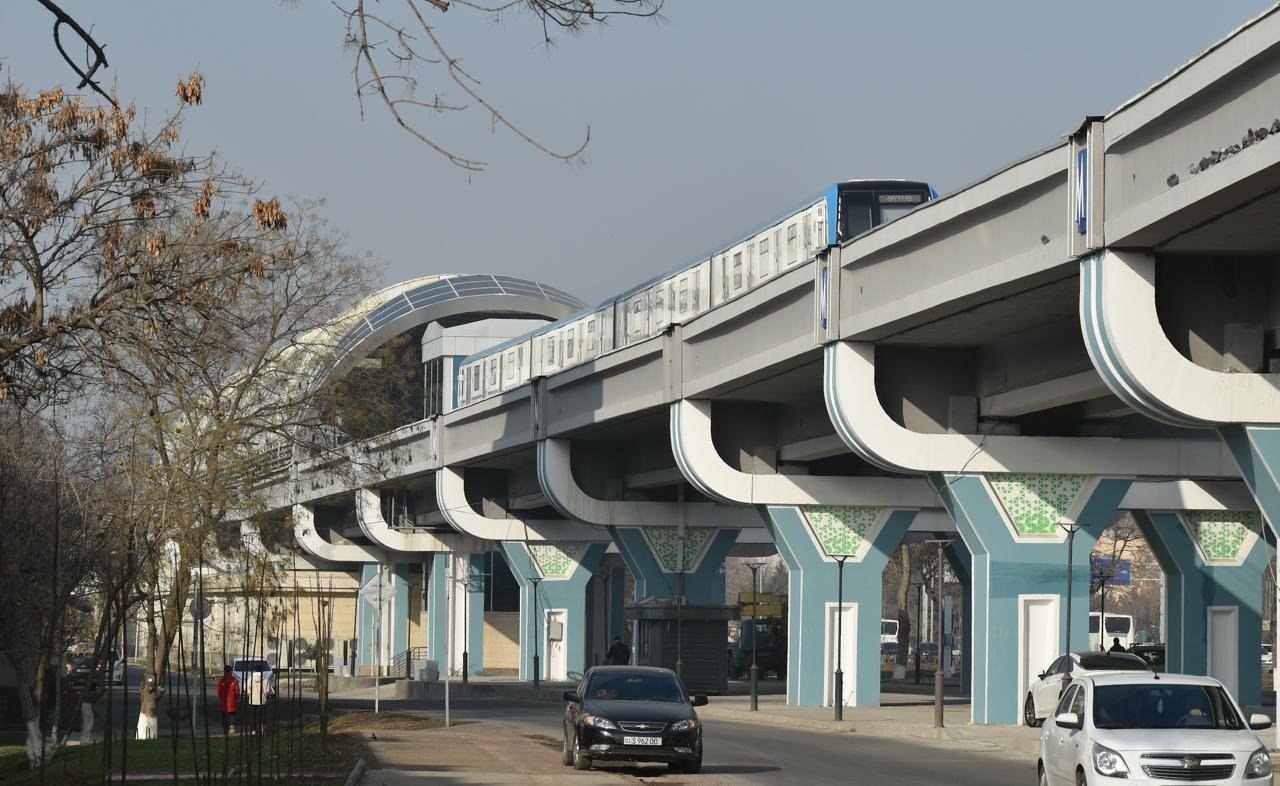
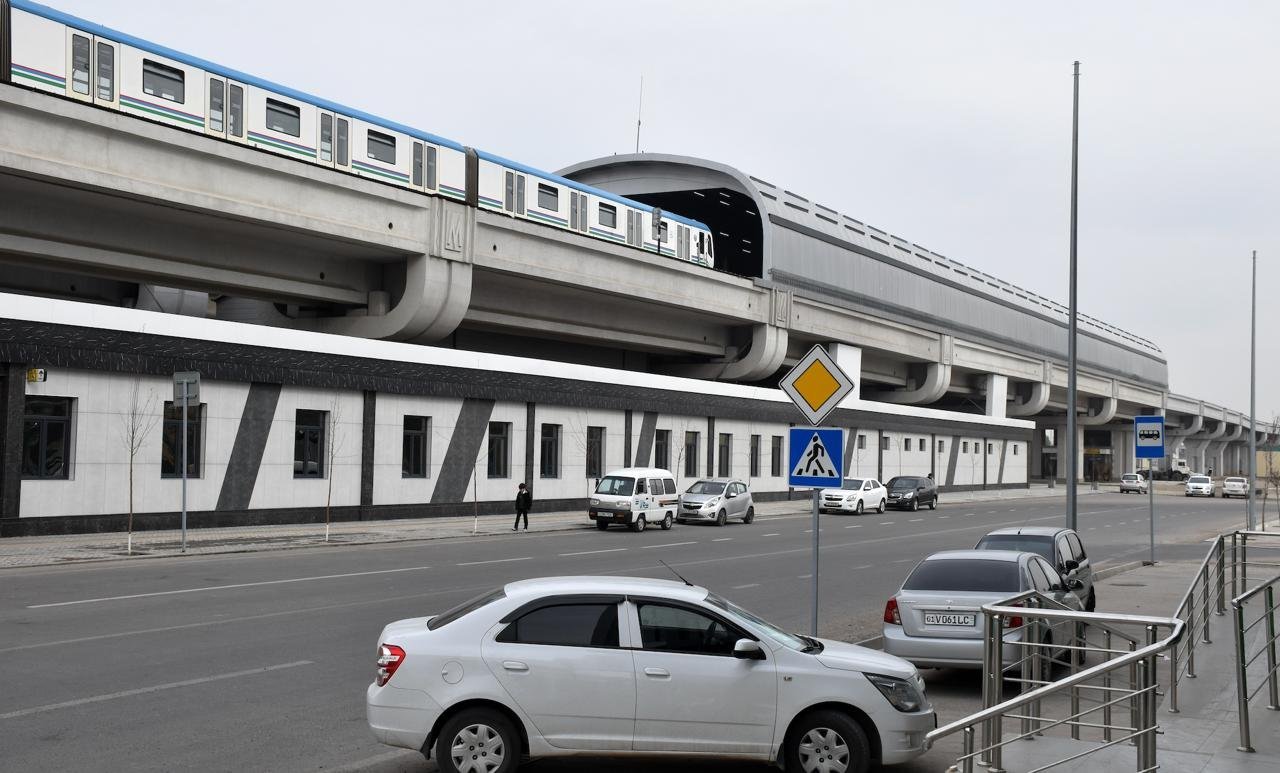
Yerkanat Zaitov, head of the Vision Zero Community Foundation and an expert on safe urban mobility, looks at the issue from a similar angle. He admits that an elevated LRT reduces the risk of direct collisions between trains, cars, and pedestrians. But this is where the safety advantage ends.
An elevated LRT really reduces the risk of direct collisions between the train, cars, and pedestrians, because the transport is physically separated from the street. In this sense, it is safer for train movement itself. But it is important to understand that city safety does not end on the tracks,Zaitov said.
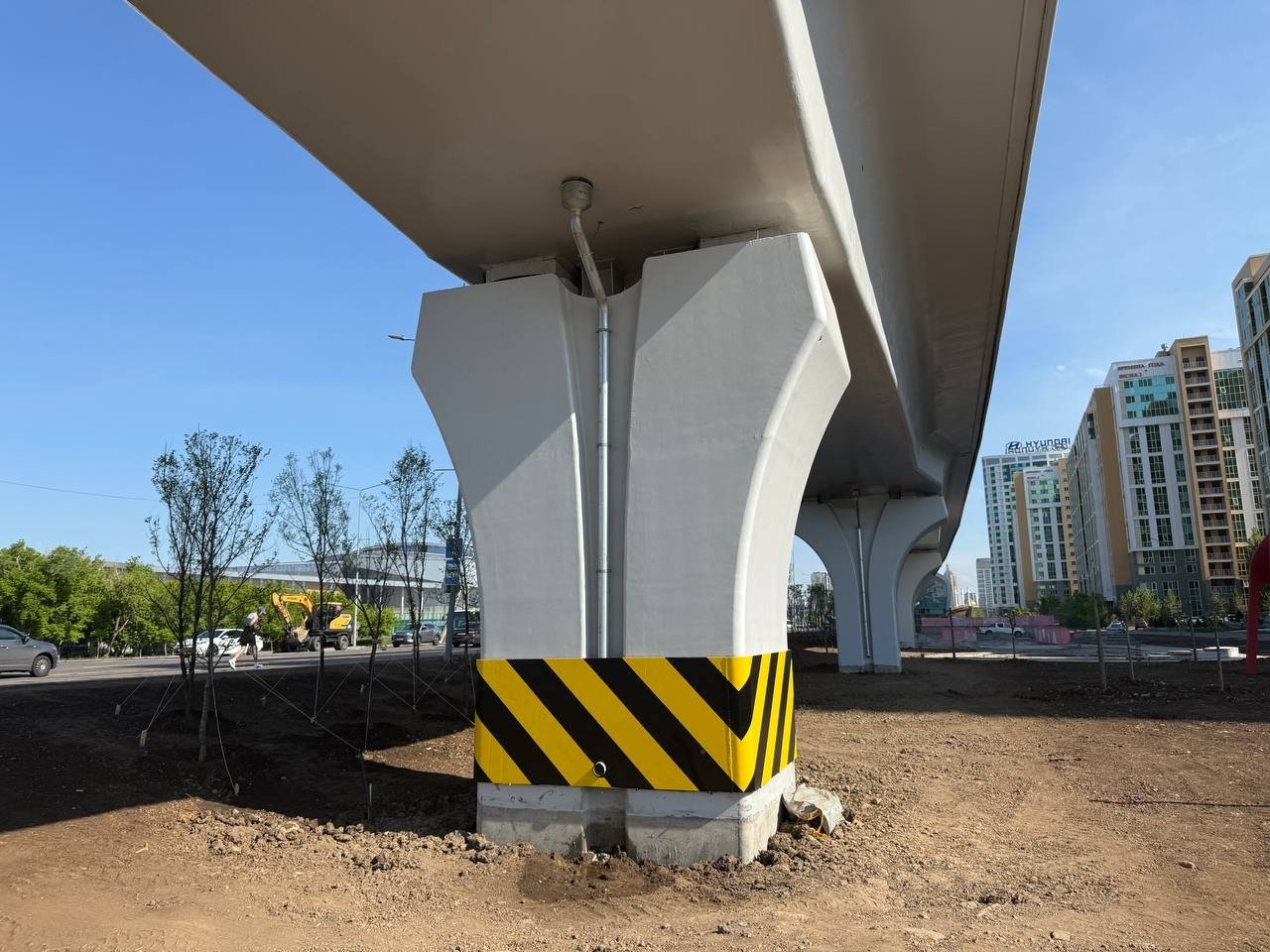
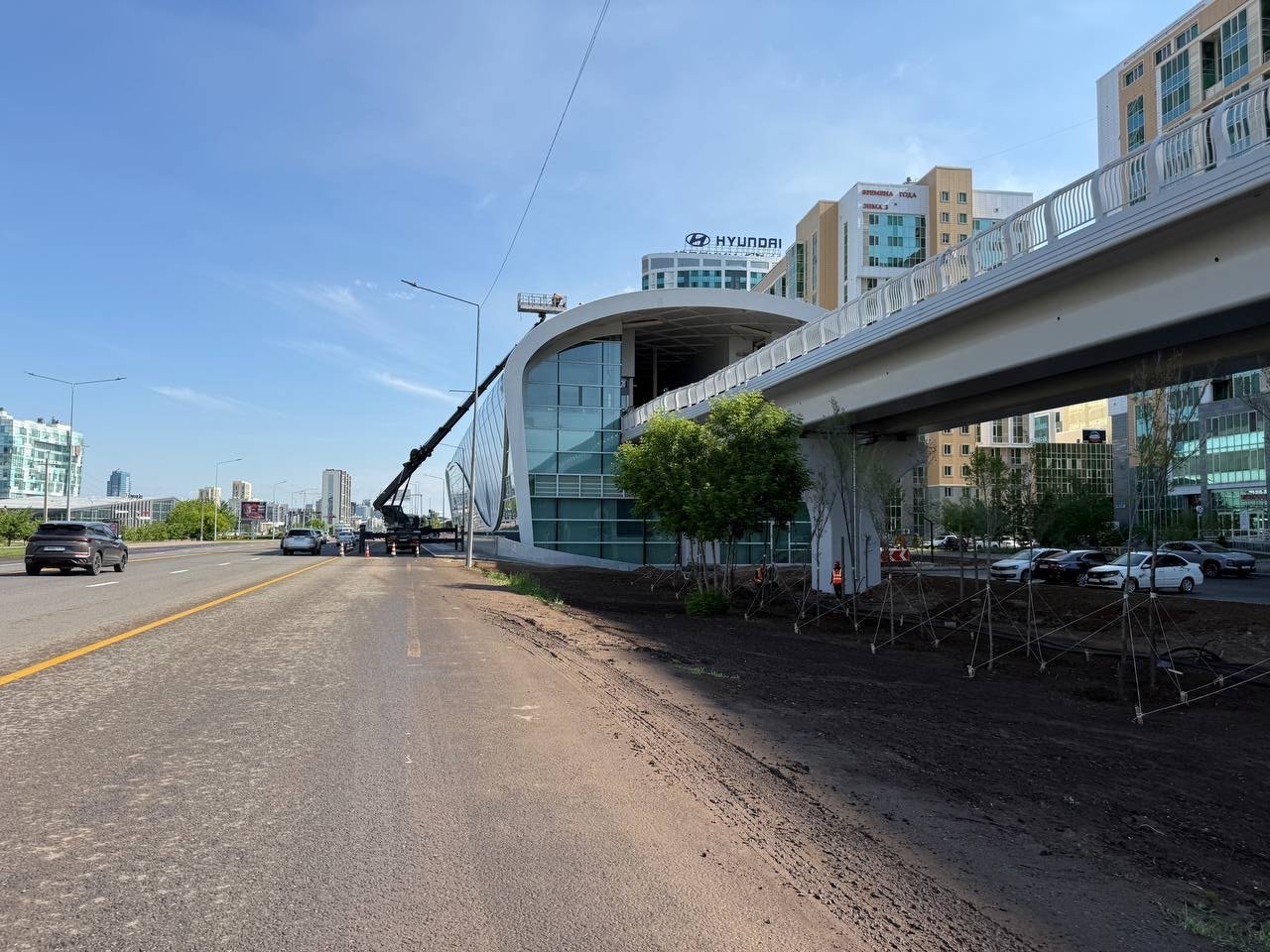
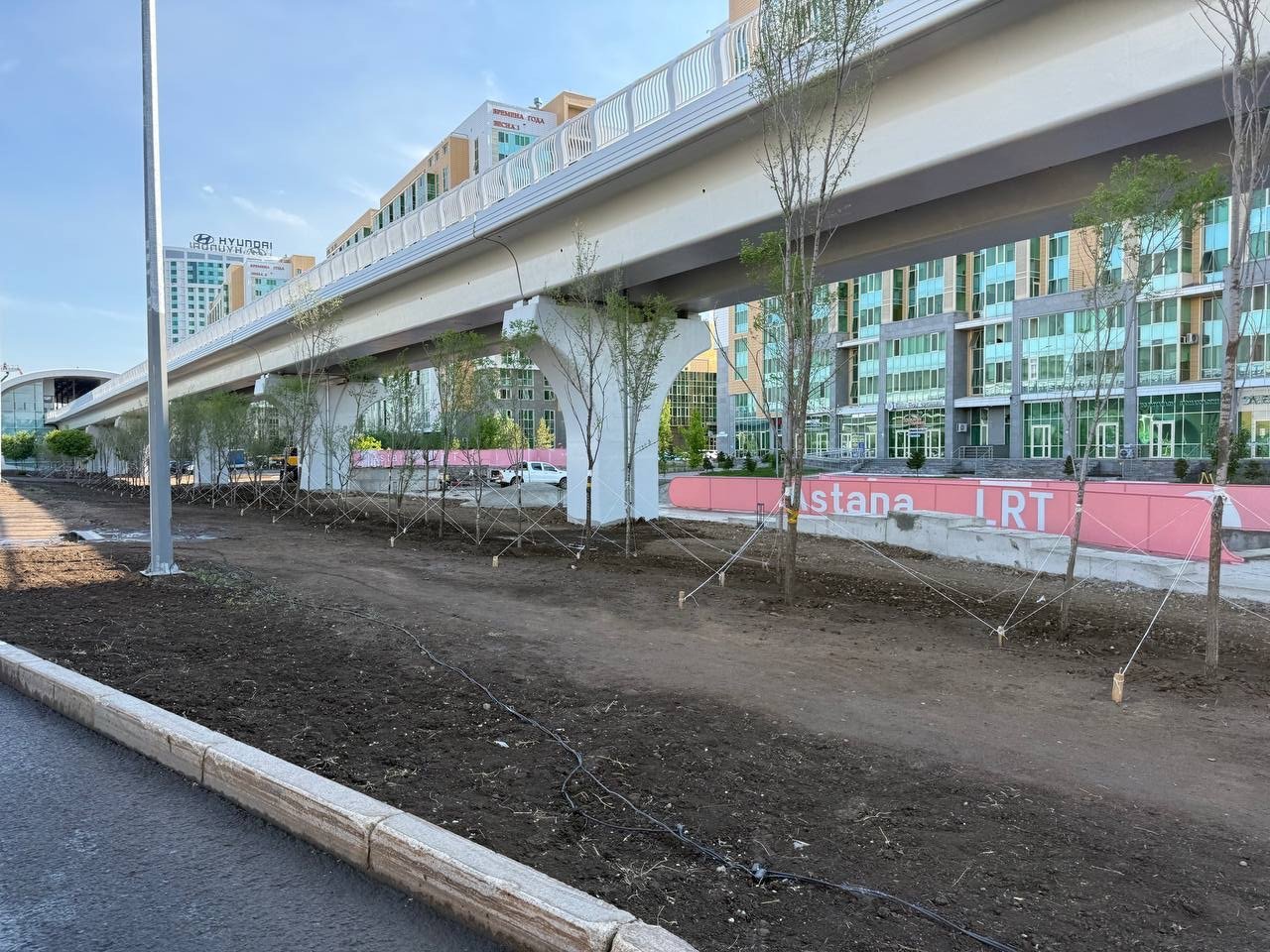
According to him, safety should be assessed where people actually walk.
If there is a six-lane road or highway around the station, inconvenient crossings, long fences, and huge distances, a person still ends up in an unsafe environment. The overpass solves one engineering problem, but it does not always solve the urban safety problem,he said.
In other words, the areas around the stations need short crossings, safety islands, lower car speeds, landscaping, wind protection, good lighting, active ground floors, and convenient links to buses, bicycles, and walking routes. These are exactly the things Astana still lacks.
The city still remains very car-oriented in its planning logic. Wide roads, long distances, unclear duplicate turns, driveways, and poorly thought-out exits where cars move at speed create an environment where pedestrians often feel like guests, not the main users of the city,Zaitov said.
The space under the elevated line is part of the same problem. In cities with elevated transport, such areas often become exclusion zones, with shadow, empty spaces, parking lots, poorly lit passages, and a sense of insecurity.
According to Zaitov, the key issue is not only where the rails are placed, but how the surrounding environment is organized.
A modern safe city is not a city without accidents on paper. It is a city where a child, an elderly person, or a person with a stroller is not afraid to cross the street. This should be the main criterion in assessing any transport infrastructure,Zaitov said.
According to him, some engineering solutions in the project are well thought out, but the urban environment around the stations remains an open question. This is exactly the stage where the city still has a chance not to lose the human scale.
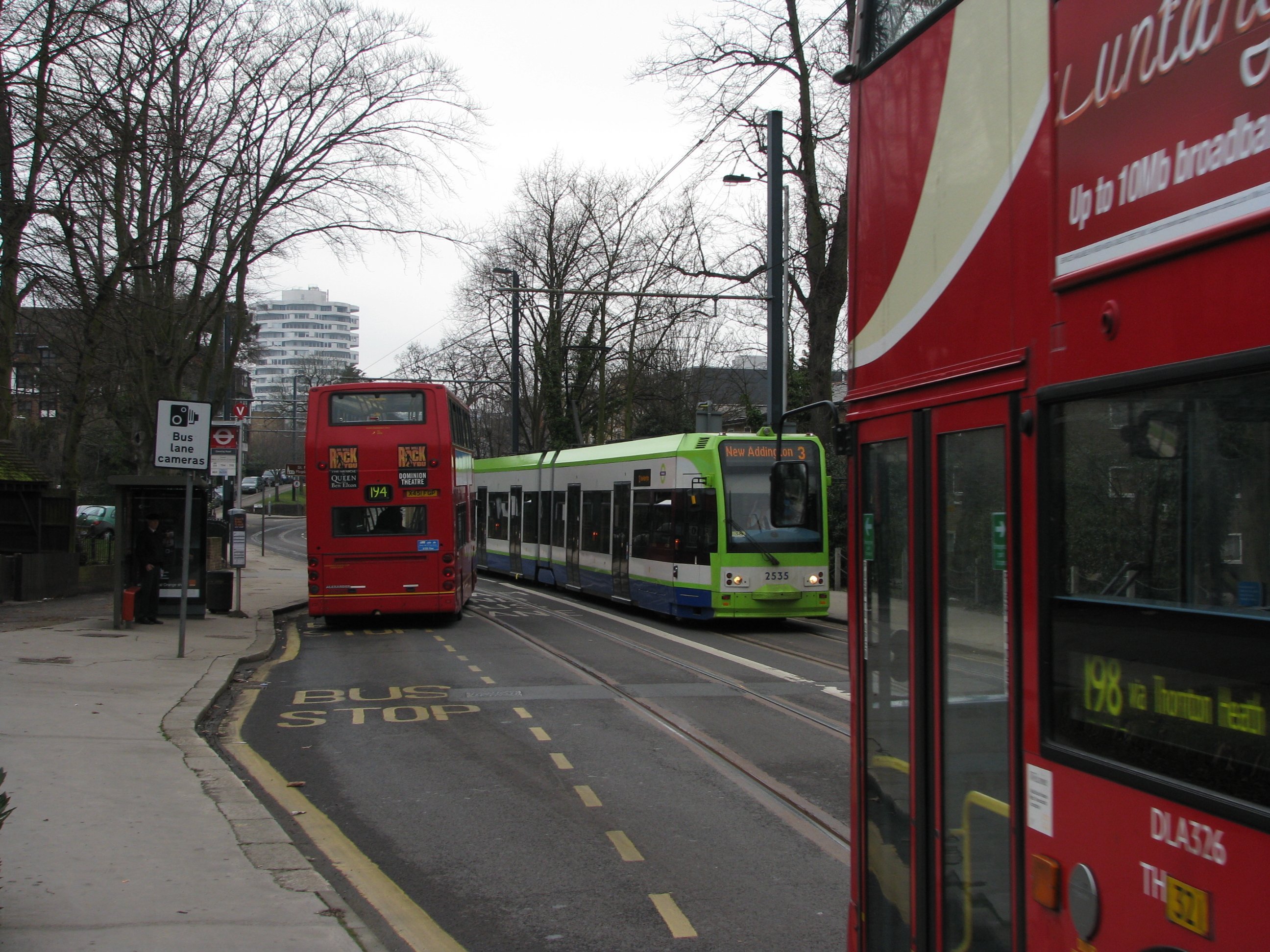
Here, according to Valdin, Astana’s LRT still has serious problems.
The system is new, but it is not integrated with the existing urban transport system — neither in terms of price nor physically. In a number of places, to transfer from one mode of transport to another, especially for people with limited mobility and parents with strollers, significant obstacles have to be overcome. Physical, technical, technological, and financial integration must be considered,he said.
Despite this, Valdin says the LRT line itself is high quality. In terms of smoothness and noise, he considers it one of the best in the post-Soviet space. But that is why the urban part becomes even more important. A large-scale engineering facility should be built into a living urban environment, not left as a sterile corridor. Both experts agree on this.
The Example Is Close By
One of the common arguments in defense of enclosed stations and elevated construction is climate. Astana has cold winters, strong winds, snow, and sharp temperature changes. But experts do not consider climate a sufficient reason to abandon ground-level rail transport.
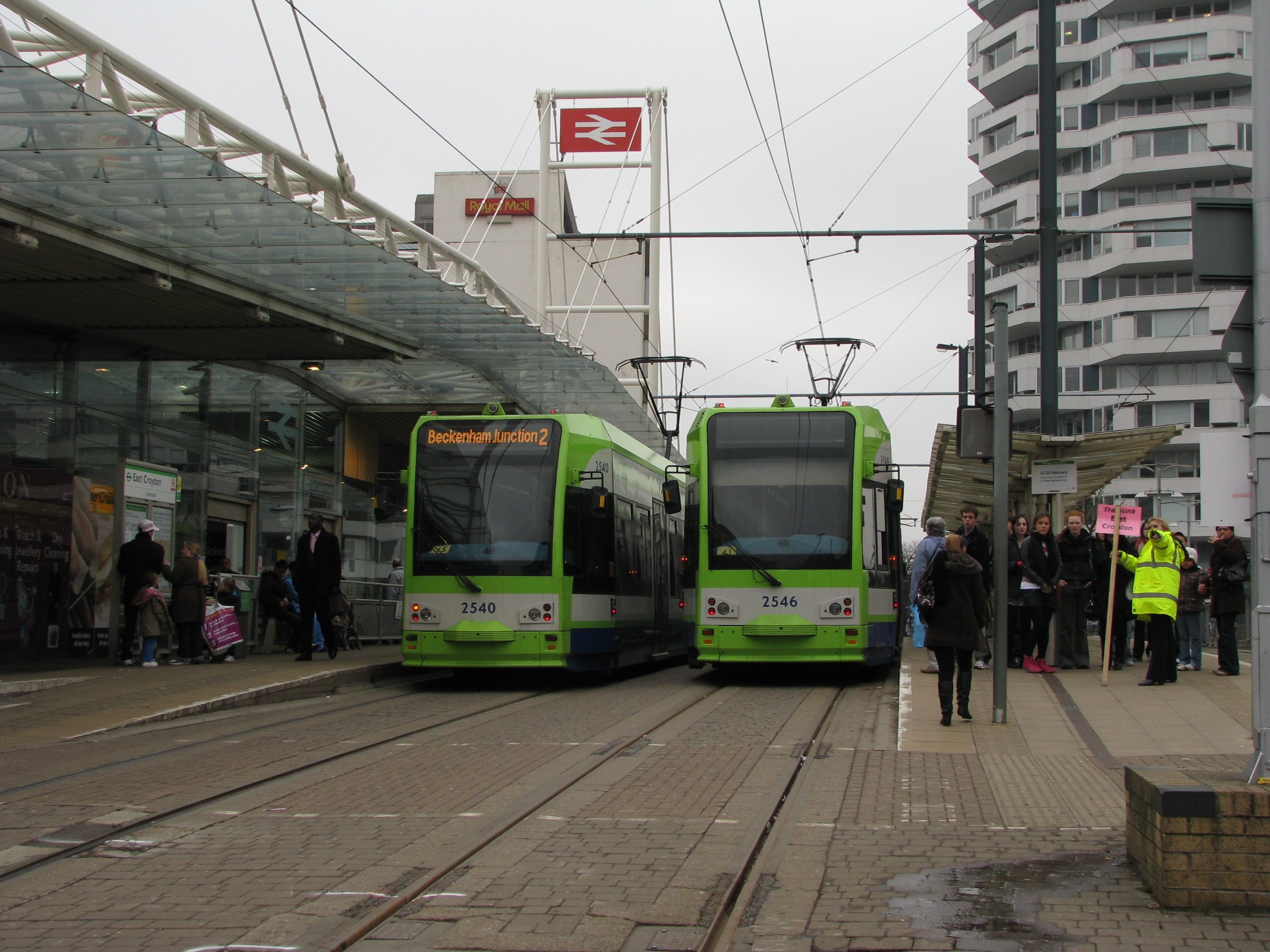
There are cities in Kazakhstan with no less severe winters where ground-level trams remain part of the transport system. In Pavlodar, Oskemen, and Temirtau, trams still operate at street level. Ground rail systems also operate in northern countries around the world.
Ground lines are being built in Norway, Finland, and China, and they work calmly. Frost and soil freezing are not critical factors in themselves. Everything depends on engineering solutions and thermal compensation,Valdin said.
According to him, there are clear engineering solutions for cold climates: rail thermal compensation, correct track construction, cleaning, contact network maintenance, and passenger protection at stops and stations. These solutions can be complicated and expensive, but they do not make ground-level LRT impossible.
Enclosed stations, on the other hand, are understandable, Valdin says. Astana is cold in winter and hot in summer, so air-conditioned stations provide comfort for passengers.
In Astana, an option similar to Dubai was used — fully air-conditioned stations. Given that it is very hot in summer and very cold in winter, this is a working solution. But it effectively makes this line a metro,the expert said.
In other words, climate can explain enclosed stations, passenger protection, and special operating requirements. But it does not fully explain why the entire line had to run on an overpass.
Can The System Come Down To The Ground?
Future branches, including the line toward Kosshy, are also expected to be built on elevated supports. Officials have explained the rejection of a ground-level option by saying the area is actively built up and a surface line would interfere with movement.
If they say it is because of dense development, that may be the case. Supports take up slightly less space than what would be needed for a ground-level line. There are cases where the inability to build a surface line without buying land led to projects being abandoned,Valdin said.
According to him, a ground-level tram line also requires space. It needs tracks, safety gaps, a right of way, and safe crossings. In some cases, this may require buying land and creating conflict with property owners.
A regular tram line, taking into account sanitary standards, the track, and the right of way, is about 10 meters wide. In some cases, to meet territorial requirements, land has to be bought out for demolition. That is not always possible,the expert explained.
But another question arises. Even if an overpass is justified on one difficult section, does that mean the entire system should continue only in this format?
Valdin recalls that there had previously been talk of switching to ground-level solutions after the first line was completed. But in his view, the current configuration already points to the continuation of the existing concept.
When the decision was made to finish the first line, as far as I remember, there was talk that this line would be completed, and everything else in Astana would be ordinary ground-level transport. But after riding along the line, I saw that the concept had not changed. In the city center, there is effectively a future triangle with a branch toward the old railway station, and at the turn to the airport there is a structure with a turn toward Kosshy,he said.
In his opinion, now that the system has already been built and launched, there is no point in completely redesigning it. But this does not mean that all future transport in Astana should be elevated.
Maybe it makes sense to bring the line from Kosshy to the old railway station and stop there. Further work should be done below, because Astana really needs trunk public transport,Valdin said.
It Is Finished — But That Is Not Enough
As expected, the LRT has not yet become full-fledged public transport. But as the experience of Kazakhstan’s only metro system shows, this may still be ahead. That is why, despite corruption scandals, pessimistic forecasts, and years of delays, the project should not be judged only from the position of “it is finally finished, and thank you for that.”
This large infrastructure facility will continue to affect Astana residents. How it does so will depend on what the city prioritizes next.
If buses, pedestrian routes, micromobility, fares, crossings, and streets are brought into a single system, the LRT can become more than an image project with a scandalous past. It can become a real part of Astana’s new public transport system.
If not, it risks remaining an expensive futuristic attraction.
Read also:
Latest news
- Orda.kz Editorial Team to Cease Operations on September 1
- The Price of a Degree: How Students in Kazakhstan Pay for University
- Second Przewalski’s Horse Foal Born as Species Returns to Kazakhstan
- Kazakh Mining Companies Can Recalculate Purchases if Tenge Weakens
- Kazakhstan Names First Vice President in Three Decades
- What Almaty’s Bus Shelters Are Missing
- 400-Truck Queue Builds at Kazakh–Kyrgyz Border
- Kazakhstan Ready to Help Feed and Rebuild Gaza
- Tokayev Establishes New Presidential Security Body
- Almaty Takes Back Its Nearly Century-Old Hippodrome
- No More Guesswork on Savings: Kazakhstan Tightens Energy Audits for Businesses
- Public Money Could Be Used to Rescue Failing Kazakh Banks
- Third Kazakh Woman Reported Missing in Nepal-China Flood Zone
- Falconer Convicted Over 35 Protected Birds, Spared Punishment Under Amnesty
- Kazakh Citizen Detained in Yakutia in Phone Fraud Case
- Yuan Instead of Dollars? KazMunayGas Draws Record Demand in Asia
- China Gains Oil-Market Influence as OPEC+ Weakens
- Kazakhstan to Divide Smartphones Into White, Gray and Black Lists
- Kazakhstan’s Government Formally Resigns as First Kurultai Session Opens
- Rare Lynx Sighting Recorded in Northern Kazakhstan
