

West Kazakhstan To Spend Billions On Waste: What Will Change By 2030?
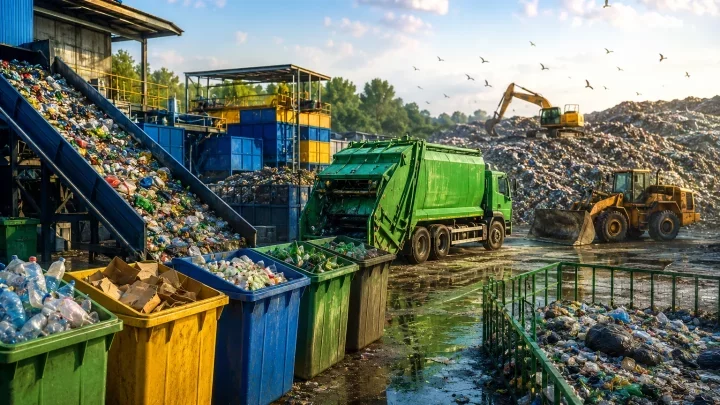 AI-generated illustration
The city of Uralsk in West Kazakhstan plans to double recycling points, increase waste processing nearly sevenfold and build a new landfill by 2030, according to the city's municipal waste management program for 2026–2030, Orda.kz reports.
Uralsk currently generates around 920,000 cubic meters of solid household waste per year, with a population exceeding 372,700. Only 4–6% of waste is currently recycled, with the rest going to landfill. By 2030, authorities aim to raise that figure to 30% and achieve full coverage of garbage collection services across the city.
The existing landfill, in operation since 1975, has effectively exhausted its service life and no longer meets environmental standards. Urban development has also crept closer to the site. Authorities plan to reclaim it at an estimated cost of 12 billion tenge, installing a degassing system, protective screen and temporary waste disposal area during the works.
A new landfill is planned on a 70-hectare plot in the Baiterek district, around seven kilometers from the current site. It is designed to handle up to 126,000 tons of waste annually and operate for 20 years. A modern waste sorting complex will be built alongside it to extract recyclable materials and produce RDF fuel for industrial use.
The city also faces a shortage of around 1,500 waste containers, with more than 100 needing replacement each year. Authorities plan to purchase ten new garbage trucks worth around 650 million tenge, followed by two additional vehicles annually. GPS monitoring and digital route tracking will be introduced for waste carriers.
Payment discipline is flagged as a separate problem. Residents fail to pay around 30% of garbage collection bills, creating financial strain for operators. Some carriers have also been taking waste to unauthorized dump sites.
The program will be funded through national and local budgets as well as private investment. The total cost has not been disclosed, though individual projects already account for multi-billion tenge expenditures.
Original author: Alina Elgeldina
Read also:
Latest news
- Orda.kz Editorial Team to Cease Operations on September 1
- The Price of a Degree: How Students in Kazakhstan Pay for University
- Second Przewalski’s Horse Foal Born as Species Returns to Kazakhstan
- Kazakh Mining Companies Can Recalculate Purchases if Tenge Weakens
- Kazakhstan Names First Vice President in Three Decades
- What Almaty’s Bus Shelters Are Missing
- 400-Truck Queue Builds at Kazakh–Kyrgyz Border
- Kazakhstan Ready to Help Feed and Rebuild Gaza
- Tokayev Establishes New Presidential Security Body
- Almaty Takes Back Its Nearly Century-Old Hippodrome
- No More Guesswork on Savings: Kazakhstan Tightens Energy Audits for Businesses
- Public Money Could Be Used to Rescue Failing Kazakh Banks
- Third Kazakh Woman Reported Missing in Nepal-China Flood Zone
- Falconer Convicted Over 35 Protected Birds, Spared Punishment Under Amnesty
- Kazakh Citizen Detained in Yakutia in Phone Fraud Case
- Yuan Instead of Dollars? KazMunayGas Draws Record Demand in Asia
- China Gains Oil-Market Influence as OPEC+ Weakens
- Kazakhstan to Divide Smartphones Into White, Gray and Black Lists
- Kazakhstan’s Government Formally Resigns as First Kurultai Session Opens
- Rare Lynx Sighting Recorded in Northern Kazakhstan
