

Week In Review: Central Asia In Focus
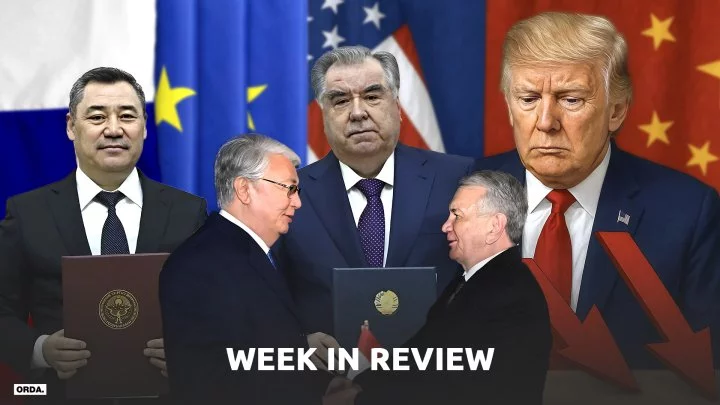
Orda has put together a brief synopsis of last week's news.
Global Turmoil
Trump's tariffs have caused quite a stir in global markets, and the economic outlook is becoming gradually less certain. While the current U.S. President's policies have created a global divide, regions seem to be looking inward to shield themselves from any blowback.
Meanwhile, the little progress made in negotiations on a ceasefire and ending the war against Ukraine, as both sides have already claimed violations of the partial 30-day ceasefire, instills further uncertainty.
Central Asian diplomacy has shown through against that backdrop — regional leaders have made significant strides in cooperation, integration, and engagement. The period from March 28 to April 4, with its high-level consultations, historic agreements, and past ones, reinforces the idea that the region is moving to secure internal cohesion on its own accord.
Central Asia's Germany and France
Often compared to regional anchors akin to Germany and France in the EU, Kazakhstan and Uzbekistan once again demonstrated leadership in Central Asian diplomacy. On March 28, Kazakhstan and Uzbekistan convened the seventh round of bilateral security consultations in Tashkent.
The talks focused on deepening cooperation in defense, counterterrorism, emergency response, and the fight against extremism and transnational organized crime, continuing ongoing policies building on the 2022 "Allied Relations" agreement.
Both sides reaffirmed their commitment to strengthening security ties and signed a formal protocol outlining actionable steps to improve interagency coordination and cooperation.
The following day, on March 29, the Presidents of Kazakhstan and Uzbekistan, Qasym-Jomart Toqayev and Shavkat Mirziyoyev, held an informal yet symbolically significant meeting in Almaty.
During the visit, President Mirziyoyev lauded the personal rapport between the two presidents, noting how it had helped resolve complex bilateral issues with efficiency and trust.
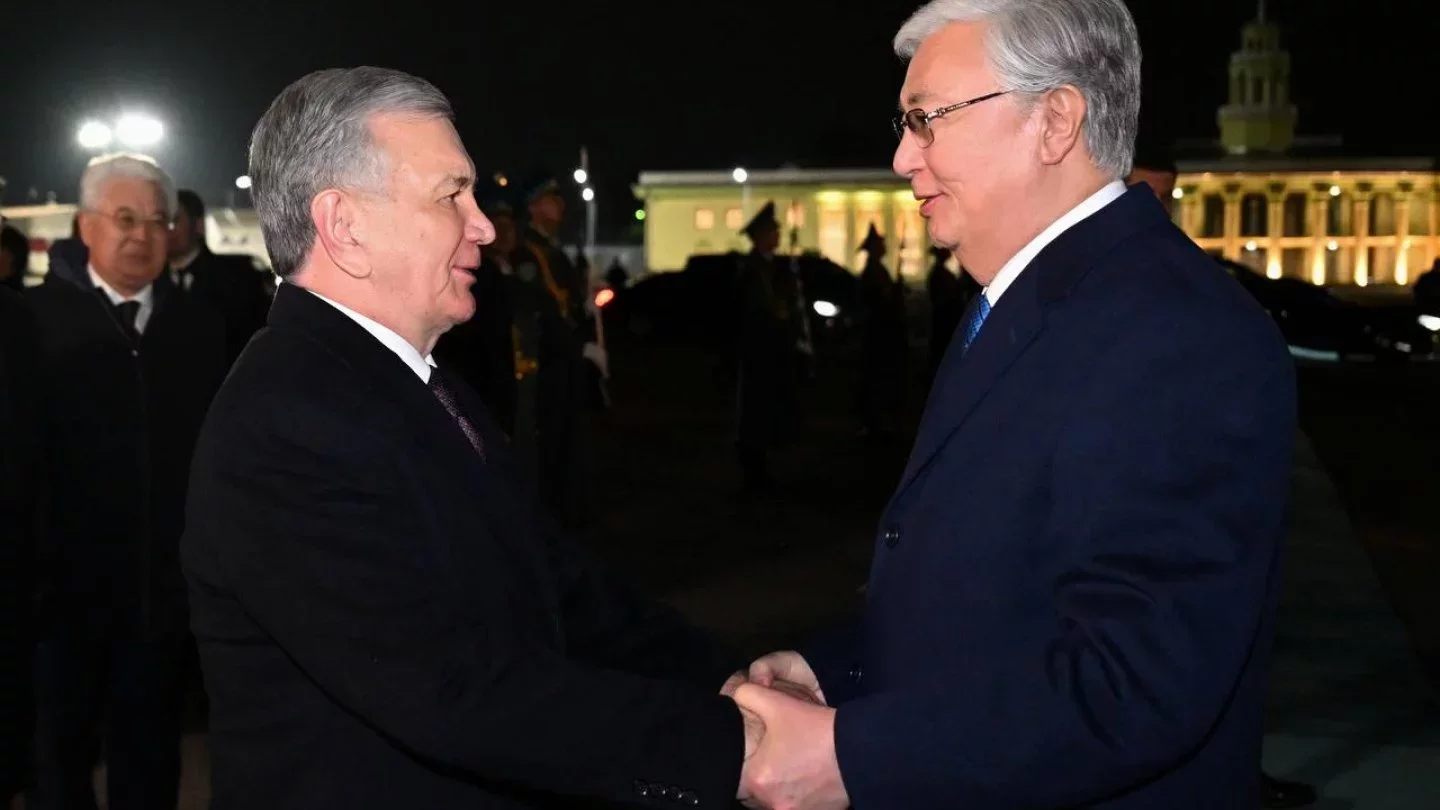
Other discussions throughout the visit spanned various topics, including trade, transportation, logistics, energy, water resource management, tourism, and humanitarian cooperation. The visit concluded with President Toqayev personally accompanying his Uzbek counterpart to the airport, underscoring the strength of their diplomatic bond and mutual respect.
A Landmark Deal Finalized
On March 31, Tajikistan’s President Emomali Rahmon and Kyrgyzstan’s President Sadyr Japarov held a one-on-one meeting, followed by a formal exchange of ratified documents finalizing a historic border agreement between the two nations.
Long-standing disputes over their shared boundary have previously erupted into violent clashes, but this new accord signals a decisive shift toward reconciliation and cooperation.
In addition to the border treaty, two new intergovernmental agreements were signed — one granting access to water management and energy infrastructure, and another addressing the construction and use of cross-border roads.
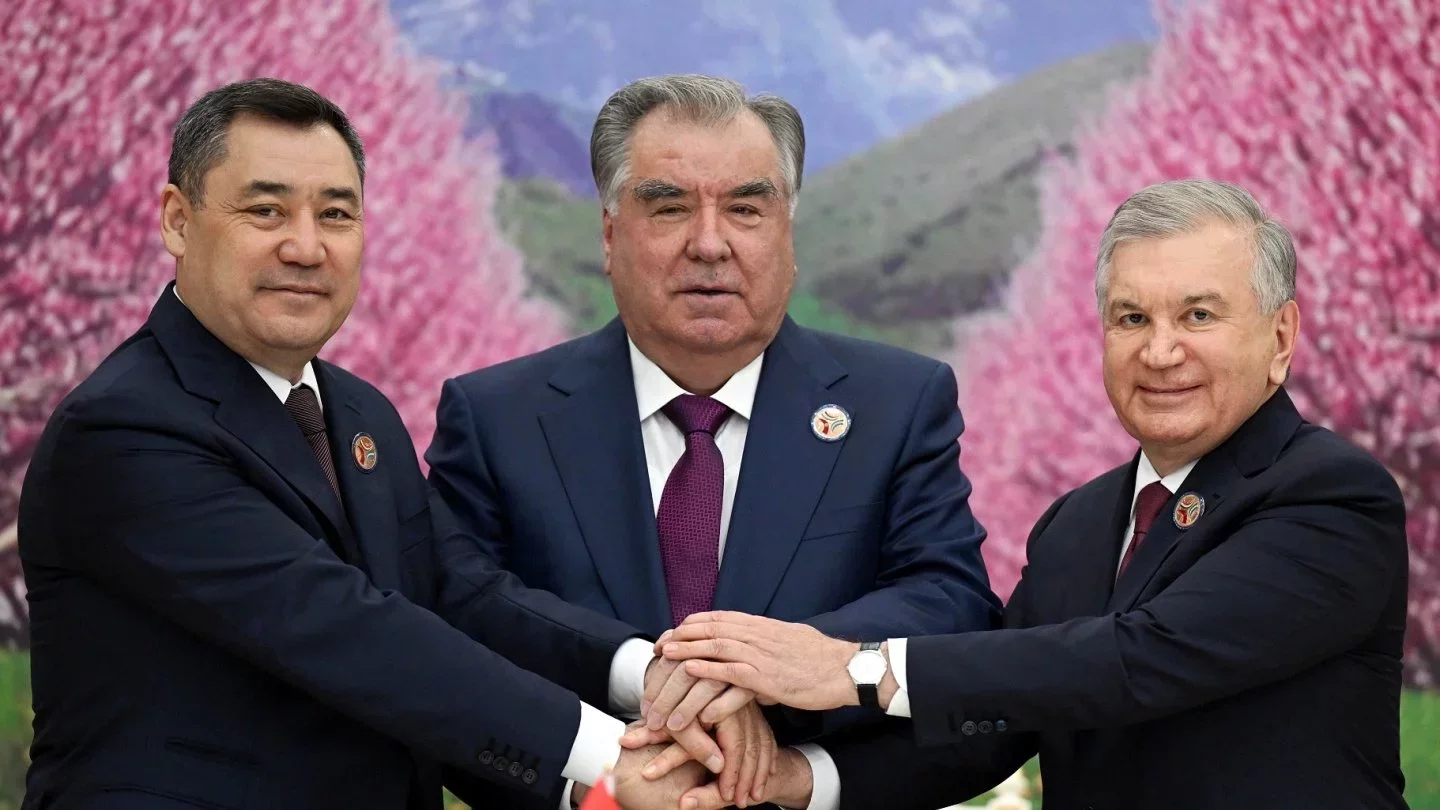
To mark the occasion, the two leaders remotely inaugurated the 500 kV “Datka–Sughd” power transmission line, a key component of the CASA-1000 regional energy project.
The project is anticipated to be fully operational by 2027. Once completed, it should enable the export of 1,300 megawatts of electricity from Kyrgyzstan and Tajikistan to Afghanistan and Pakistan during the summer, enhancing regional energy security and cooperation.
Uzbek President Shavkat Mirziyoyev was also present. The nations signed an agreement formalizing the tripoint of the three countries' state borders. Tajikistan and Uzbekistan also saw their agreement on "Allied Relations" coming into force. Kazakhstan and Kyrgyzstan had signed a similar document back in 2024, while securing investment protections and advancing a cross-border project in late March 2025.
The borders between Kyrgyzstan, Tajikistan, and Uzbekistan had long been an area of contention, and agreements suggest that relations have reached a point where pragmatism triumphs. Past grievances likely remain, and as expert Temur Umarov states:
No one is guaranteed protection from new conflicts in the future, but for now, the leaders see far greater benefit in cooperation than in aggression.
Indeed, Kyrgyz authorities have taken visible measures against those who opposed the Kyrgyz-Tajik border negotiations and the controversial 2022 Kempir-Abad deal with Uzbekistan. Tajikistan and Uzbekistan are also unlikely to allow anything internal to disrupt engagement perceived as an economic driver.
This reading gains traction given political speculation on power moves in Uzbekistan, in tandem with the recent attempt on a former Uzbek political heavyweight's life, Komil Allamjonov, and the long-awaited power transfer in Tajikistan.
Stronger Together
The Central Asian nations are known for their "multi-vector" policy, allowing them to interact with multiple nations, in particular their traditional ones: China, Russia, and Türkiye, simultaneously. And they have held true to this trajectory, notwithstanding analytical chatter.
However, tariffs could spell trouble for the region and its significant trade with China, whose economy may experience a downturn extending to Central Asia.
In parallel, Türkiye continues to deal with domestic unrest and diplomatic back-and-forths with Israel over Syria. At the same time, Russia, increasingly positioning itself as a central energy supplier to the region, is more focused on the battlefield and talks with the Trump administration.
None of this produces a zero-sum game, though. These nations' mutual engagement will continue, while other engagement is also sought.
Trump's tariffs also drive U.S. allies away, such as the European Union. As the week's culmination of events in Central Asia has demonstrated, the EU is keen on deepening ties with Central Asia.
European Commission President Ursula von der Leyen announced a €12 billion Global Gateway Investment Package, targeting critical sectors such as transport, raw materials, clean energy, and digital infrastructure.
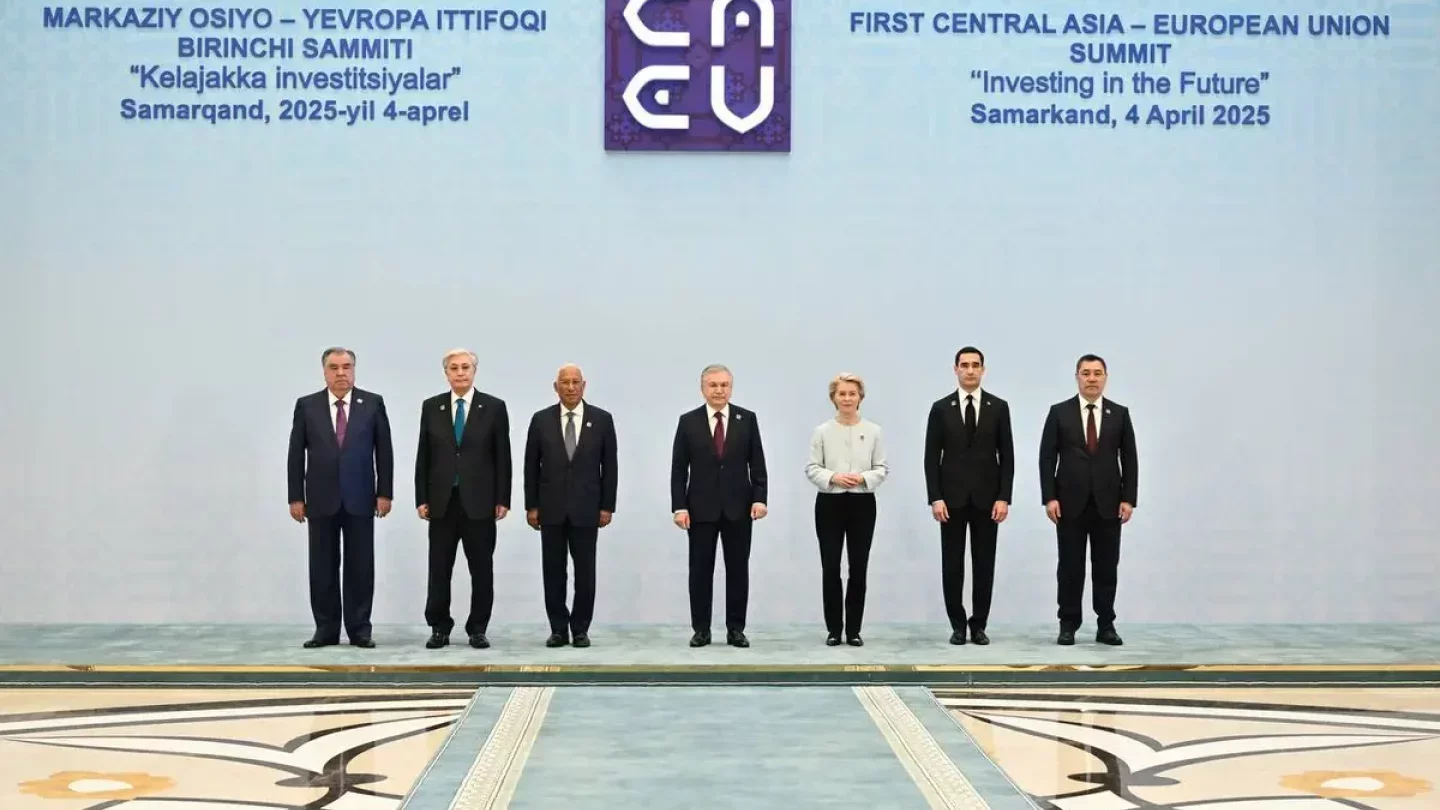
Logistics are among the focal points, as many Chinese goods will pass through the region onward to Europe and vice versa. In that regard, while it may not be a direct factor, Central Asian actors might have also taken note of the tensions between Armenia and Azerbaijan, which hinder mutual economic benefits and stability.
Although the EU advocates for specific policies, the bloc will be hesitant to overstep, a move that could push the region further toward China and Russia. Both have been hit by Western restrictions, another topic Central Asian nations can bring up in talks with other nations.
Comparatively, the U.S. has demonstrated interest as well, though actions tend to speak louder than words, and what is unfolding around the U.S.-Ukraine rare-earth metals deal could prove to be a signal to tread carefully.
Other nations, such as China and South Korea, have also made such efforts, underscoring the options available, but China's deep economic footprint in the area is non-negligible.
Separately, concerns remain regarding threats emanating from Afghanistan's territory, explaining the region's efforts to reintegrate the nation, which would, in turn, bolster cohesion and security. Yet, restrictions imposed remain in force, contributing to the volatility within it.
If the volatility were to extend beyond the Afghan borders, the Central Asian region would have to respond. In all likelihood, none are willing to leave such an outcome contingent on intervention from partners who may very well opt to bounce the responsibility back and prioritize internal matters.
The Takeaway
The above conditions suggest that while external actors contribute in multifaceted ways, the Central Asian nations wield notable agency, utilizing interests as leverage and looking toward one another for economic outlets.
Divergence and disagreements, both internally and externally, will indeed crop up. Still, when push comes to shove, these nations will likely be able to reach mutually beneficial consensuses.
As the world continues to fragment and interaction with factions becomes more conditional, Central Asian nations will push on in unison, striving to secure beneficial outcomes to shield their nations from the fallout.
The growing cohesion can become a geopolitical axis in its own right, and nations looking to engage with it must bear this in mind, while the region stands to facilitate its strengthening.
Ultimately, their shortcomings, namely corruption and internal factions vying for influence, remain the most notable underlying challenge amplified by outside pressure.
Such a mix could be what undoes it all.
Latest news
- Where Do The Trillions Go? Kazakhstan Lawmakers Demand Tighter Oversight Of Energy Sector
- Kazakhstan And Czech Police Dismantle Personal Data Trafficking Network
- Kazakhstan To Expand Average Speed Checks On Toll Roads In 2026
- U.S. Police Confirm Death Of Missing 24-Year-Old Kazakh Man
- Rare Canadian Lynxes From U.S. Arrive At Almaty Zoo
- IMF Urges Kazakhstan To Stay The Course On Inflation
- Kazakh Refinery Could Lose Russian Supplies After Drone Attack
- Kazakhstan Trains To Get Satellite Internet On Major Routes
- Locust Invasion Alarms Residents In Mangistau Region
- Kazakhstan’s Rail Fleet Remains Heavily Worn Despite Modernization
- Kazakhstanis Will See Who Requested Their Data Through eGov
- Mangistau Hospitals Face Antidote Shortage As Karakurt Bites Rise
- Kazakhstan Sees Afghanistan as Key Regional Link
- US Authorities Find Body Believed To Be Kazakhstani Citizen
- Car Loan Issuances In Kazakhstan Fall Almost 18%
- High Rates Win Over Consumption As Kazakhstanis Bring More Money To Banks
- Illegal Miners Damage Protected Forest Reserve Near Semey
- Recruitment And Diplomatic Silence: Inside A Webcam Network Allegedly Involving Kazakhstani Women In Vietnam
- Kazakhstan Not Yet Ready To Give Sign Language Official Status
- Kazakhstan Receives Cable for Caspian Internet Route
