

They Want to Prove They Belong: Why Ethnic Kazakhs Fight in Ukraine
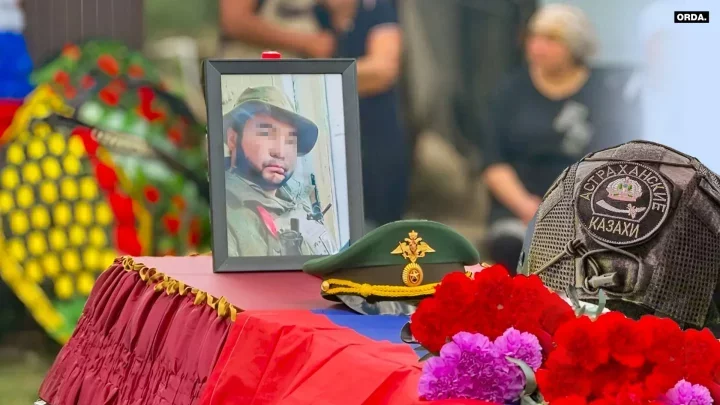
In early October, Orda.kz published an article about the losses among ethnic Kazakhs in Russia's war against Ukraine. At that time, we only spoke with the person who led a volunteer group keeping track of casualties among ethnic Kazakhs. This time, Orda.kz tried to find out what motivates ethnic Kazakhs to fight and whether or not there are deserters among them.
No one Is Forced
We initially attempted to speak with Kazakh diasporas in Russian cities. We had to study several resources on the national cultural autonomies of Kazakhs and other public organizations from different regions of Russia. Unfortunately, not all organizations in the Russian Federation indicate their contact information.
We still managed to identify representatives of the NCAs from the Astrakhan, Tyumen, Omsk, and Tomsk regions.
The Astrakhan diaspora did not answer our calls. The Tyumen and Tomsk ones said they would not be able to talk to us about ethnic Kazakhs' participation in the "Special Military Operation." Only the chair of the regional Kazakh national-cultural autonomy of the Omsk region and the regional mufti, Bota Bakulin, agreed to speak with us.
When asked directly what ethnic Kazakhs are fighting for and what the war in Ukraine is called in Russia, Bota Bakulin said:
This is a complex political question, and I refuse to answer it. We will live here, and it will be more peaceful.
He did, however, agree to answer other questions, such as whether Kazakhs in the Omsk region willingly go to the front:
At the moment, no one is forcing anyone, everyone is coming forward voluntarily. Money is paid and everyone is coming forward voluntarily, Be it Kazakhs or other nationalities.
Bakulin claims that, as an organization, they assist the families of Kazakhs who died in the war and those who went to fight.
We mainly help with food, he says.
However, Bakulin says he does not know precisely how many Omsk Kazakhs went to the front and how many of them died there.
Nobody keeps count - how many left, how many arrived, how many were wounded, how many died. We don't do that, he said.
Yet, volunteers have told Orda.kz differently.
Incidentally, in 2023, Bota Bakulin did not hesitate to discuss political topics with Omsk media. He even went so far as to call for going to war:
Dear fellow countrymen, at this moment we all must correctly understand and support the policy of our president and must go and, without fear, sign up and participate in the special military operation because in unity is our strength, in unity we will defeat injustice. Victory will be ours!
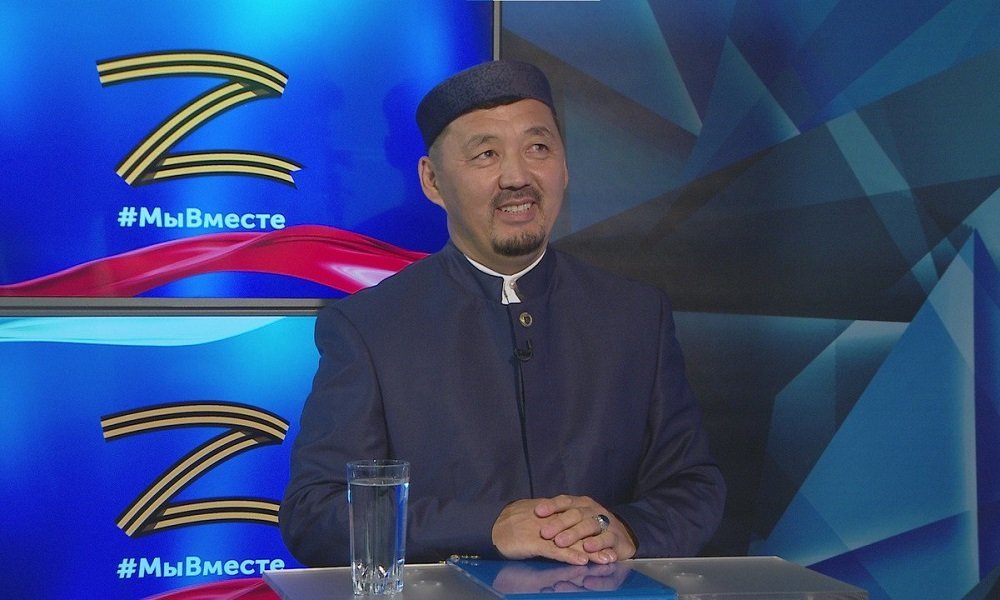
Bota Bakulin. Photo: Channel 12
We also spoke with a former representative of the Kazakh diaspora in Russia. He is also a native Omsk blogger and author of the YouTube channel “Obozhayu” Askhat Niyazov.
When asked how he feels about ethnic Kazakhs fighting in the war against Ukraine, Askhat said:
As a citizen of Kazakhstan, but born in Russia, in the Omsk region, I feel awful about any human casualties in this war. And I do not seperate them into Kazakhs, Russians, Ukrainians, Georgians, Tatars,Niyazov said.
One Deserter
Money is indeed likely to be a driver for many who fight. After the beginning of the war, Astrakhan blogger and journalist Todar Baktemir wrote in his Telegram channel “Steppe Noviope” that most Astrakhan region residents who went to war were Kazakhs. They mainly live in rural areas, where the standard of living is very low and views are conservative.
Kazakh human rights activist Artur Alkhastov, who assists Russian deserters in Kazakhstan, makes a similar conclusion.
For example, in the Astrakhan region there are several areas with a fairly dense distributed population of Kazakhs. But these are all depressed areas. And there, many people serve in the army under contract because this is one of the few opportunities for a stable income. Let's say a contract soldier's salary is 40 thousand rubles, but it is consistently received before the 10th. And it is difficult to dismiss you from the troops, says Alkhastov.
Still, there are other factors. Propaganda seems to influence such decisions. Its reach is also not limited to a specific ethnicity. An Oral journalist, Lukpan Akhmedyarov, confidently told an Orda correspondent that when West Kazakhstan region residents went to fight against Ukraine, propaganda served as the catalyst.
They were from areas adjacent to the border with the Russian Federation. There, to watch Russian television, you don't have to pay, it's received with a regular antenna. I mean, people there may not even watch TV broadcasted in Kazakhstan, says Akhmedyarov.
As for ethnic Kazakhs in Russia, Lukpan Akhmedyarov says there may be another reason why not only Kazakhs but also ethnic minorities head to the trenches:
The current Russian regime emphasizes that Russia is a country of Russians. The Russian language and Russian culture are everywhere. And, probably, representatives of national minorities have formed the thesis that they need to prove their citizenship, to demonstrate that they are the same citizens as ethnic Russians. And this desire to prove their citizenship may be another factor why people become more susceptible to propaganda, begin to justify the war and a rather despotic regime. And when an opportunity arises to manipulate people, saying that 'this is a just war,' that 'we are protecting someone,' such rhetoric, it seems to me, falls on this fertile ground, the journalist believes.
Akhmedyarov's opinion is also supported by the fact that virtually no Kazakhs were among Russian army deserters. Artur Alkhastov says there were fewer Russian national minorities among those who fled the war than Russians. There was only one Kazakh.
But he also deserted for religious reasons. At the same time, I did not hear any complaints from him about the Russian authorities, says Alkhastov.
Orda.kz also asked the “Idi Lesom” movement whether ethnic Kazakhs had approached them.
The organization helps Russian citizens avoid Russian military service. We requested statistics on appeals by region with a significant Kazakh diaspora, and as of early October, it was as follows:
- Saratov region - 321 requests
- Samara region - about 600
- Omsk region - 230
- Altai Republic - 220.
There were no ethnic Kazakhs among them.
Original Author: Igor Ulitin
The original article was published on 24/10/24.
Latest news
- Orda.kz Editorial Team to Cease Operations on September 1
- The Price of a Degree: How Students in Kazakhstan Pay for University
- Second Przewalski’s Horse Foal Born as Species Returns to Kazakhstan
- Kazakh Mining Companies Can Recalculate Purchases if Tenge Weakens
- Kazakhstan Names First Vice President in Three Decades
- What Almaty’s Bus Shelters Are Missing
- 400-Truck Queue Builds at Kazakh–Kyrgyz Border
- Kazakhstan Ready to Help Feed and Rebuild Gaza
- Tokayev Establishes New Presidential Security Body
- Almaty Takes Back Its Nearly Century-Old Hippodrome
- No More Guesswork on Savings: Kazakhstan Tightens Energy Audits for Businesses
- Public Money Could Be Used to Rescue Failing Kazakh Banks
- Third Kazakh Woman Reported Missing in Nepal-China Flood Zone
- Falconer Convicted Over 35 Protected Birds, Spared Punishment Under Amnesty
- Kazakh Citizen Detained in Yakutia in Phone Fraud Case
- Yuan Instead of Dollars? KazMunayGas Draws Record Demand in Asia
- China Gains Oil-Market Influence as OPEC+ Weakens
- Kazakhstan to Divide Smartphones Into White, Gray and Black Lists
- Kazakhstan’s Government Formally Resigns as First Kurultai Session Opens
- Rare Lynx Sighting Recorded in Northern Kazakhstan
