

Kazakhstan’s Planned Route to Mongolia Will Pass Through Russia
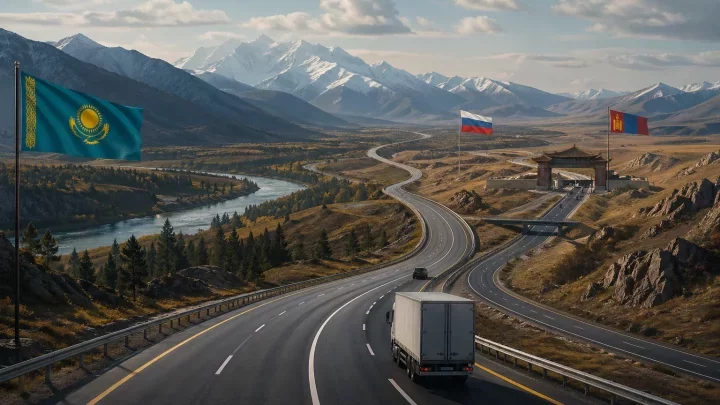 AI-generated illustration
The planned highway from Kazakhstan to Mongolia is expected to pass through Russia, but the project still has neither an approved budget nor implementation deadlines, Orda.kz reports. These and other details became known from the Transport Ministry’s response to an official request.
Earlier, Orda.kz wrote that the presidents of Kazakhstan and Mongolia had agreed in Akorda to work on the construction of a direct highway between the two countries. It has now emerged that the basic route has already been identified: it will run along the Oskemen-Ridder-Russian border line, then through Russia’s Altai Republic and onward to Mongolia.
The ministry described this option as the priority route because it is the shortest and most выгодный in logistical terms. Alternative options, including a route through China, are also still under consideration, but no specifics have been given.
According to the ministry’s response, specialists are now clarifying the route alignment, assessing the condition of existing roads, and determining where new sections will need to be built. In particular, there is a gap of about 30 kilometers on Russian territory where a road would have to be built from scratch.
The ministry did not specify implementation deadlines. Most likely, this is because the entire project still requires coordination with Russia and Mongolia, as well as final calculations of economic efficiency. At the same time, Kazakhstan has already scheduled repairs on its section for 2024-2027.
The final cost of the project and the sources of financing have also not yet been disclosed.
The Transport Ministry added that the project could have a major economic effect and almost halve the distance to Mongolia.
The implementation of the project is seen as one of the significant factors in the development of Kazakhstan’s transport, logistics and tourism potential, primarily in the East Kazakhstan region. The current route to Mongolia is about 1700 km, which increases travel time and restrains the development of ties. The new route could reduce this distance to 859 km.the ministry said.
The ministry also expects the project to stimulate the development of roadside services, hotels and catering.
Original author: Elvira Ivannikova
Read also:
Latest news
- Orda.kz Editorial Team to Cease Operations on September 1
- The Price of a Degree: How Students in Kazakhstan Pay for University
- Second Przewalski’s Horse Foal Born as Species Returns to Kazakhstan
- Kazakh Mining Companies Can Recalculate Purchases if Tenge Weakens
- Kazakhstan Names First Vice President in Three Decades
- What Almaty’s Bus Shelters Are Missing
- 400-Truck Queue Builds at Kazakh–Kyrgyz Border
- Kazakhstan Ready to Help Feed and Rebuild Gaza
- Tokayev Establishes New Presidential Security Body
- Almaty Takes Back Its Nearly Century-Old Hippodrome
- No More Guesswork on Savings: Kazakhstan Tightens Energy Audits for Businesses
- Public Money Could Be Used to Rescue Failing Kazakh Banks
- Third Kazakh Woman Reported Missing in Nepal-China Flood Zone
- Falconer Convicted Over 35 Protected Birds, Spared Punishment Under Amnesty
- Kazakh Citizen Detained in Yakutia in Phone Fraud Case
- Yuan Instead of Dollars? KazMunayGas Draws Record Demand in Asia
- China Gains Oil-Market Influence as OPEC+ Weakens
- Kazakhstan to Divide Smartphones Into White, Gray and Black Lists
- Kazakhstan’s Government Formally Resigns as First Kurultai Session Opens
- Rare Lynx Sighting Recorded in Northern Kazakhstan
