

What Kazakhstan Could Learn from Mongolia’s Olympic Kit
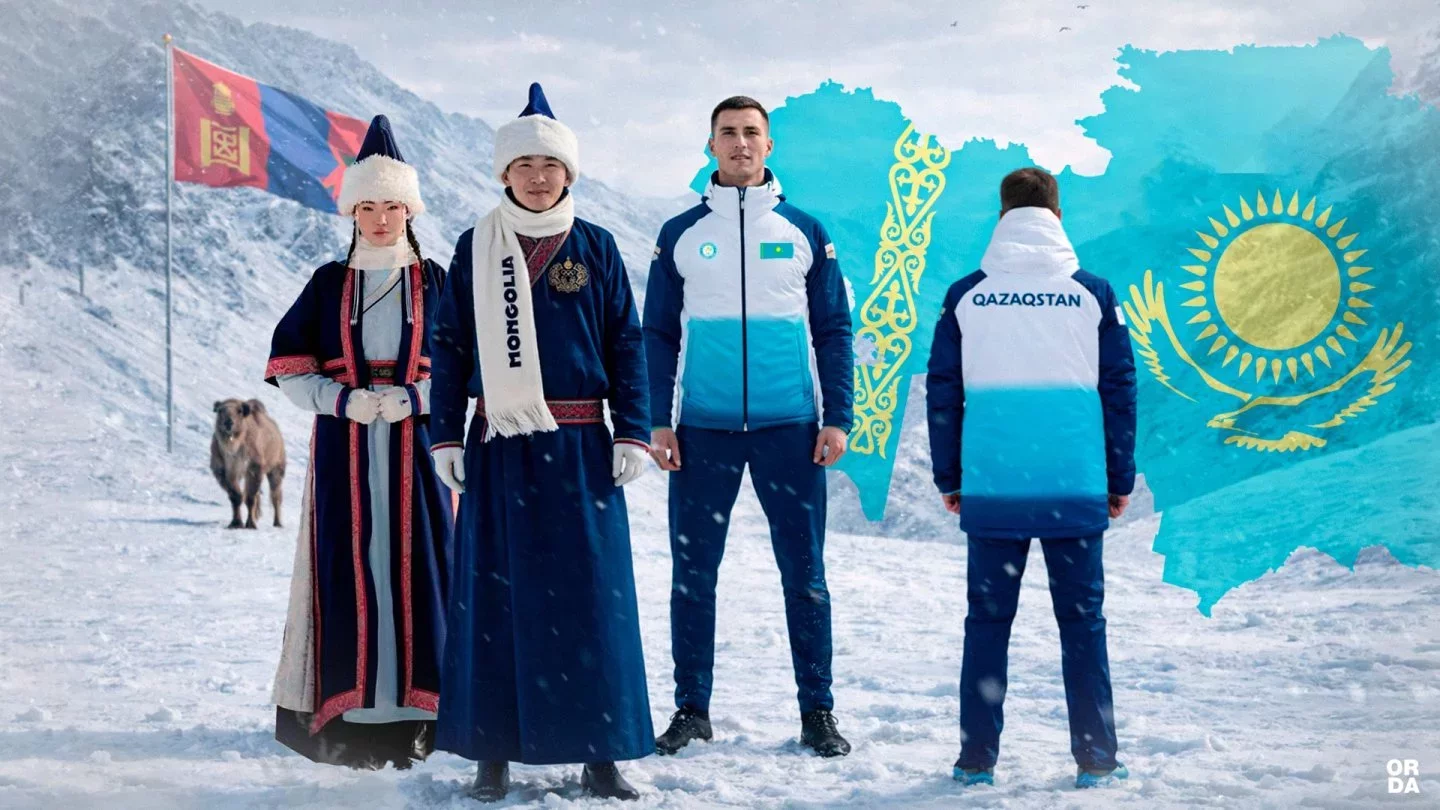 Photo: Orda.kz
On January 21, Mongolia revealed the Olympic team’s uniform for the Winter Olympics in Milan. The video went viral and led to lots of users talking about it. People were interested in how the country picks the equipment for its national team and who makes it. These questions also caught the interest of Orda.kz, so we decided to find out whether Kazakhstan should approach the choice of sports kit the way Mongolia does—and what’s happening with the manufacture at home.
We asked the company that made Mongolia’s Olympic kit this year directly for an interview.
Munkhbayasgalan Delgerbat got in touch with us and asked to be called Baysa. She is the brand’s creative director. In 2022–2023, she studied in Milan. First, she took a Fashion Design Intensive course. Then, she took an MA program in Fashion Styling, Creative Direction, and Digital Content. She went back to Mongolia in the spring and has been working at her family's business Goyol Cashmere ever since.

«The company Goyol Cashmere was founded in 2005 as a family business started by my parents. We have 250 employees and sell clothing both retail and wholesale. Right now, we produce more than 300,000 items in over 20 countries», Baysa said.
Baysa told us that in Mongolia, the government commissions the national team’s Olympic kit through the Go Mongolia initiative. Under the program, the state selects local brands to represent Mongolia at the Games, with a focus on showcasing the country’s culture to a global audience. Last summer, Mongolia opened a competitive selection process and, in September 2025, chose the company that would represent the country at the Winter Olympic Games in Milan. The contract went to Goyol Cashmere, a brand specializing in cashmere apparel.
The Olympic team kit was designed using traditional national dresses for inspiration. It was created to clearly show the world who Mongolians are and what their traditional dresses look like. At the same time, a key goal was to demonstrate the outfit’s functionality: Mongolia has a harsh climate, and that lived experience became the foundation of the design.
«We based it on the clothing our ancestors wore every day. Our country has harsh climatic conditions, and our traditional clothing is practical. Take vests, for example: they protect you from the cold and are comfortable for horse riding,»,Baysa shared.
As the creative director, she was directly involved in developing the sportswear's design.
Notably, all the materials used to create the Olympic kit were produced entirely within Mongolia.
«Mongolia exports 30% of the world’s cashmere, so the choice was obvious. All the raw materials we used to make the Olympic team’s clothing were produced here,», Baysa says.
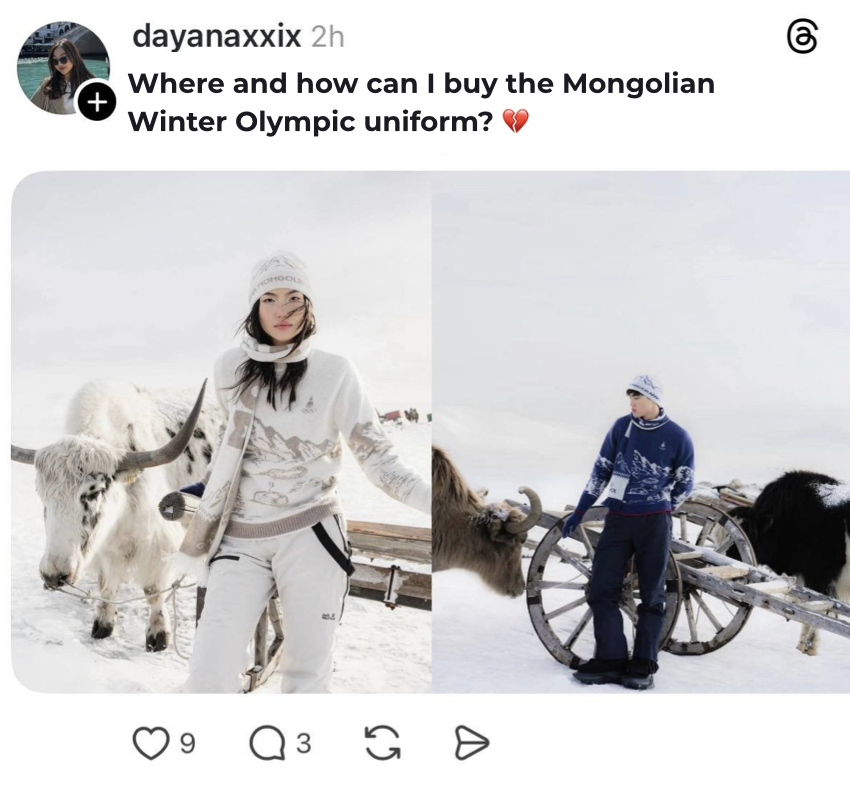
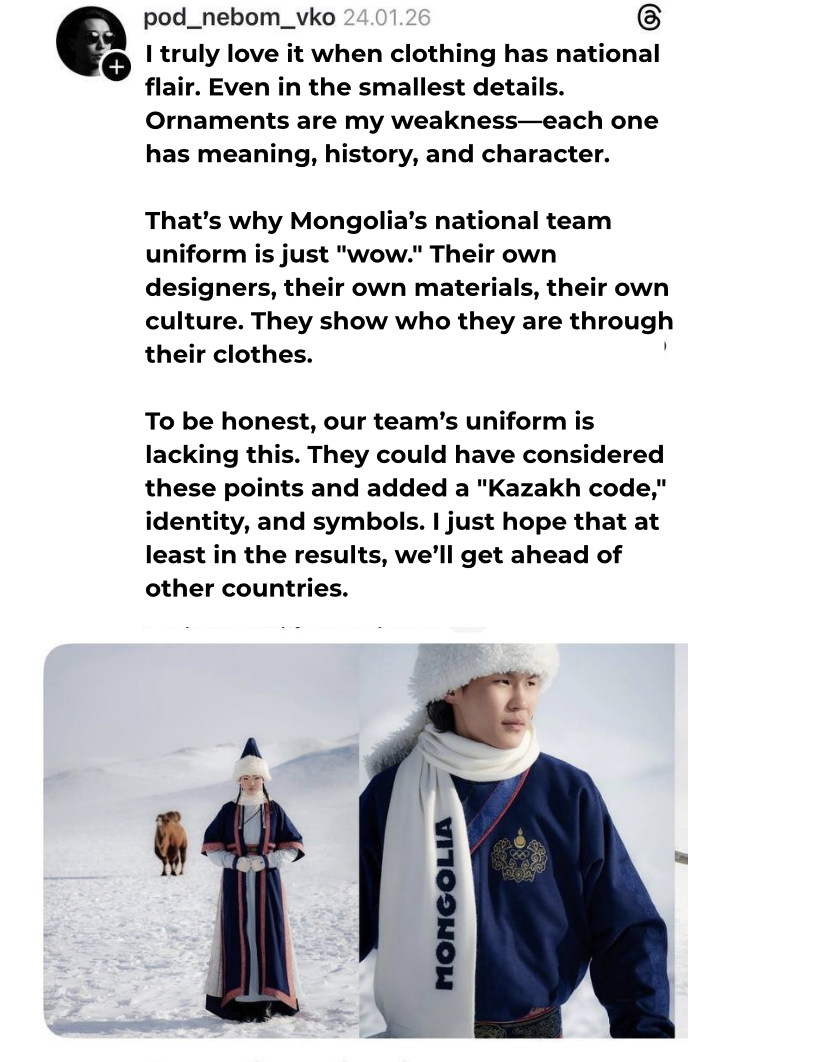
The presentation sparked a wave of online attention—enough that even an Orda.kz reporter wanted to buy the outfit. When we asked how to purchase it and what it costs, the brand replied briefly: ‘On the website.’ They then quoted the price of their bestselling Mountains sweater, made of pure cashmere, at about $180.
Unfortunately, we were unable to find out exactly how much the government contract for Goyol Cashmere was worth. But as the kit was made for only five people, it's reasonable to assume it wasn't expensive. The brand's representatives say that the state paid for all of the equipment to be made, and the company did all of the development and design work itself.
«I can’t tell you how much it cost. But from our country, three athletes and two coaches will go, so the price was not high,»Baysa said.


Kazakhstan’s Olympic team, by contrast, was outfitted by Under Armour. Reportedly, the company offered Kazakhstan a 70% discount under the contract. Athletes got winter and summer sportswear, about 18 items in total.
The formal ceremonial uniform was handled separately: a Kazakhstani company sewed it for free. But officials kept the company’s name confidential, and they didn't say the value of the contribution.
A closer look suggests there's nothing unique about the team’s kit—it wasn’t designed from scratch. Instead, it consists of standard, ready-made items with Kazakhstan’s flag and name added. This kind of customization is standard practice and can be done on almost any off-the-shelf product.
Is it possible to buy this kit to support the Olympic team? It does not appear to be listed on major marketplaces, so dressing like Kazakhstani athletes is unlikely. Even if it were available, would you choose it when cashmere is an option?
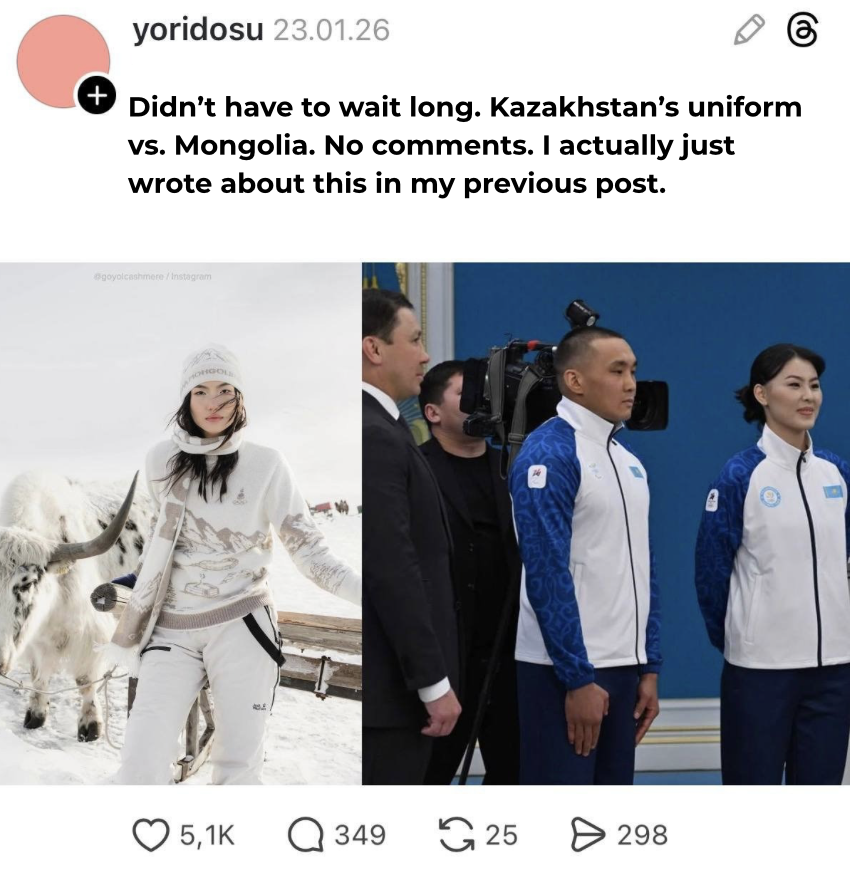
We won't compare the designs of the kits here because social media has long done that for us.
Hypothetically, Kazakhstan could do it the Mongolian way: hold an open competition, pick the manufacturer, and keep a close eye on production. After all, no brand wants to put out something flimsy or ugly—its reputation is on the line. Mongolia also showed what good storytelling can do: a campaign built around just three athletes and two coaches still got the whole world talking about the country. Could we follow their lead? Time will tell.
Original author: Islam Abdukapparov
Latest news
- Kazakhstan Joins the Opening of the Milano Cortina 2026 Paralympic Winter Games
- Statistics Show Where the Most Women Live and Work in Kazakhstan
- Kazakhstan Carries Out 12 Evacuation Flights From the Middle East
- Kazakhstan Labor Inspectors Find Wage Arrears at 102 Enterprises
- Police Raid in Shymkent Uncovers Widespread Violations Involving Foreign Nationals
- Tokayev Condemns Drone Strike on Nakhchivan Airport
- Eyewitnesses Share Photos of Kazakh Citizens’ Evacuation
- Tokayev Orders Tighter Security for Kazakhstan’s Critical Infrastructure
- Semey Teen Convicted Over Telegram Chat Targeting Foreign Students
- Gender Equality Index 2025: Is Kazakhstan Leading in the Region?
- UNICEF Highlights Children’s Digital Rights in Draft Constitution of Kazakhstan
- Kazakhstani Journalists Returning From Ukraine Detained at Astana Airport
- Kazakhstan Prosecutor Opposes Deportation of 16-Year-Old Russian Teen
- Russian TV Channels Taken Off Air in Kazakhstan
- Mistaken Claim? Kazakhstan Denies $1B Contribution to the Board of Peace
- How many Kazakhstanis remain in the Middle East — MFA
- Kazhydromet Warns of High Flood Risk in Five Regions in 2026
- MP Calls for Prosecutor Review of Kazakhstanis’ Dubai Property
- Kazakhstan Moves to Legalize Private Detective Work
- Kazakhstan to Extend Gas Export Ban for Six More Months
