

Tax Reform, Energy Plans, and Price Controls: Kazakhstan Holds Expanded Government Meeting
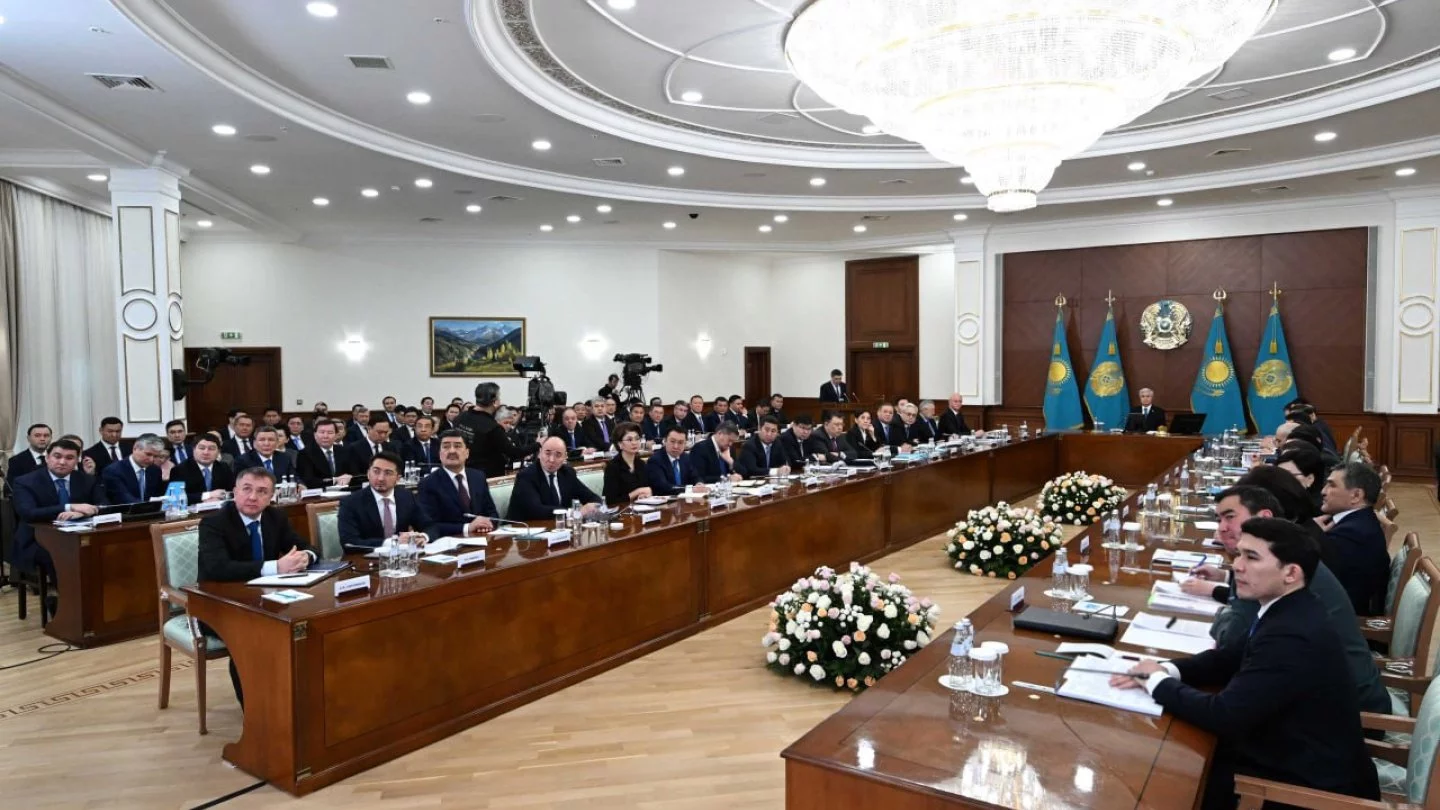 Photo: gov.kz
Kazakhstan's Government held an expanded meeting with Qasym-Jomart Toqayev on January 28.
Orda has put together highlights from the meeting.
Nuclear Power
Prime Minister Olzhas Bektenov announced Kazakhstan is determining the location for its second nuclear power plant. President Toqayev recently discussed building two additional nuclear power plants in an interview with Ana Tili.
In the near future, we will conclude the necessary agreements for the construction of the first nuclear power plant in the Almaty region. Analysis of regions to determine possible construction sites for the second nuclear power plant is also being completed, said Bektenov.
The Ministry of Energy discussed potential contractor companies for the project on January 21.
Later in the meeting, President Toqayev declared the necessity of building a second nuclear power plant in Kazakhstan:
We truly need a second nuclear power plant, the country needs nuclear energy. Without this, Kazakhstan cannot develop. This will stimulate economic development and increase the population's well being.
By 2027, the Government needs to complete the integration of the Western zone's electrical grids with the country's Unified Power System. Implementing the project to strengthen the electrical grids in the Southern zone also needs to be accelerated.
To eliminate energy deficits in southern regions, major projects in 'green' energy and combined-cycle power plants have been launched. Therefore, it is necessary to complete the first stage of construction of the second branch of the Beineu-Bozoi-Shymkent gas pipeline by 2026, added Toqayev.
Tax Reform, Shale Oil
Prime Minister Olzhas Bektenov also spoke about Kazakhstan's need to increase its Value Added Tax (VAT) rate.
Deputy Prime Minister Serik Zhumangarim added that the VAT registration threshold will be lowered, possibly from 78 million tenge to 15 million tenge.
Only 6% - 137,700 out of 2.3 million - business entities are VAT taxpayers. Of these, only 88,000 actually pay VAT. One reason is the high registration threshold for VAT. Currently, it stands at 78 million tenge,he said.
This change will make VAT a creditable tax. It is expected to add approximately 300,000 new taxpayers.
The proposal will be discussed in parliament and by experts as part of a comprehensive tax system reform package.
Prime Minister Olzhas Bektenov also announced that Kazakhstan would start producing shale oil.
He says the country expects to extract its first domestic shale oil in 2025.
This will create an incentive for investment in the oil and gas industry. Gas production will begin at the Western Proryva and Barkhannoye fields, with reserves of about 19 billion cubic meters. A large deposit containing 17 types of rare earth metals has been discovered in the Qaraganda region, Bektenov reported.
He added that they are developing a feasibility study for graphite concentrate production in the Qaraganda region.
The graphite concentrate will be used in the production of electric vehicle batteries.
Meanwhile, President Qasym-Jomart Toqayev endorsed Prime Minister Olzhas Bektenov's tax reform initiative while emphasizing the need for careful execution. As Vlast.kz reports, the President also suggested finding an alternative to discontinuing the social tax.
He stated that reducing transfers from the National Fund and strengthening its savings function remain priority tasks. Major infrastructure projects must be secured.
The reform itself must also be clearly explained to citizens.
We need to conduct good explanatory work. The reform is necessary, but it's important to discuss it comprehensively. In 2025, we're prioritizing attention to tax and budget codes. There is no room for error. I confirm that reform is needed, but I believe this aspect, particularly the social tax, needs to be well thought out, said the President.
Reforms to increase budget revenue were initially proposed in mid-January at the first meeting of the expert council under the Ministry of National Economy.
At the same time, President Tokayev announced a review of production-sharing agreements (PSAs) in the oil and gas sector, according to Vlast.kz.
He emphasized that PSAs for significant deposits have allowed "Kazakhstan to become a reliable energy supplier to the global market" and significantly contribute to the country's socio-economic development.
Meanwhile, large investments require long-term planning horizons. Therefore, the government will need to intensify negotiations regarding the extension of PSA contracts under updated conditions that are beneficial for the country, he said.
Other Matters
Kazakhstan's President highlighted the need to reform the Samruk Kazyna sovereign wealth fund.
The most important task for Samruk-Kazyna is the reform of the fund. It's difficult to say that work in this direction has been successful. Of course, there are some results, but much work remains to be done. We will specifically discuss the fund's activities in February, said Toqayev.
Prime Minister Bektenov later commented on the rising fuel prices.
According to him, the phased liberalization of fuel, gas, utilities, and rail transportation prices will impact consumers.
A gradual transition to market pricing will help attract necessary investments in these sectors and eliminate risks of fuel shortages. I want to emphasize that we will not allow any sharp price spikes, said the Prime Minister.
The President noted that lengthy approval procedures and decision-making processes are linked to civil servants' unwillingness and fear of taking responsibility.
Interdepartmental coordination still takes up too much time in the process of developing investment projects. The government must work more efficiently and get rid of excessive bureaucracy. Long procedures for approvals and decision-making are connected to civil servants' unwillingness and fear to take responsibility. We need to speak directly about this. What is the issue, perhaps the anti-corruption agency has suppressed, weighed down, and intimidated everyone. Let's sort out this issue as well. But decisions need to be made. Especially since I've spoken about delegating broad powers to the government. The Presidential Administration now has no right to interfere in the government's operational activities. Make decisions, said Toqayev.
He added that the Government now needs to "tighten its belts" and spend money only on essential matters.
The President also spoke about the National Bank:
The National Bank operates according to its mandate. This is understandable. Work continues in the current mode, but questions certainly remain. First of all, people are concerned about the volatility of the national currency. Experts expect pressure on the tenge exchange rate due to the strengthening of the US dollar and currency stability issues. Overall, taming inflation is an extremely important task that must be carried out in close cooperation with the government. The previous approach that we are independent and autonomous no longer works, as the situation is unusual. I will speak about this later.
President Toqayev also proposed stricter liability for spreading "destructive content" online.
The President addressed the increasing cases of disinformation and incitement of discord.
We are increasingly encountering cases of disinformation and media plants aimed at manipulating public opinion, discrediting authority, and inciting discord. This creates serious risks to citizens' security and stability in the country. Therefore, it is necessary to consider legislative measures to hold internet platforms accountable for spreading destructive content, stated Toqayev.
He urged citizens to be understanding of state actions.
Measures taken by the state to ensure legal order should also not serve as a reason for labeling one's own country.
Some citizens are turning our country into an object of ridicule. While many foreigners admire our achievements and successes, telling the world about them, some of our compatriots, including representatives of show business, young people calling themselves 'public activists,' even deputies, tarnish Kazakhstan's reputation. This is completely incomprehensible, added the President.
He also noted that the rapid digitalization is leading to increased cybercrime. Fighting criminals should not come at the expense of digital development, Toqayev said.
Therefore, the government, together with law enforcement agencies and financial regulators, must ensure maximum protection of citizens' personal data, added Toqayev.
Original Post, Original Article from the last section.
The linked post is the first of subsequent posts in the Telegram Channel.
Latest news
- Nazarbayev-Linked Villa in Spain Agrees to Fund New Coastal Path
- Why Kazakhstan Is Restricting Foreign Goods in Public Procurement
- Kazakhstan Has the Lowest Level of Dependence on China in Central Asia
- Noise, Construction and Cameras: What Astana Residents Are Saying About the LRT Tests
- Marshrutka vs. Shuttle: Why Kazakhstan Is Reinventing the Main Public Transport of the 1990s
- Several Border Checkpoints With China to Close for One Day
- Laser Guidance Systems Begin Testing on Kazakhstan’s Highways
- Kazakhstan Plans Mandatory Labeling for Dietary Supplements and Jewelry
- Chinese Influencer Tao Mingxiu Receives Presidential Award in Kazakhstan
- Kazakhstan Ranks Sixth In the World By Agricultural Land Area
- Uzbekistan Breaks Regional Record In Public Debt Market
- “They Are Not Cattle, You Don’t Vaccinate Them”: Why Zoologists Cannot Save Caspian Seals
- Did The Digital Economy Stumble Over PPP? How The Minister Reacted to the IT Industry’s Problems
- Private Investors to Help Build Juvenile Correctional Facilities in Kazakhstan
- “Like Rotten Eggs”: Residents of Atyrau Again Complain About the Stench in the City
- Digital Passport and Admission Benefits: Kazakhstan Wants to Change Volunteering
- Infected Sunflower Seeds From the U.S. Barred From Entering Kazakhstan
- Almaty Drivers Offered Free Emissions Checks Without Penalties
- Croatia Will Finance Oil Exploration In Aktobe Region
- Half of Kazakhstanis Earn Less Than $1,000 a Month
