

Putin and Tokayev Consolidate New Format of Relations, Political Analyst Says
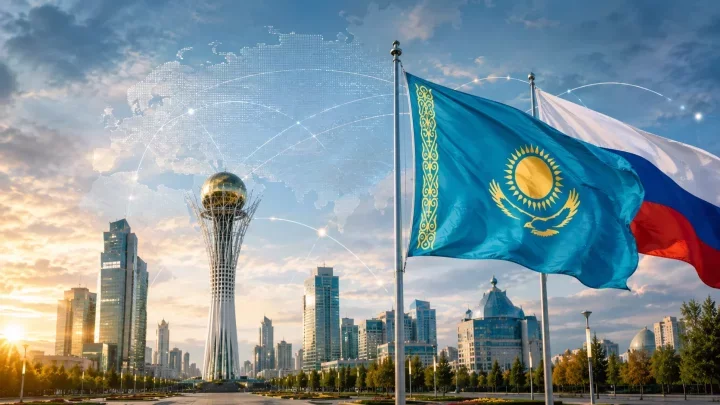 AI-generated illustration
Russian President Vladimir Putin’s state visit to Kazakhstan confirmed the transition of relations between Astana and Moscow to a model of pragmatic partnership and sovereign equality, political analyst Eduard Poletaev said, Orda.kz reports.
According to Poletaev, the visit showed a high level of trust between the two countries and strengthened the personal dialogue between Kassym-Jomart Tokayev and Vladimir Putin. He said the diplomatic protocol during the Russian leader’s reception demonstrated a departure from the old model of a “senior and junior partner.”
The public signals from the Russian side confirmed that Kazakhstan sees Russia as a strong, predictable, and equal negotiator capable of firmly defending its positions,Poletaev wrote.
He also drew attention to Putin’s article in Kazakhstanskaya Pravda. In his view, Moscow effectively recognized Kazakhstan’s new political reality, supported the updated Constitution, and backed Tokayev’s modernization course.
Poletaev also linked the growth of economic cooperation to a shift toward deeper industrial cooperation. He recalled that trade turnover between the two countries had reached $27.4 billion, while joint projects covered mechanical engineering, metallurgy, and petrochemicals.
Kazakhstan has pragmatically converted its neighbor’s economic interest into technology transfer, production localization, and the creation of industrial jobs,Poletaev said.
The political analyst separately focused on energy projects. He said the two sides had moved the gas and oil agenda into the realm of economic pragmatism. This concerned the work of the CPC, the Atyrau–Samara route, gas processing at the Orenburg gas processing plant, and the Ishim–Astana highway project.
Poletaev also said cooperation in the nuclear industry and space sector had brought relations between the two countries to a new technological level.
Kazakhstan has de facto acquired the status of a full-fledged participant in space activities, with its own personnel and technologies,he said.
The political analyst said stable relations with Russia had strengthened Kazakhstan’s position in Eurasia and expanded Astana’s diplomatic capabilities within the EAEU, CSTO, and SCO.
Original author: Daria Malkova
Read also:
Latest news
- Orda.kz Editorial Team to Cease Operations on September 1
- The Price of a Degree: How Students in Kazakhstan Pay for University
- Second Przewalski’s Horse Foal Born as Species Returns to Kazakhstan
- Kazakh Mining Companies Can Recalculate Purchases if Tenge Weakens
- Kazakhstan Names First Vice President in Three Decades
- What Almaty’s Bus Shelters Are Missing
- 400-Truck Queue Builds at Kazakh–Kyrgyz Border
- Kazakhstan Ready to Help Feed and Rebuild Gaza
- Tokayev Establishes New Presidential Security Body
- Almaty Takes Back Its Nearly Century-Old Hippodrome
- No More Guesswork on Savings: Kazakhstan Tightens Energy Audits for Businesses
- Public Money Could Be Used to Rescue Failing Kazakh Banks
- Third Kazakh Woman Reported Missing in Nepal-China Flood Zone
- Falconer Convicted Over 35 Protected Birds, Spared Punishment Under Amnesty
- Kazakh Citizen Detained in Yakutia in Phone Fraud Case
- Yuan Instead of Dollars? KazMunayGas Draws Record Demand in Asia
- China Gains Oil-Market Influence as OPEC+ Weakens
- Kazakhstan to Divide Smartphones Into White, Gray and Black Lists
- Kazakhstan’s Government Formally Resigns as First Kurultai Session Opens
- Rare Lynx Sighting Recorded in Northern Kazakhstan
