

Officials Punished Over Illegal Rice Planting and Water Use in Southern Kazakhstan
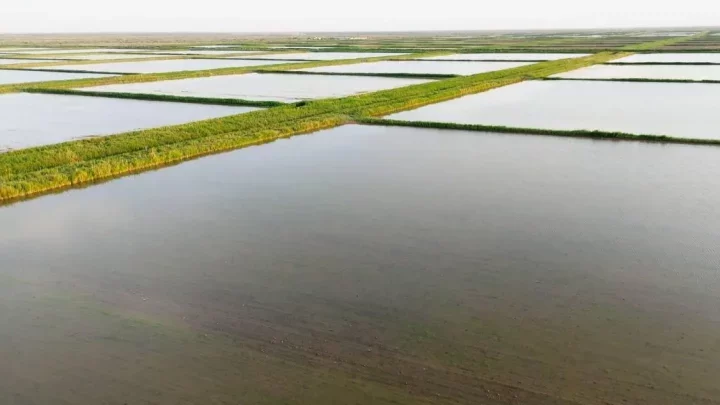 Photo: RK MoWRI
In the Turkistan and Qyzylorda regions, rice was planted on land areas four times larger than permitted, and irrigation water was used illegally, Orda.kz reports.
The Ministry of Water Resources sanctioned the heads of regional branches of Kazvodkhoz for negligence and undermining water security in the country’s south.
According to the Ministry, officials and specialists tasked with enforcing water limits instead signed numerous contracts with farmers to irrigate water-intensive crops, ignoring drought risks and water shortages.
The situation in Turkistan Region is especially concerning. There, the rice planting plan was exceeded by 4.7 times — instead of the permitted 2,800 hectares, over 13,000 hectares were sown. Local branches of Kazvodkhoz not only failed to prevent the expansion of illegal planting but actively signed irrigation contracts for the fields.
Jetysay production unit signed 77 contracts for irrigating 1,528 hectares, Shardara unit signed 499 contracts for 6,453 hectares, and Maktaaral unit signed 471 contracts for 5,277 hectares of rice fields,
the Ministry calculated.
Violations in Qyzylorda Region were no less extensive. According to inspections, 126 farms irrigated nearly 5,000 hectares of rice without any contracts.
By the time of the audit, they had illegally consumed 52 million cubic meters of water. An additional 180 million cubic meters would be needed to complete the irrigation season, potentially exceeding water limits by 220 million cubic meters.
Illegal water intake and insufficient oversight by Kazvodkhoz branch leadership regarding the reduction of water-intensive crop planting places a heavy burden on water resources. This worsens the situation for law-abiding users who receive water legally and under contract,
the Ministry explained.
The Ministry issued strict reprimands to the directors of Kazvodkhoz’s Qyzylorda and Turkistan branches, as well as to the heads of three district divisions.
Total agricultural water withdrawal across five southern regions has already reached seven billion cubic meters — and the irrigation season is only halfway through.
The situation is especially acute due to an unusually early start to the irrigation season, which began 20 days ahead of schedule this year due to heat and lack of rainfall. Regional authorities have begun implementing a rotational irrigation system in an effort to maintain balance and ensure farmers are not left without water.
Original Author: Alina Pak
Latest news
- Orda.kz Editorial Team to Cease Operations on September 1
- The Price of a Degree: How Students in Kazakhstan Pay for University
- Second Przewalski’s Horse Foal Born as Species Returns to Kazakhstan
- Kazakh Mining Companies Can Recalculate Purchases if Tenge Weakens
- Kazakhstan Names First Vice President in Three Decades
- What Almaty’s Bus Shelters Are Missing
- 400-Truck Queue Builds at Kazakh–Kyrgyz Border
- Kazakhstan Ready to Help Feed and Rebuild Gaza
- Tokayev Establishes New Presidential Security Body
- Almaty Takes Back Its Nearly Century-Old Hippodrome
- No More Guesswork on Savings: Kazakhstan Tightens Energy Audits for Businesses
- Public Money Could Be Used to Rescue Failing Kazakh Banks
- Third Kazakh Woman Reported Missing in Nepal-China Flood Zone
- Falconer Convicted Over 35 Protected Birds, Spared Punishment Under Amnesty
- Kazakh Citizen Detained in Yakutia in Phone Fraud Case
- Yuan Instead of Dollars? KazMunayGas Draws Record Demand in Asia
- China Gains Oil-Market Influence as OPEC+ Weakens
- Kazakhstan to Divide Smartphones Into White, Gray and Black Lists
- Kazakhstan’s Government Formally Resigns as First Kurultai Session Opens
- Rare Lynx Sighting Recorded in Northern Kazakhstan
