

Kazakhstan Plans Radioactive Waste Center, But Still Has No Site
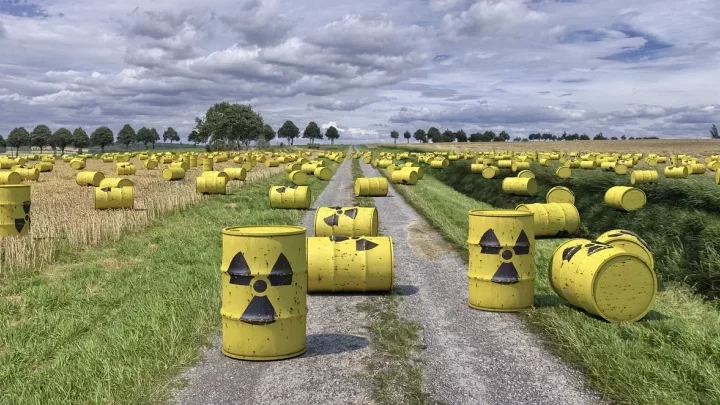 Illustration: pixabay
Kazakhstan wants to build a radioactive waste disposal facility with a processing and long-term storage center, but a specific site — or even a region — has not yet been chosen, Orda.kz reports.
The country is preparing a new radioactive waste management system. At the center of this system should be a special radioactive waste disposal facility with a processing and long-term storage center.
The Atomic Energy Agency said such a facility is needed to reduce the volume of accumulated waste, lower its impact on the environment, and improve nuclear and environmental safety.
Earlier, the agency had already named a possible location. Last November, Deputy Chairman of the Atomic Energy Agency Gumar Sergazin said a disposal facility could be created in the Semipalatinsk nuclear safety zone — territory that had already been contaminated by nuclear testing.
In its latest response, however, the agency no longer mentions the Semipalatinsk zone. The agency clarified that a specific site for the permanent disposal facility has not yet been officially chosen. Moreover, even the regions where such a facility could appear have not yet been determined.
The site will be selected after comprehensive research. Specialists must assess geology, ecology, infrastructure, and international safety requirements. After that, the national operator will prepare proposals for the authorized body.
The cost of the project is also unknown. It will be announced after design and estimate documentation is developed. The authorities will determine funding sources later.
Earlier, Orda.kz reported on the scale of the problem. According to the agency, about 293.24 million tons of radioactive waste have accumulated in Kazakhstan. Most of it — about 237 million tons — is located at the former Semipalatinsk nuclear test site and other sites. Waste is also linked to the operation of nuclear facilities, uranium mining, uranium processing, and mining enterprises.
Original author: Alexander Zhdanov
Read also:
- Government Decides Fate of Hundreds of Thousands of Hectares of Former Semipalatinsk Test Site
- Kazakhstan Moves To Ban Imports Of Radioactive Waste
- How Much Water Will Kazakhstan’s First Nuclear Power Plant Need For Cooling?
Latest news
- Orda.kz Editorial Team to Cease Operations on September 1
- The Price of a Degree: How Students in Kazakhstan Pay for University
- Second Przewalski’s Horse Foal Born as Species Returns to Kazakhstan
- Kazakh Mining Companies Can Recalculate Purchases if Tenge Weakens
- Kazakhstan Names First Vice President in Three Decades
- What Almaty’s Bus Shelters Are Missing
- 400-Truck Queue Builds at Kazakh–Kyrgyz Border
- Kazakhstan Ready to Help Feed and Rebuild Gaza
- Tokayev Establishes New Presidential Security Body
- Almaty Takes Back Its Nearly Century-Old Hippodrome
- No More Guesswork on Savings: Kazakhstan Tightens Energy Audits for Businesses
- Public Money Could Be Used to Rescue Failing Kazakh Banks
- Third Kazakh Woman Reported Missing in Nepal-China Flood Zone
- Falconer Convicted Over 35 Protected Birds, Spared Punishment Under Amnesty
- Kazakh Citizen Detained in Yakutia in Phone Fraud Case
- Yuan Instead of Dollars? KazMunayGas Draws Record Demand in Asia
- China Gains Oil-Market Influence as OPEC+ Weakens
- Kazakhstan to Divide Smartphones Into White, Gray and Black Lists
- Kazakhstan’s Government Formally Resigns as First Kurultai Session Opens
- Rare Lynx Sighting Recorded in Northern Kazakhstan
