

Government Rejects Higher Markups For Rural Food Stores
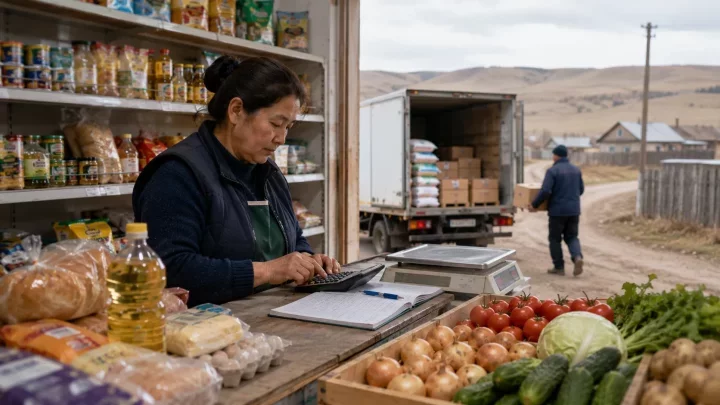 AI-generated illustration
Kazakhstan’s government has rejected a proposal to allow rural stores to charge higher markups on socially significant food products. Instead, the authorities are preparing amendments that would let stores account for confirmed transportation, delivery, and spoilage costs, Orda.kz reports.
Earlier, Mazhilis deputies appealed to Deputy Prime Minister and Minister of National Economy Serik Zhumangarin over losses faced by rural stores. The issue arose after Kazakhstan expanded its list of socially significant food products from 19 to 31 items at the end of 2025 and set a maximum trade markup of 15%.
The new list includes tomatoes, cucumbers, meat, fish, dairy products, cheese, and tea. Deputies said these goods make up the core assortment of rural stores. At the same time, entrepreneurs often have to bring products from other cities and districts, pay for logistics, and absorb losses when goods spoil.
Against this background, deputies proposed allowing rural stores to apply a higher markup — from 20% to 25%, depending on how remote the village is. They also asked the government to consider subsidies for food delivery and speed up the development of municipal markets.
Zhumangarin said in response that Kazakhstan does not plan to introduce a separate fixed markup for rural stores.
The current basic requirement remains in place, under which the trade markup must not exceed 15% of the seller’s sale price or the wholesale supplier’s purchase price,the deputy prime minister said.
At the same time, he acknowledged the problem of delivery costs and said other amendments are being prepared. If adopted, stores will be able to factor in real costs for transportation, imports, storage, and natural product losses.
Amendments are being developed that would allow businesses to take into account actual and documented costs related to transportation, import, and delivery of goods,Zhumangarin said.
In other words, the state wants to keep control over prices while allowing rural stores to officially include part of their logistics costs in the cost of goods. This is especially relevant for remote settlements where food is delivered from hundreds of kilometers away.
Zhumangarin added that the ministry is working with Kazakhstan Temir Zholy on preferential tariffs for transporting socially significant products. The government is also continuing to develop trade and logistics infrastructure and build wholesale distribution centers to reduce the number of intermediaries and lower delivery costs.
Original author: Daria Malkova
Read also:
Latest news
- Orda.kz Editorial Team to Cease Operations on September 1
- The Price of a Degree: How Students in Kazakhstan Pay for University
- Second Przewalski’s Horse Foal Born as Species Returns to Kazakhstan
- Kazakh Mining Companies Can Recalculate Purchases if Tenge Weakens
- Kazakhstan Names First Vice President in Three Decades
- What Almaty’s Bus Shelters Are Missing
- 400-Truck Queue Builds at Kazakh–Kyrgyz Border
- Kazakhstan Ready to Help Feed and Rebuild Gaza
- Tokayev Establishes New Presidential Security Body
- Almaty Takes Back Its Nearly Century-Old Hippodrome
- No More Guesswork on Savings: Kazakhstan Tightens Energy Audits for Businesses
- Public Money Could Be Used to Rescue Failing Kazakh Banks
- Third Kazakh Woman Reported Missing in Nepal-China Flood Zone
- Falconer Convicted Over 35 Protected Birds, Spared Punishment Under Amnesty
- Kazakh Citizen Detained in Yakutia in Phone Fraud Case
- Yuan Instead of Dollars? KazMunayGas Draws Record Demand in Asia
- China Gains Oil-Market Influence as OPEC+ Weakens
- Kazakhstan to Divide Smartphones Into White, Gray and Black Lists
- Kazakhstan’s Government Formally Resigns as First Kurultai Session Opens
- Rare Lynx Sighting Recorded in Northern Kazakhstan
