

Caterpillar Invasion Putting Qaraganda's Green Spaces at Risk, Biologists Urge Urgent Action
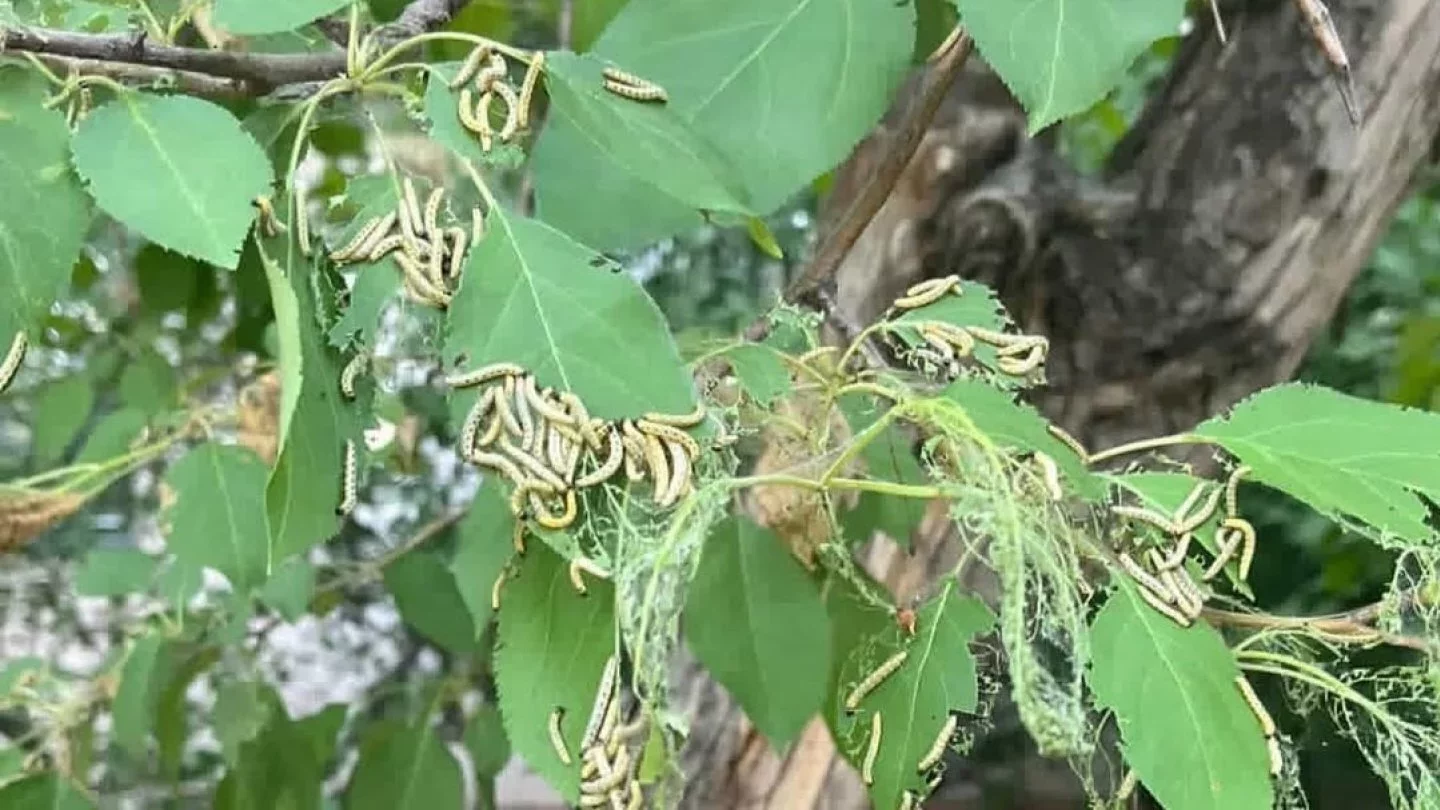 Photo by an eyewitness
Qaraganda is under siege by hordes of caterpillars devouring trees and greenery across the city, and biologists are sounding the alarm. If immediate action isn’t taken, experts warn that a third of the city’s trees could be lost within a year, Orda.kz reports.
According to local environmental activists, the damage is already visible: foliage on more than 400 trees in the central park has been stripped bare, and entire alleys of elms near the central mosque are left bald. The pests have now spread to maples, poplars, and even pine trees.
Biologist Denis Sirman explains that the culprits are actually butterflies in their larval stage. Three main species are currently "at work" in Qaraganda: the apple moth, the mottled umber, and the winter moth, with more possibly on the way.
This pest outbreak is a direct consequence of climate change, which we’re already beginning to feel. The winter of 2024–2025 was unusually mild, with average temperatures 2.5 degrees Celsius above normal. In the past, such low winter temperatures acted as a natural barrier to these pests, but that barrier no longer exists, leading to mass reproduction. On top of that, spring came early, the snow melted quickly, and by May, temperatures had already hit 37°C. All of this created the perfect conditions for caterpillars to reproduce rapidly.Sirman says.
The city is currently experiencing the first wave of reproduction, which will last about three weeks. During this time, caterpillars feed aggressively on young foliage. While trees can regenerate leaves by mid-summer, a second wave of reproduction is expected.
If the second wave of pests destroys the regrown foliage, the trees won’t be able to prepare for winter and will die due to a lack of nutrients. Right now, our top priority is to begin sanitary treatment. If we’ve already missed the current reproduction window, the next wave could affect up to 30% of all green spaces in the city,the biologist warns.

Each adult butterfly can lay up to 200 eggs, making the population explosion difficult to contain. The Qaraganda Parks Department says it has already launched efforts to combat the infestation.
We’ve identified outbreaks near the central mosque, Central Park, Victory Park, and in several squares in Maikuduk. Specialists advised us to begin chemical treatment, and we’ve already started the first phase. To ensure the safety of park visitors, we’re doing the spraying early in the morning. We initially used the pesticide Aktara from our existing stock. Now, we’re purchasing more powerful products, and we expect treatment efforts to continue across all city parks and squares for about another month, said Talgat Baitokhin, director of the Qaraganda Parks Department.
This isn’t the first time Qaraganda has faced an insect invasion — last year, residents also complained about midges, mosquitoes, and caterpillars overrunning green spaces.
Original Author: Inna Rutz
Videos: Orda.kz
Latest news
- Moscow Court Fines Kazakh Rapper for “Offensive” Music
- Saudi Arabia Gives Kazakhstan 34 Balaban Falcons Worth Half a Billion Tenge
- Tick Season Alert: Almaty Starts Disinfecting 2,300+ Hectares
- How Much Was Kazzinc Fined for Air Pollution in Oskemen
- Astana Residents Fight Home Demolition Over “State Needs”
- Pension Returns in Kazakhstan Nearly Match Inflation
- Kazakhstan Bets on a Falling Company: KASE Signs Three‑Year Agreement With BitGo
- New Legal Culture Lesson Introduced in Kazakh Schools and Colleges Amid Bullying Prevention Efforts
- Dozens of Officials Caught Betting With Bookmakers in Ulytau Region
- What Scheme Could Allow Kazakhstan to Supply Oil to Japan, Expert Explains
- What Will Happen to Gasoline Prices in Kazakhstan? Expert Outlines Three Scenarios
- More Than a Ton of Medicines Smuggled to Almaty Under Guise of Cosmetics
- Kazakhstani Man Suspected of Creating Multi‑Billion Tenge Pyramid Extradited from Georgia
- How Many Drugs Have Been Found in Kazakhstan Since Beginning of 2026, KNB Says
- “Civilized Divorce”: Why Kazakhstan Still Needs the CIS
- Fruit And Vegetable Exports Through Khorgos Rise To 137,000 Tons
- 80 People Defrauded of 40 Million Tenge in Fake UK Job Scheme
- From Taiga to Steppe: Red Book Amur Tigers to Be Resettled in Kazakhstan
- In Zhetysu, Authorities Begin Removing Fences That Blocked Animal Migration
- In Almaty, Over 400 Companies Received Fictitious Licenses for Construction Work
