

Who Will Be Able To Create New Regions In Kazakhstan? Parliament Defines Powers
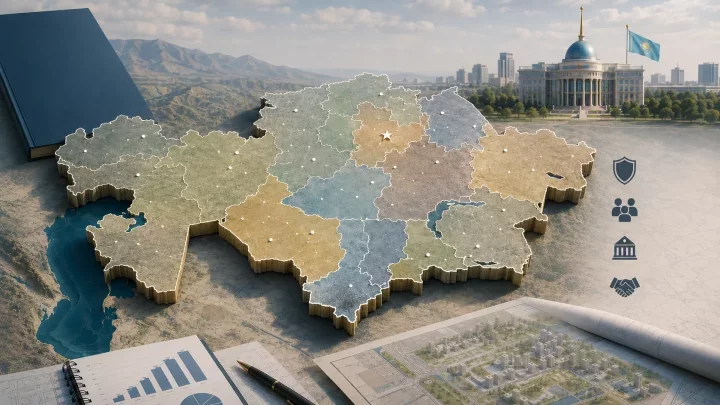 AI-generated illustration
Kazakhstan’s parliament has adopted in the first reading a draft constitutional law on the country’s administrative-territorial structure. The document was developed in line with the new Constitution, Orda.kz reports.
The bill defines Kazakhstan’s administrative-territorial units, how they can be created, transformed, or abolished, and what powers state bodies would receive.
The document sets out the categories of settlements. These include cities at all levels, as well as villages and settlements regardless of their administrative subordination.
The bill also separates powers between the president, the government, and local authorities.
The president would be able to form and abolish regions and districts, as well as classify settlements as cities of republican, regional, or district significance.
The government would submit proposals to the president on these issues. It would also be able to establish and change the borders of the capital, regions, and cities of republican significance.
Local representative and executive bodies would receive powers over the status of settlements and villages, their administrative subordination, and the approval or change of their borders.
The bill also sets requirements for the status of cities, villages, and settlements. Lawmakers say this should prevent unjustified changes to the status of settlements. Such decisions are expected to take socio-economic indicators and residents’ opinions into account.
Separately, the document sets out the procedure for assigning and changing the names of administrative-territorial units. The borders of settlements would be established or changed based on master plans or development schemes.
Original author: Ilya Astakhov
Read also:
Latest news
- Orda.kz Editorial Team to Cease Operations on September 1
- The Price of a Degree: How Students in Kazakhstan Pay for University
- Second Przewalski’s Horse Foal Born as Species Returns to Kazakhstan
- Kazakh Mining Companies Can Recalculate Purchases if Tenge Weakens
- Kazakhstan Names First Vice President in Three Decades
- What Almaty’s Bus Shelters Are Missing
- 400-Truck Queue Builds at Kazakh–Kyrgyz Border
- Kazakhstan Ready to Help Feed and Rebuild Gaza
- Tokayev Establishes New Presidential Security Body
- Almaty Takes Back Its Nearly Century-Old Hippodrome
- No More Guesswork on Savings: Kazakhstan Tightens Energy Audits for Businesses
- Public Money Could Be Used to Rescue Failing Kazakh Banks
- Third Kazakh Woman Reported Missing in Nepal-China Flood Zone
- Falconer Convicted Over 35 Protected Birds, Spared Punishment Under Amnesty
- Kazakh Citizen Detained in Yakutia in Phone Fraud Case
- Yuan Instead of Dollars? KazMunayGas Draws Record Demand in Asia
- China Gains Oil-Market Influence as OPEC+ Weakens
- Kazakhstan to Divide Smartphones Into White, Gray and Black Lists
- Kazakhstan’s Government Formally Resigns as First Kurultai Session Opens
- Rare Lynx Sighting Recorded in Northern Kazakhstan
