

149th Place And Five Detained Journalists: What Is Happening To Press Freedom In Kazakhstan
 AI-generated illustration
Press freedom around the world continues to deteriorate. According to the new Reporters Without Borders index, journalism has reached its lowest point in 25 years. Kazakhstan ranked 149th out of 180 countries in the 2026 index, falling eight places in one year. China ranked 178th, with only North Korea and Eritrea below it, Orda.kz reports.
In Kazakhstan, the situation has worsened across almost all key indicators. In China, press freedom remains among the most restricted in the world. Against this background, human rights groups are recording a growing number of detained and imprisoned writers, journalists, and media workers — not only in authoritarian states, but also in countries where authorities increasingly use courts, legislation, and law enforcement agencies against critics.
Kazakhstan Falls Eight Places In One Year
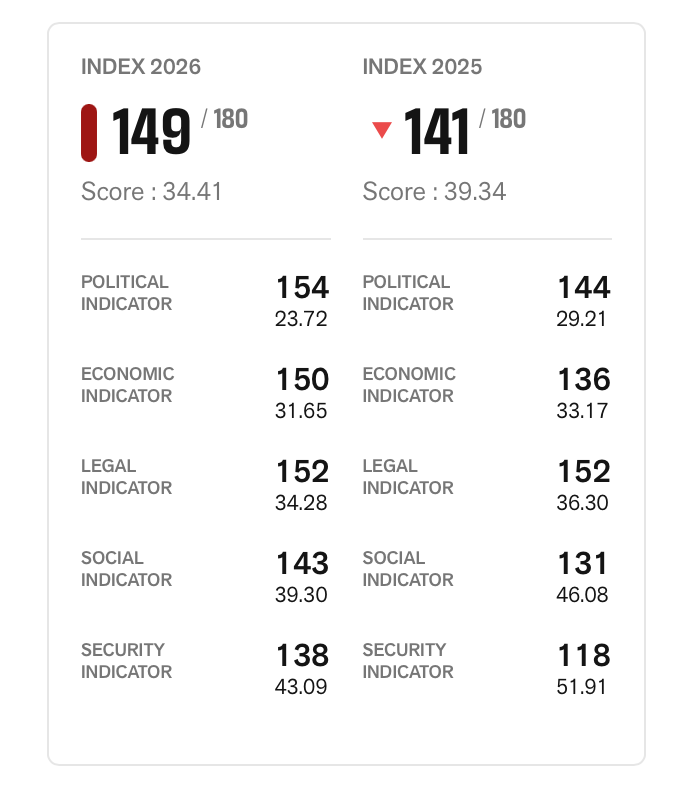
In the RSF index, Kazakhstan ranked 149th out of 180 countries. In 2025, the country was 141st. Its total score fell from 39.34 to 34.41. Under RSF’s methodology, a lower score and lower ranking indicate worse conditions for journalists.
 RSF screenshot
For comparison, Kazakhstan performed better in 2025 on political, economic, social, and especially safety indicators. The sharpest decline was in safety, where Kazakhstan fell from 118th place in 2025 to 138th in 2026. This means RSF now assesses risks for journalists in the country as higher.
The RSF country page for Kazakhstan also says that since the beginning of 2026, no journalists or media workers have been killed in the country. However, five journalists are listed as detained.
What The Index Measures
RSF does not only assess whether a website can operate or a newspaper can be published in a country. The index also looks at whether journalists are protected by law, whether they can work without pressure, whether newsrooms have economic independence, whether authorities interfere with access to information, and whether criminal cases, blocking, and administrative pressure are used against the media.
Earlier, journalists appealed to Kazakhstan’s president, Kassym-Jomart Tokayev, asking him to drop charges against journalists and reconsider restrictive provisions in media legislation. The appeal mentioned detentions of journalists, pressure on independent media, blocking, and the risk of self-censorship.
China Near The Bottom Of The Ranking
China ranked 178th out of 180 countries in the RSF index. Only North Korea and Eritrea ranked lower. RSF describes China as a country where press freedom is effectively trapped by a dictatorial regime and systematic control over information.
According to RSF, China remains one of the world’s most closed and dangerous countries for journalists. The state controls the information space, independent journalism faces constant pressure, and critical voices risk not only being blocked, but also receiving prison sentences.
The situation is also alarming for writers and authors. According to PEN America, the number of imprisoned writers worldwide exceeded 400 in 2025 for the first time since the organization launched its index in 2019. The Independent reported that China remains the world’s leading jailer of writers, while the total number of imprisoned authors rose to 401 people across 44 countries.
The Independent also cited PEN America’s assessment that the number of jailed writers worldwide has increased by 69 % over seven years.
Journalists Are Being Killed And Detained Worldwide
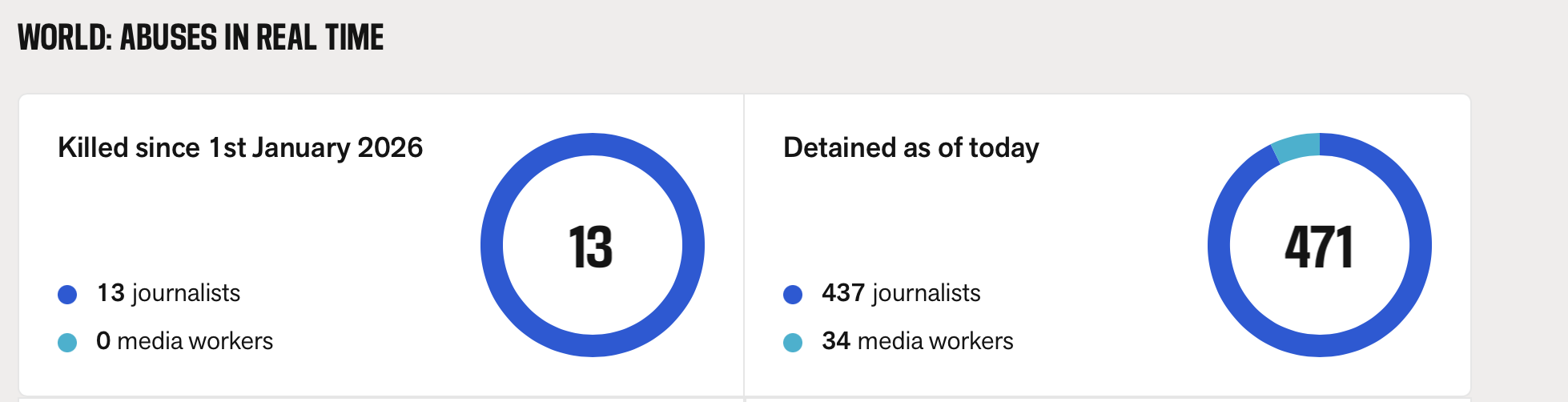
According to RSF, 13 journalists have been killed worldwide since January 1, 2026. At the time of publication, 471 journalists and media workers were listed as detained, including 437 journalists and 34 media workers. The organization updates these figures in real time.
Earlier, Orda.kz wrote that Article 274 of Kazakhstan’s Criminal Code, “Dissemination of Knowingly False Information,” has become a convenient tool for putting pressure on the media and targeting journalists, bloggers, and civil activists — not only by the state, but also by businesses.
Participants at a press conference in Almaty dedicated to the wave of pressure on bloggers and journalists said the article is vague and underdeveloped, should be revised, and pressure on the media sector should be reduced.
Original author: Elvira Ivannikova
Read also:
- Kazakhstani Journalists Returning From Ukraine Detained at Astana Airport
- Culture Minister Aida Balayeva Comments on Situation Surrounding Orda and KazTag
- Press Freedom Groups Condemn Searches, Charges Against Orda.kz Editor
Latest news
- Orda.kz Editorial Team to Cease Operations on September 1
- The Price of a Degree: How Students in Kazakhstan Pay for University
- Second Przewalski’s Horse Foal Born as Species Returns to Kazakhstan
- Kazakh Mining Companies Can Recalculate Purchases if Tenge Weakens
- Kazakhstan Names First Vice President in Three Decades
- What Almaty’s Bus Shelters Are Missing
- 400-Truck Queue Builds at Kazakh–Kyrgyz Border
- Kazakhstan Ready to Help Feed and Rebuild Gaza
- Tokayev Establishes New Presidential Security Body
- Almaty Takes Back Its Nearly Century-Old Hippodrome
- No More Guesswork on Savings: Kazakhstan Tightens Energy Audits for Businesses
- Public Money Could Be Used to Rescue Failing Kazakh Banks
- Third Kazakh Woman Reported Missing in Nepal-China Flood Zone
- Falconer Convicted Over 35 Protected Birds, Spared Punishment Under Amnesty
- Kazakh Citizen Detained in Yakutia in Phone Fraud Case
- Yuan Instead of Dollars? KazMunayGas Draws Record Demand in Asia
- China Gains Oil-Market Influence as OPEC+ Weakens
- Kazakhstan to Divide Smartphones Into White, Gray and Black Lists
- Kazakhstan’s Government Formally Resigns as First Kurultai Session Opens
- Rare Lynx Sighting Recorded in Northern Kazakhstan
