

Kazakhstan Wants More Copper and Aluminum Processed Inside the Country
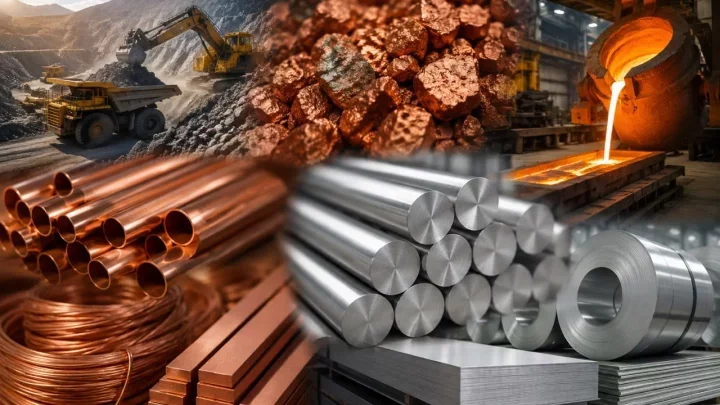 AI-generated illustration
Kazakhstan’s government has outlined plans to develop new metallurgical clusters and deepen the processing of raw materials. In 2026, an additional 329 billion tenge was allocated through Baiterek structures to support the manufacturing industry, Orda.kz reports.
The plans were set out in the government’s response to a parliamentary inquiry on deep processing of metallurgical raw materials.
The response shows that the government wants to export fewer raw materials and process more metal inside the country. To do this, the state is providing businesses with financial support, leasing, industrial grants and co-financing for projects.
Since 2022, 118 manufacturing projects worth 539 billion tenge have received support through Baiterek structures. Including mixed financing, the total volume reached about 748.8 billion tenge. In 2026, an additional 329 billion tenge was allocated for these purposes.
Separately, the government is working on the issue of raw materials for Kazakh plants. For this, agreements are being concluded between raw material producers and processors, while exports of raw materials are licensed with domestic market needs taken into account.
Applications from about 30 enterprises for copper, aluminum, zinc and lead have already been considered. Among them are KazKat Plant LLP, Alageum Cable Product LLP, Aluminum Kazakhstan LLP, Alutech LLP and others.
Demand from processors is growing. Copper demand rose from 13,000 tons in 2024 to 20,400 tons in 2026. Growth in aluminum is even more noticeable, from 54,100 tons to 77,700 tons. Zinc demand increased from 725 tons to 2,700-3,000 tons.
The most notable part of the government’s response concerns new industrial clusters. By analogy with Qarmet, the authorities want to create a metallurgical cluster involving Mineral Product International LLP. The first step would be a ferroalloy plant in the Ekibastuz industrial zone.
The project is expected to rely on Kazakh raw materials and the region’s relatively cheap energy. In the future, it is linked to the production of steel products, meaning not only mining and primary processing.
An aluminum cluster is planned in the Kostanay and Pavlodar regions with the participation of Kazakhstan Westerfield Mining, Kazakhstan Jingyum Aluminium Industries Limited and Kazakhstan Jinjiang Co. The government expects these projects to increase alumina and primary aluminum production, create jobs, expand exports and keep more processing inside the country.
Original author: Alexander Zhdanov
Read also:
Latest news
- Orda.kz Editorial Team to Cease Operations on September 1
- The Price of a Degree: How Students in Kazakhstan Pay for University
- Second Przewalski’s Horse Foal Born as Species Returns to Kazakhstan
- Kazakh Mining Companies Can Recalculate Purchases if Tenge Weakens
- Kazakhstan Names First Vice President in Three Decades
- What Almaty’s Bus Shelters Are Missing
- 400-Truck Queue Builds at Kazakh–Kyrgyz Border
- Kazakhstan Ready to Help Feed and Rebuild Gaza
- Tokayev Establishes New Presidential Security Body
- Almaty Takes Back Its Nearly Century-Old Hippodrome
- No More Guesswork on Savings: Kazakhstan Tightens Energy Audits for Businesses
- Public Money Could Be Used to Rescue Failing Kazakh Banks
- Third Kazakh Woman Reported Missing in Nepal-China Flood Zone
- Falconer Convicted Over 35 Protected Birds, Spared Punishment Under Amnesty
- Kazakh Citizen Detained in Yakutia in Phone Fraud Case
- Yuan Instead of Dollars? KazMunayGas Draws Record Demand in Asia
- China Gains Oil-Market Influence as OPEC+ Weakens
- Kazakhstan to Divide Smartphones Into White, Gray and Black Lists
- Kazakhstan’s Government Formally Resigns as First Kurultai Session Opens
- Rare Lynx Sighting Recorded in Northern Kazakhstan
