

Putin Approves Russia's New Nuclear Doctrine
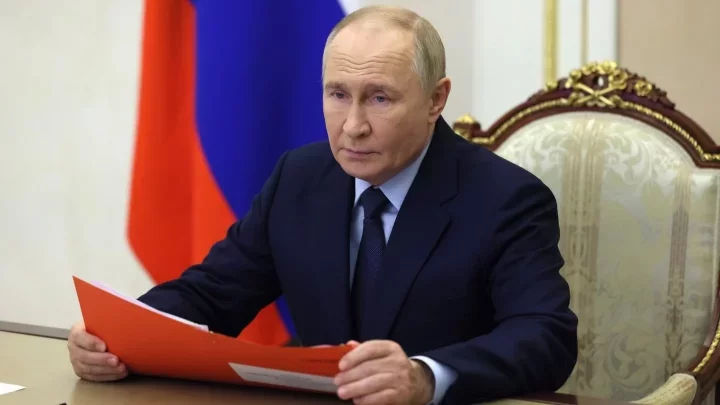 Photo: Kremlin.ru
Russian President Vladimir Putin signed a decree approving new principles of state policy in nuclear deterrence, Orda.kz reports.
The updated Russian doctrine states that the state nuclear deterrence policy “is defensive in nature,” and the Russian Federation considers the use of nuclear warheads as an “extreme and forced measure” necessary to demonstrate the “inevitability of retaliation.”
Nuclear deterrence will be used against military blocs or alliances that view Russia as an adversary.
How broadly an alliance is to be interpreted and whether, for example, the interaction between Ukraine and NATO falls under this definition is not entirely clear.
Nuclear deterrence is also carried out in relation to states that provide the territory they control <...> and resources for the preparation and implementation of aggression against the Russian Federation, the document says.
An attack on the Russian Federation by one union member or bloc member will be interpreted as aggression by all members.
If a non-nuclear state shows aggression against the Russian Federation with the support or participation of an ally that has nuclear weapons, this will also be considered a joint attack.
Aggression against Belarus will also be perceived as a provocation against Russia.
According to the document, Russia could use nuclear deterrence to neutralize threats such as the “presence and deployment” of air defense systems, medium- and shorter-range cruise and ballistic missiles, high-precision non-nuclear and hypersonic weapons, and attack drones.
Blocking access to critical communications, possible attempts to destabilize environmentally hazardous facilities, and even large-scale military exercises near Russia’s borders are also indicated as such.
The doctrine specifies that Russia reserves the right to use nuclear weapons only in response to the use of weapons of mass destruction by the enemy.
Putin signed the new nuclear doctrine of the Russian Federation a day after it became known about the decision to allow Ukraine to use long-range ATACMS missiles to strike Russian territory.
In September, the Russian President said that he considered it necessary to expand the list of threats to which Russia could respond with such deterrence.
Original Author: Nikita Drobny
Latest news
- Orda.kz Editorial Team to Cease Operations on September 1
- The Price of a Degree: How Students in Kazakhstan Pay for University
- Second Przewalski’s Horse Foal Born as Species Returns to Kazakhstan
- Kazakh Mining Companies Can Recalculate Purchases if Tenge Weakens
- Kazakhstan Names First Vice President in Three Decades
- What Almaty’s Bus Shelters Are Missing
- 400-Truck Queue Builds at Kazakh–Kyrgyz Border
- Kazakhstan Ready to Help Feed and Rebuild Gaza
- Tokayev Establishes New Presidential Security Body
- Almaty Takes Back Its Nearly Century-Old Hippodrome
- No More Guesswork on Savings: Kazakhstan Tightens Energy Audits for Businesses
- Public Money Could Be Used to Rescue Failing Kazakh Banks
- Third Kazakh Woman Reported Missing in Nepal-China Flood Zone
- Falconer Convicted Over 35 Protected Birds, Spared Punishment Under Amnesty
- Kazakh Citizen Detained in Yakutia in Phone Fraud Case
- Yuan Instead of Dollars? KazMunayGas Draws Record Demand in Asia
- China Gains Oil-Market Influence as OPEC+ Weakens
- Kazakhstan to Divide Smartphones Into White, Gray and Black Lists
- Kazakhstan’s Government Formally Resigns as First Kurultai Session Opens
- Rare Lynx Sighting Recorded in Northern Kazakhstan
