

Not Allowed to Go Home: Bloggers Accused of Extortion Face Jury Trial in Almaty
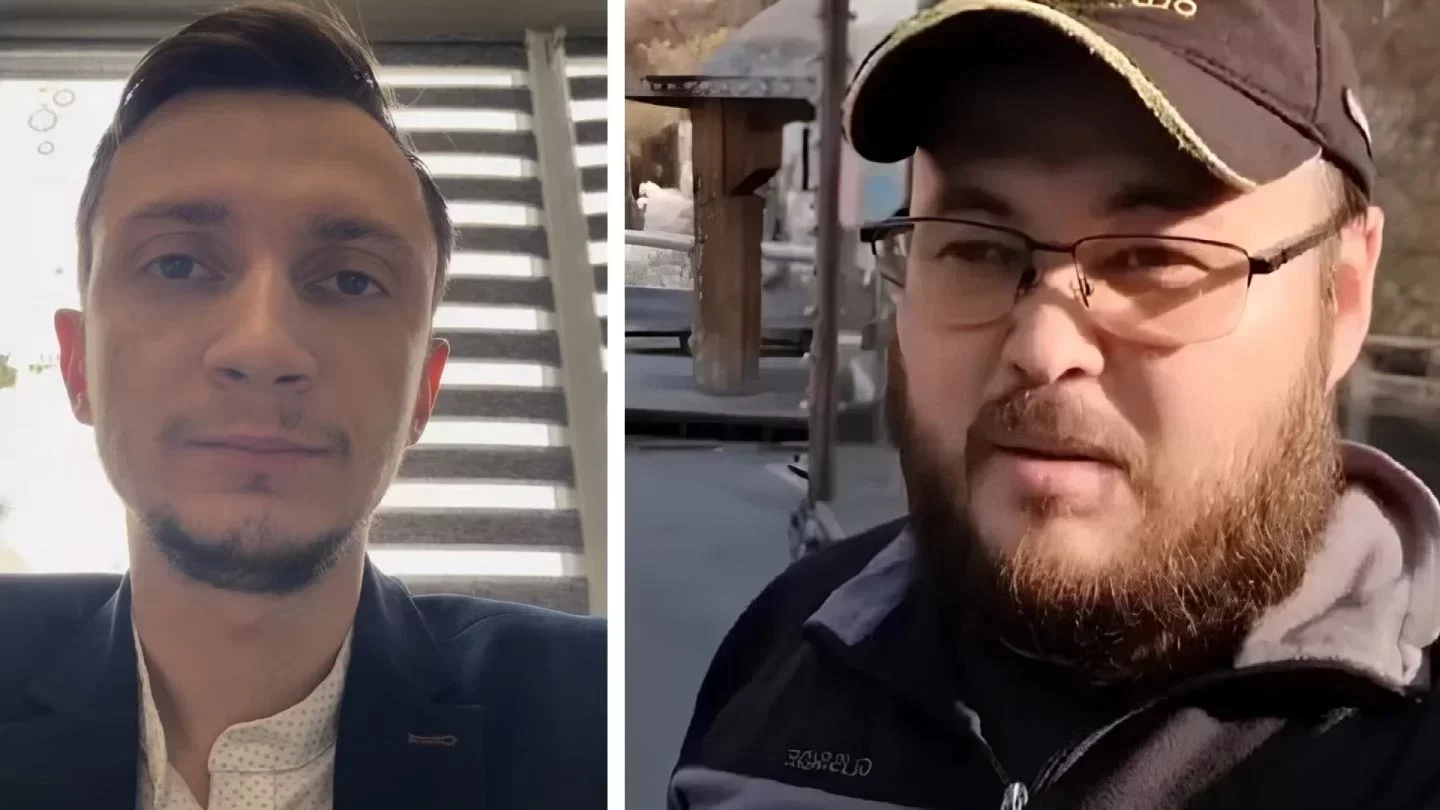 Photo: Orda.kz
The trial of bloggers Damir Kusheyev and Ruslan Karimov, along with two other defendants, has begun in Almaty. They are accused of extorting a large sum of money from convicted businessman Bakhtiyar Blayev in January 2025. All four deny the charges, Orda.kz reports.
Kusheyev and Karimov gained attention through their independent investigative videos. Kusheyev often published clips about bicycle infrastructure problems and alleged police misconduct, while Karimov focused on exposing questionable practices among bottled water manufacturers.
Their online work attracted thousands of followers, some of whom attended court to support them.
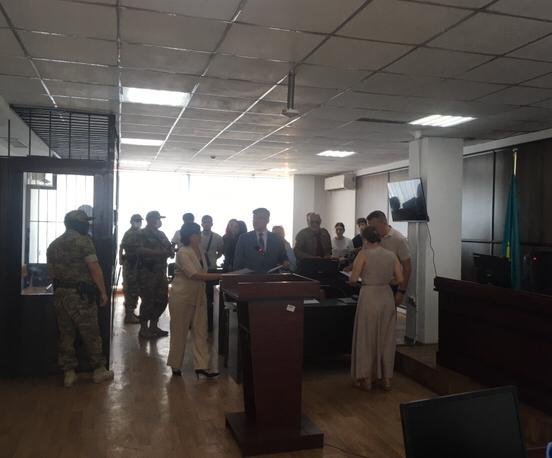
Our reporters also attended the preliminary hearings.
Blackmail or Exposure?
The defendants — Damir Kusheyev, Kurmangazy Aitmukanov, Ruslan Karimov, and Andrey Belyansky — are charged under Part 4 of Article 194 of Kazakhstan’s Criminal Code: “Extortion on an especially large scale.” This offense is classified as particularly serious, carrying a prison sentence of seven to 15 years with confiscation of property.
Seven defense lawyers are representing the accused, three of them for Kusheyev. The prosecution is led by two district prosecutors. The trial, overseen by Judge Bakhytkhan Bakirbayev of Almaty’s Specialized Interdistrict Criminal Court, is being held openly, in Russian, and offline.
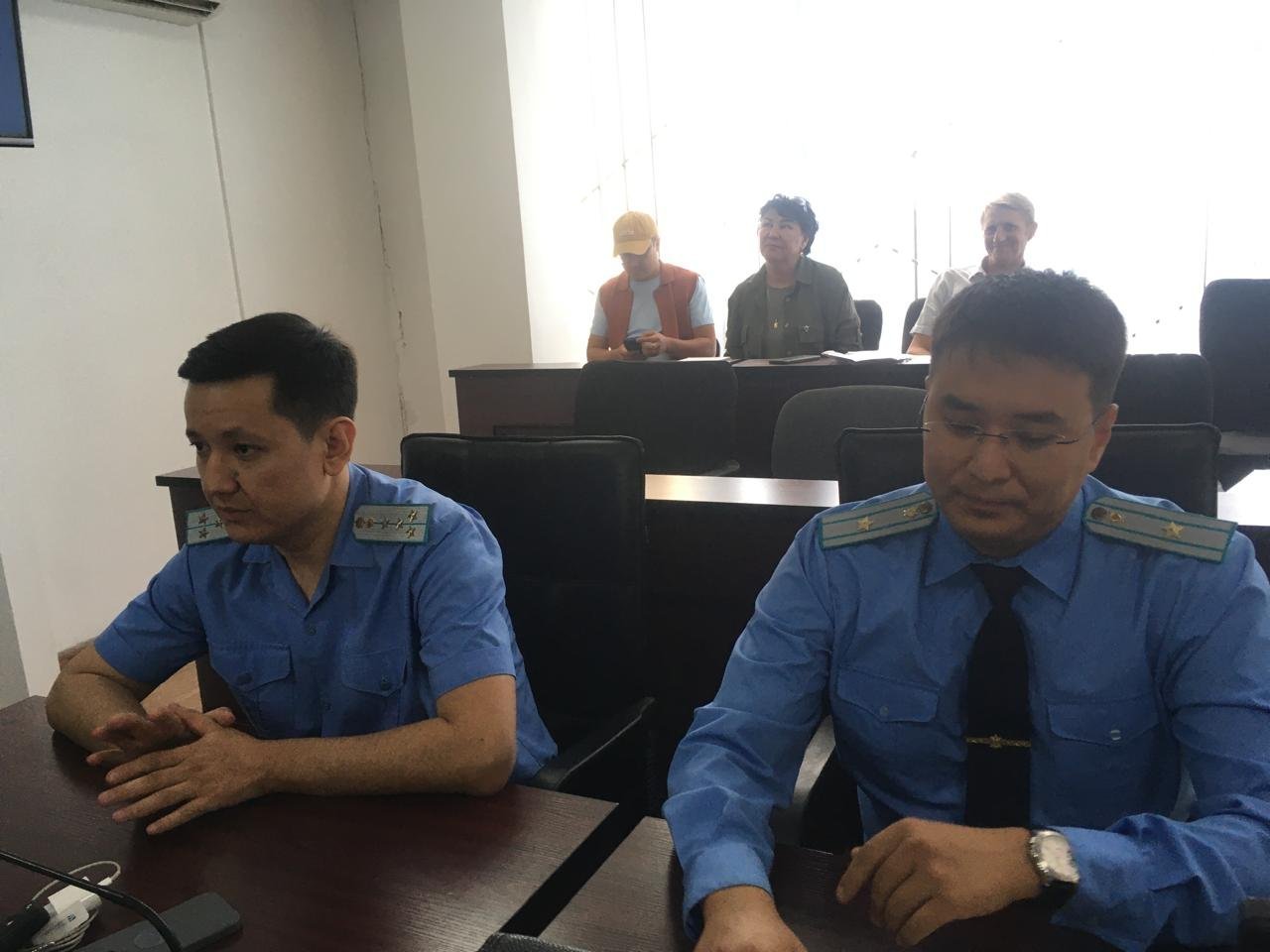
The issue of allowing photos and video recordings has not yet been raised, but since some of the defendants’ relatives opposed it before the hearing, our journalists limited themselves to a general courtroom shot. Notably, Orda.kz was the only media outlet present.
There are two episodes in the criminal case. According to the prosecution, the first episode took place on August 25, 2023, when Kusheyev reported his neighbor’s scooter stolen at a shopping mall. An investigative team from the Bostandyq District Police Department responded.
Detective Serikov took Kusheyev’s statement, questioned security guards, collected surveillance footage, searched the surrounding area, and left. Prosecutors allege that Kusheyev later threatened Serikov, saying that if the thief was not found, he would publish a critical post on social media about the police department’s work.
The prosecution’s description states:
Kusheyev began to pressure Serikov to cover his damages — 100,000 tenge, the cost of the scooter —out of his own pocket. Serikov ignored these illegal demands, explaining that he had already carried out certain work (to find the scooter – Ed.). Nevertheless, Kusheyev posted negative comments about Serikov’s activities on social media.
The indictment claims that, fearing public backlash, Serikov eventually transferred the money to Kusheyev through mobile banking. Emboldened, Kusheyev allegedly sought further gains at another person’s expense.
This led to the second episode, dated January 2025. Prosecutors say that Kusheyev entered into a conspiracy with his acquaintance, Kurmangazy Aitmukanov. Aitmukanov targeted convicted businessman Bakhtiyar Blayev, who was serving his sentence in Penal Colony No. 13 of the Almaty Department of the Penal Correction System, as stated in the bloggers' video, for arbitrariness.
Why Blayev?
Prosecutors explain that Aitmukanov’s ex-wife owed Blayev’s company 20.5 million tenge, and her business accounts were frozen. Aitmukanov allegedly planned to force Blayev into a mediation agreement and demand 10 million tenge in compensation. To carry out this plan, he recruited Kusheyev and Karimov.
The critical moment came on January 20, 2025. While Blayev was driving around the city on business, Aitmukanov spotted him. He photographed Blayev and sent both the images and the geolocation to Kusheyev.
Then, Aitmukanov deliberately caused a traffic accident with Blayev’s jeep.
Blayev, unsuspecting, got out of his car and noticed Aitmukanov filming with his cell phone. Fearing that the footage could affect the conditions of his sentence in the minimum-security penal colony of the Almaty Department of the Penal Correction System, Blayev tried to leave the scene. At that moment, Aitmukanov began chasing him in his car, recording everything on video. When they reached a gas station, Aitmukanov forced Blayev to stop. Then Kusheyev and Karimov arrived. Through blackmail and threats of publication, they began extorting 10 million tenge and demanded that he renounce claims of 20,541,000 tenge against Aitmukanov’s ex-wife, the indictment states.
To increase the pressure on Blayev, the bloggers later went to Penal Colony No. 13 and showed the prison administration the video of the accident.
As a result, Blayev received an administrative penalty.
On January 21, 2025, the three friends met in a shopping mall, where they discussed their future plans. The next day, Aitmukanov arranged a meeting with Blayev at a legal consultation office. Equipped with a hidden video camera, Blayev recorded himself handing over part of the money to Aitmukanov.
Afterward, Aitmukanov asked Kusheyev to delete the published posts and videos about Blayev.
According to the indictment, the third defendant, Andrey Belyansky, was also present. His wife allegedly owed Blayev’s company 1,145,000 tenge. Prosecutors claim Belyansky demanded that Blayev write off not just this amount, but 21 million tenge. Out of fear of further damaging publications, Blayev agreed to these conditions.
Prosecutors allege that the defendants extorted a total of 30,541,932 tenge from Blayev. The court also heard the conclusion of a psychological and philological examination, which confirmed the defendants’ intent.
The focus of the conversation is defined as discussion of a common topic: calculating the amount of money to be returned and drafting a mediation agreement. The participants speak about a subject they all understand. Their hierarchical relations can be described as equal. Suspect Belyansky takes a more active communicative role compared to the others. Blayev encourages the interlocutors to take specific actions and assumes certain obligations.
A Deal with Justice
Once the prosecutor finished reading the indictment, Judge Bakirbayev asked the defendants: “Do you understand the charges brought against you?” They replied that they did.
He then reminded them that they had the right to request a trial by jury.
None of you have filed such a motion. The court reminds you once again: you have the right to request this. You know who jurors are — 10 citizens who, together with a professional judge, make a decision by voting. They determine whether the crime was proven, whether the defendant committed it, and whether he is guilty or not. If one of you files such a motion, the court is obliged to grant it, even if the other three are against it. If you refuse now, you cannot do so later.
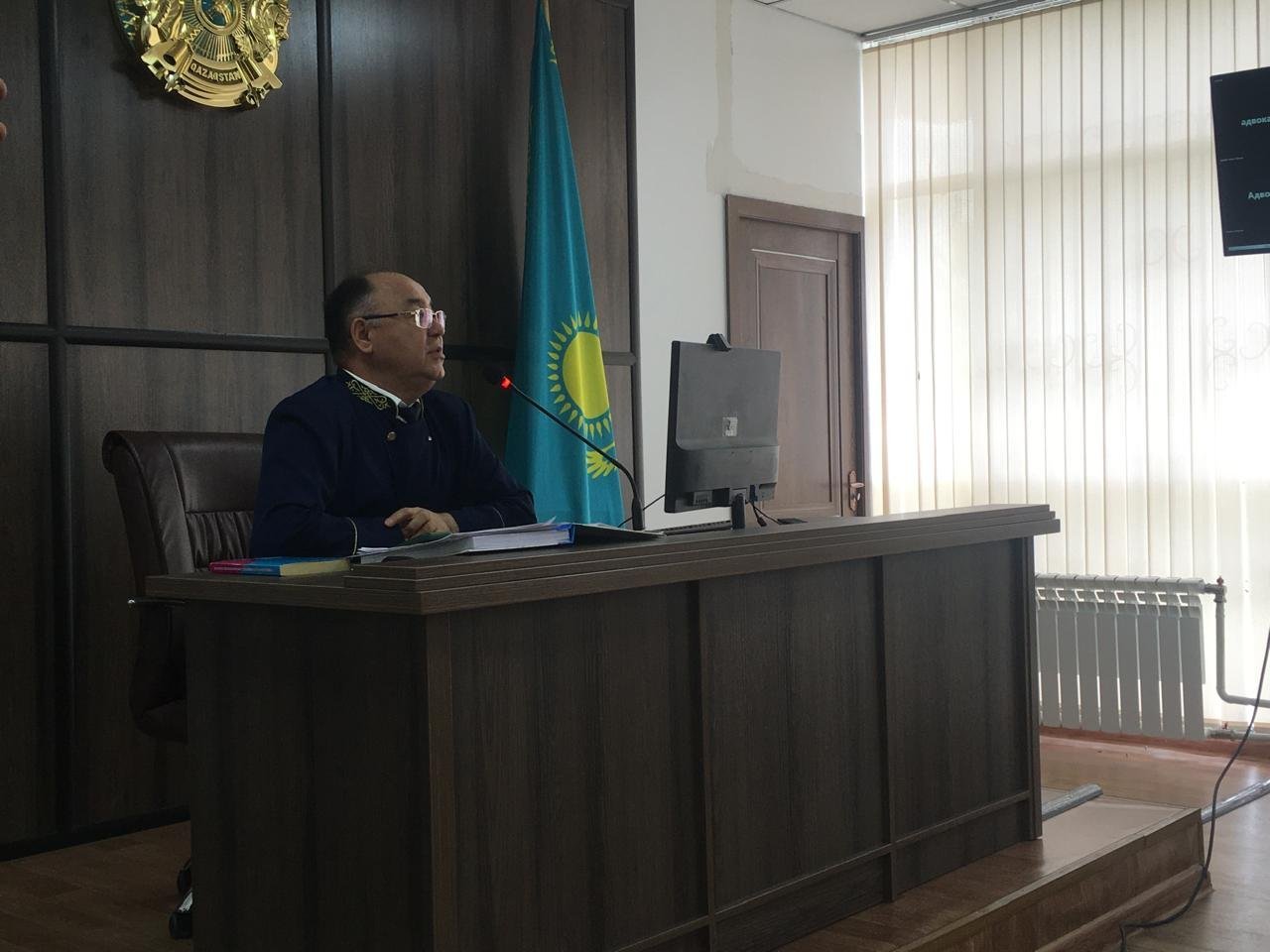
All four defendants ultimately chose to have their case heard by a jury.
Defense lawyers petitioned to change the measure of restraint from detention to house arrest. Some cited deteriorating health, while others argued their clients’ families were left without an income provider.
What is the need to keep a person under arrest if he is not going to flee? The investigation is complete, there will be no obstacles. During the investigation, Kusheyev was questioned only twice. There were no further actions. I myself am an investigator with 20 years of experience, and I know how cases are handled. But there is no evidence in Kusheyev’s case. That means there is no reason to keep him in custody. He has five children waiting for him at home—he is the head of the family, the income provider, one of Kusheyev’s lawyers argued.
Defendant Aitmukanov complained about poor medical care in the pretrial detention center:
In the last six months in the special block, we received no treatment. Only after we filed an official complaint through eGov did they start giving me Ketanov and Fibrofit (painkillers – Ed.), but they cause complications with my kidneys and stomach. They give me injections because I can’t walk or even sit. Only in the last five days did they start giving me vitamin injections. The guards barely managed to get me into the paddy wagon because my leg won’t bend. They even asked me to tell the court about it. The surgery is still being delayed.
Another lawyer for Kusheyev reported alleged misconduct by the police investigator overseeing the case.
According to the defense, the investigator blocked the bank account of Damir’s wife, Akmeir, where state benefits for large families were being deposited.
When the young woman approached the investigator to request that the account be unblocked, he allegedly pressured her to testify, telling her to state that the account did not belong to her husband. The investigator, however, did not explain her rights before taking the testimony.
Under the law, a person who has given testimony in a case cannot later serve as a public defender.
We regard this as moral and psychological pressure on Kusheyev himself. We ask that Akmeir be excluded from the list of witnesses and admitted as a public defender. The case includes their marriage certificate, the children’s birth certificates, and proof of large-family status. Previously, Damir’s mother participated in the case, but she lives in the west, and it is difficult for her here in the highlands because of the blood pressure. She cannot continue to participate in the trial, the lawyer argued.
The defense noted that the investigator eventually unblocked Akmeir’s account. Still, Kusheyev had not seen his children during the eight months of the investigation. His lawyer asked the court to appoint Akmeir as his public defender so she could maintain constant contact, update him about the children, and show him their photos.
Judge Bakirbayev responded:
If we allow her as a defender, she won’t come to his cell with the child, will she? I suggest sending the photos through a lawyer so the defendant can see his children. Even here, during the court hearing, I allow you, Kusheyev, to look at the photos of the children!
The judge also addressed the relatives of the defendants, reminding them to strictly observe order and control their emotions. Guards had stated that during breaks, wives and mothers rushed to kiss and hug their relatives through the cage.
The judge warned that any further violations would result in removal from the courtroom. The remark surprised many, as such a strict ban had not previously been enforced in the Specialized Interdistrict Criminal Court.
The lawyers for the other defendants also asked the court to allow close relatives to act as public defenders. Belyansky’s son applied to represent him, and Aitmukanov’s wife applied to represent him.
One of the lawyers clarified the amount of compensation mentioned by the prosecutor when reading the indictment. The case refers to 200,000 tenge that Blayev gave to Aitmukanov, while the prosecutor mistakenly stated 20 million tenge. It was clarified that the actual amount was 200,000 tenge.
Kusheyev himself spoke out, emphasizing what he saw as violations of his and his wife’s constitutional rights:
The President says one thing, the investigation does another. I conclude that we have double standards. Therefore, respected court, I ask you to support the motions to change the preventive measure and grant my wife the status of a public defender. For some reason, she is now waiting outside. Even strangers have come in here — public figures and journalists — yet my wife is standing downstairs. Isn’t this putting psychological pressure on me?
The judge then asked prosecutors for their view on the defense motions.
They opposed changing the measure of restraint:
The defendants are charged with committing a particularly serious crime. The arguments presented by the defense cannot be grounds for altering the preventive measure. If the condition of any defendant deteriorates sharply, the motion can be considered during the main trial, the prosecutors said.
Judge Bakhytkhan Bakirbayev ultimately granted the defendants’ request for the case to be heard by a jury.
However, he rejected motions to transfer them to house arrest, citing a lack of grounds, and denied the request to admit Kusheyev’s wife as a public defender, since she remains listed as a witness.
Relatives of other defendants may still submit written motions to be recognized as defenders.
The next hearing will take place behind closed doors for jury selection. As soon as journalists are permitted to return, Orda.kz will resume reporting from the courtroom.
Original Author: Zhanar Kusanova
Latest news
- Statistics Show Where the Most Women Live and Work in Kazakhstan
- Kazakhstan Carries Out 12 Evacuation Flights From the Middle East
- Kazakhstan Labor Inspectors Find Wage Arrears at 102 Enterprises
- Police Raid in Shymkent Uncovers Widespread Violations Involving Foreign Nationals
- Tokayev Condemns Drone Strike on Nakhchivan Airport
- Eyewitnesses Share Photos of Kazakh Citizens’ Evacuation
- Tokayev Orders Tighter Security for Kazakhstan’s Critical Infrastructure
- Semey Teen Convicted Over Telegram Chat Targeting Foreign Students
- Gender Equality Index 2025: Is Kazakhstan Leading in the Region?
- UNICEF Highlights Children’s Digital Rights in Draft Constitution of Kazakhstan
- Kazakhstani Journalists Returning From Ukraine Detained at Astana Airport
- Kazakhstan Prosecutor Opposes Deportation of 16-Year-Old Russian Teen
- Russian TV Channels Taken Off Air in Kazakhstan
- Mistaken Claim? Kazakhstan Denies $1B Contribution to the Board of Peace
- How many Kazakhstanis remain in the Middle East — MFA
- Kazhydromet Warns of High Flood Risk in Five Regions in 2026
- MP Calls for Prosecutor Review of Kazakhstanis’ Dubai Property
- Kazakhstan Moves to Legalize Private Detective Work
- Kazakhstan to Extend Gas Export Ban for Six More Months
- Majilis MP Calls to Soften Liability for Kazakhstanis Drawn into Foreign Wars for Pay
