

Majilis Adopted Law on National Fund Transfer
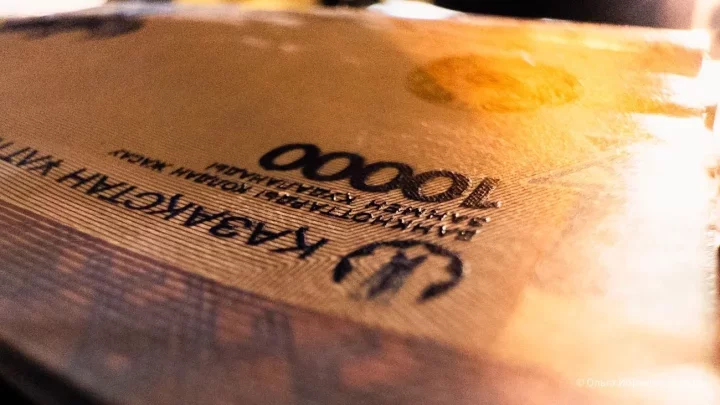 Photo: Olga Ibraeva. Orda.kz
The Majilis adopted the corresponding law on a National Fund guaranteed transfer for 2025-2027, Orda.kz reports.
The Minister of National Economy Nurlan Baibazarov presented the draft law:
The law approves the amount of the guaranteed transfer from the National Fund of the Republic of Kazakhstan to the republican budget for 2025-2027 in the amount of two trillion tenge annually.
The draft law on the guaranteed transfer is also based on the cutoff price for oil – an indicator of the world price of oil used to calculate the maximum possible volume of the guaranteed transfer. It is based on the projected volume of receipts to the National Fund from oil companies and budget needs: for 2025 - $42.3 per barrel, 2026 - $41.0, and 2027 - $39.4 per barrel.
Taking into account the cutoff price, revenues to the National Fund of the Republic of Kazakhstan from oil sector organizations are projected to be: in 2025 - 2,277.0 billion tenge, 2026 - 2,276.8 billion tenge, and 2027 - 2,277.0 billion tenge.
Deputy Tatyana Savelyeva reminded the minister that a targeted transfer from the National Fund, exceeding three trillion tenge, is also planned.
At the same time, the annual appeals and arguments of the government about changing approaches to the use of the National Fund's resources, about limiting transfers, remain slogans for now. The deputies are concerned about the following question: will the government implement the plan to bring the National Fund's foreign currency assets to 100 billion dollars by 2030? Tatyana Savelyeva asked.
The Minister specified that the volume of the National Fund is primarily influenced by oil production and the price per barrel. Based on these indicators, according to the MNE projections, the National Fund can be replenished in the five years leading up to 2030.
The second factor is the amount of withdrawals, it also has a big impact. According to our calculations, in order to achieve the planned volume of the National Fund, starting in 2026, it is necessary to reduce the level of withdrawals to five billion dollars (about 2.45 trillion tenge). The government will work to replace these transfers, which we are currently taking in increased volumes, at the expense of budget revenues, promised Nurlan Baibazarov.
Experts from the International Monetary Fund have warned about the risks associated with spending National Fund funds to cover the budget deficit.
Original Author: Anastasia Prilepskaya
Latest news
- Orda.kz Editorial Team to Cease Operations on September 1
- The Price of a Degree: How Students in Kazakhstan Pay for University
- Second Przewalski’s Horse Foal Born as Species Returns to Kazakhstan
- Kazakh Mining Companies Can Recalculate Purchases if Tenge Weakens
- Kazakhstan Names First Vice President in Three Decades
- What Almaty’s Bus Shelters Are Missing
- 400-Truck Queue Builds at Kazakh–Kyrgyz Border
- Kazakhstan Ready to Help Feed and Rebuild Gaza
- Tokayev Establishes New Presidential Security Body
- Almaty Takes Back Its Nearly Century-Old Hippodrome
- No More Guesswork on Savings: Kazakhstan Tightens Energy Audits for Businesses
- Public Money Could Be Used to Rescue Failing Kazakh Banks
- Third Kazakh Woman Reported Missing in Nepal-China Flood Zone
- Falconer Convicted Over 35 Protected Birds, Spared Punishment Under Amnesty
- Kazakh Citizen Detained in Yakutia in Phone Fraud Case
- Yuan Instead of Dollars? KazMunayGas Draws Record Demand in Asia
- China Gains Oil-Market Influence as OPEC+ Weakens
- Kazakhstan to Divide Smartphones Into White, Gray and Black Lists
- Kazakhstan’s Government Formally Resigns as First Kurultai Session Opens
- Rare Lynx Sighting Recorded in Northern Kazakhstan
