

Kazakhstan’s EV Boom Is Here. Is The Grid Ready?
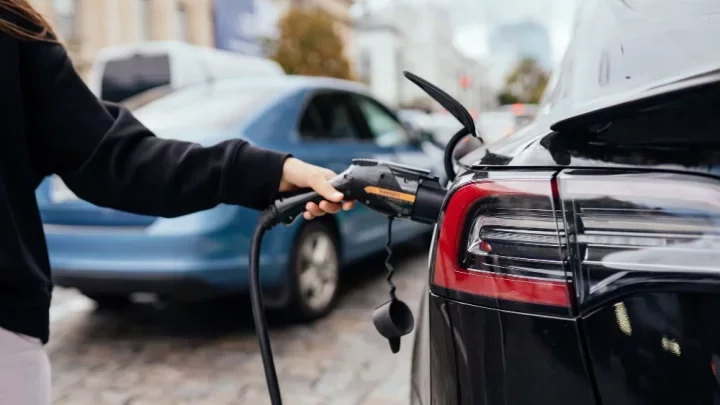 Illustration: magnific
The Ministry of Energy has reported an unexpected electricity surplus just as Kazakhstanis are increasingly switching to electric cars. Officials say the country’s energy system is fully balanced. An Orda.kz correspondent asked an expert whether Kazakhstan’s excess generation would be enough to charge thousands of new vehicles.
Recently, the Ministry of Energy shared positive statistics: in the first quarter of the year, the country produced 100 million kilowatt-hours more electricity than it consumed. The ministry predicts that within a few years Kazakhstan will fully close its domestic deficit through the launch of new capacity.
However, on a national scale, this quarterly surplus is small. It is less than half a percent of the country’s annual consumption. Another figure gives a clearer picture: in just seven months last year, Kazakhstan imported more than two billion kilowatt-hours of electricity from Russia.
Orda.kz contacted Zhakyp Khairushev, an electric power industry expert and chairman of the Public Council under Kazakhstan’s Ministry of Energy. He explained that annual balance and real-time capacity are not the same thing.
Having enough annual production and covering demand at a specific moment are different things. Our power system operates in parallel with Russia’s. On average, we can reach zero over the year, but during certain peak hours, winter frosts, or summer heat, there is a capacity shortage. We cover this imbalance through imports,Khairushev said.
According to the expert, even when Kazakhstan becomes self-sufficient, it will not completely abandon power flows with Russia. The unified power system operates in parallel, and imports will still be needed to cover peak demand, repairs, and emergencies.
The Math Behind Electric Cars
According to the Bureau of National Statistics, as of April 1, 2026, more than 31,000 electric cars had been registered in Kazakhstan. This is only about 0.5% of the country’s total vehicle fleet.
On average, one electric car consumes about 2,500–3,000 kilowatt-hours per year. Even if the number of electric vehicles doubles, the total increase in consumption would be about 100 million kilowatt-hours per year.
Against the background of the country’s total consumption, which exceeds 124 billion kilowatt-hours, this is a very small figure. Therefore, the main question is not whether Kazakhstan will have enough electricity in its annual balance. In general, it will. The problem is different: at what time of day and through which networks this energy will be consumed,Khairushev said.
An electric car is not dangerous for the grid because of its total consumption, but because of the load it creates at specific times, especially in the evening. It puts pressure on networks that may not be ready for it.
The Geography Problem
Kazakhstan’s problem is not only the volume of generation, but also where the load occurs. Most electric cars are concentrated in Almaty. At the same time, the southern capital has historically been an energy-deficient region, while the main “donor” of electricity is northern Kazakhstan.
If several dozen electric cars appear in the underground parking lot of a residential complex, and each owner installs a 7–11 kilowatt charger, this becomes a serious test for the building’s infrastructure.
Such a simultaneous load is comparable to the energy consumption of an entire entrance in a multi-story building. When people return home en masse from 6 p.m. to 11 p.m., car charging overlaps with the household peak: air conditioners, appliances, and elevators are switched on. Due to a sharp jump in current load, cables overheat, voltage drops, automatic protection is triggered, and this leads to local outages,Khairushev explained.
The situation is complicated by the overall quality of distribution networks. Frequent power outages in different districts of the city show that intra-neighborhood lines are already operating at their limits. As a result, bad weather, including heavy rain or wind, can lead to substation shutdowns. The influx of electric cars will accelerate the wear of this equipment.
Additional risks come from “partisan” connections, when residents install sockets in parking lots without approval from condominium associations and utility companies. Khairushev emphasized that an electric car cannot be treated as an ordinary household appliance. It is a powerful electrical receiver that engineers must officially include in the building’s power scheme.
Can The Nuclear Power Plant Help?
According to the expert, the construction of a 2.5 GW nuclear power plant in the village of Ulken will certainly strengthen Kazakhstan’s power system, especially in the southern region. But it should not be seen as a cure-all for local blackouts in residential areas.
It should be understood that the nuclear power plant will not solve the problem of charging electric cars inside a residential quarter. It will give the country additional baseload capacity, but it will not replace the modernization of distribution networks, urban substations, and cable lines. Almaty’s local problems need to be solved through network projects and load management,the expert said.
What Should Be Done — Bans Or Smart Management?
Strict bans on buying or charging electric cars are unlikely. However, if the process develops on its own, restrictions in energy-deficient areas may appear naturally in the form of forced reductions in charger capacity during peak hours.
To prevent this, Khairushev proposes four mandatory steps.
- Charging stations should be included as a new type of load when technical conditions are issued for the construction of new residential complexes and business centers.
- Stations in parking lots should not all operate at maximum capacity at the same time. A smart system should distribute power among 40 parked cars, charging them alternately throughout the night.
- It should be financially beneficial for electric car owners to charge at night, when the system is less loaded. But this requires full digitalization and clear tariff grids.
- Charging stations should be developed near offices, shopping malls, and industrial zones to distribute the load throughout the day and avoid sending all cars into residential areas in the evening.
Otherwise, the energy crisis caused by electric vehicles will begin not at the national level, but at the level of specific courtyards, residential complexes, and underground parking lots.
Original author: Eva Golovintseva
Read also:
Latest news
- Orda.kz Editorial Team to Cease Operations on September 1
- The Price of a Degree: How Students in Kazakhstan Pay for University
- Second Przewalski’s Horse Foal Born as Species Returns to Kazakhstan
- Kazakh Mining Companies Can Recalculate Purchases if Tenge Weakens
- Kazakhstan Names First Vice President in Three Decades
- What Almaty’s Bus Shelters Are Missing
- 400-Truck Queue Builds at Kazakh–Kyrgyz Border
- Kazakhstan Ready to Help Feed and Rebuild Gaza
- Tokayev Establishes New Presidential Security Body
- Almaty Takes Back Its Nearly Century-Old Hippodrome
- No More Guesswork on Savings: Kazakhstan Tightens Energy Audits for Businesses
- Public Money Could Be Used to Rescue Failing Kazakh Banks
- Third Kazakh Woman Reported Missing in Nepal-China Flood Zone
- Falconer Convicted Over 35 Protected Birds, Spared Punishment Under Amnesty
- Kazakh Citizen Detained in Yakutia in Phone Fraud Case
- Yuan Instead of Dollars? KazMunayGas Draws Record Demand in Asia
- China Gains Oil-Market Influence as OPEC+ Weakens
- Kazakhstan to Divide Smartphones Into White, Gray and Black Lists
- Kazakhstan’s Government Formally Resigns as First Kurultai Session Opens
- Rare Lynx Sighting Recorded in Northern Kazakhstan
