

Kazakhmys and Kazzinc May Soon Change Owners Amid Negotiations
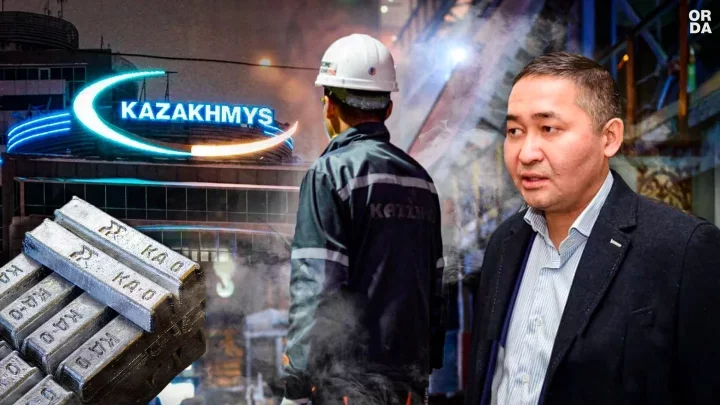 Photo: Orda Collage
Major deals are taking shape in Kazakhstan. Two of the country’s largest raw materials assets — Kazakhmys and Kazzinc — are expected to be transferred to new owners, reports Orda.kz.
Negotiations have been underway for some time.
Market sources say the Kazakhmys deal is about 80% complete. The situation with Kazzinc is more complex: two U.S. companies, The Vanguard Group and Capital Group Companies, are among its shareholders. They are also listed as founders of the Swiss company Glencore, which holds a controlling stake in Kazzinc. This means the talks are complicated by the involvement of foreign players and carry potential risks of international arbitration.
Meanwhile, new contenders are appearing around Kazakhmys and Kazzinc. Among them are the owners of Qazaq Stroy.
And signals are coming not only from the market, but also from the highest levels of government.
Meetings at Aqorda
On November 4, President Qasym-Jomart Toqayev received Nurlan Artykbayev, founder of Qazaq Stroy. On November 21, he met with Shahmurat Mutalip, beneficiary of Integra Construction KZ.
An expert notes that the president typically holds such meetings with akims or security officials. Now, however, he is meeting with major businessmen who have rapidly expanded their assets in recent years. Ashimbayev does not rule out a repeat of the Andrei Lavrentyev scenario.
Over the past year, Artykbayev has acquired stakes in Kazakhtelecom, the gas company Taiqonyr Energy, and FC Aqtobe. Shakhmurat Mutalip became head of the Boxing Federation last year, and this year, the Atameken National Chamber of Entrepreneurs' Construction and Housing and Utilities Committee. According to some rumors, Artykbayev and Mutalip could follow in Lavrentyev's footsteps in acquiring Qarmet: the former is mentioned as a possible buyer of Kazakhmys, the latter of Kazzinc,
the political scientist points out in his Telegram channel.
Is Qazaq Stroy Becoming a New “National Chaebol”?
Financial analyst Rasul Rysmambetov also reports on negotiations between Kazakhmys and Qazaq Stroy.
He adds an important detail: Qazaq Stroy previously obtained a license for a potash mine, meaning the company is no longer simply a school builder or a charitable contractor for the Academy of Sciences.
A new national champion is emerging in the market. Diversification and chaebolization (In South Korea a large business conglomerate - Ed.). A shakeup of the established players is long overdue.
In effect, Artykbayev's company is gradually transforming into a multi-industry Korean-style corporation with interests in construction, telecommunications, mineral resources, and potentially the copper sector.
Another expert, Nurlan Zhumagulov, believes a merger between Qazaq Stroy and Kazakhmys is only a matter of time. However, this concerns not the high-margin projects of KAZ Minerals, but the legacy assets of Kazakhmys Copper.
Previously, QazaqStroy acquired a stake in Kazakhtelecom, entered into a project for a sulfuric acid plant in Turkistan, and received a 75% stake in the Pridorozhnoye gas field,
Zhumagulov noted.
It is worth recalling that Kazakhmys was previously a publicly listed company.
Its shares traded on the London Stock Exchange until the 2014 spin-off of KAZ Minerals Plc.
Local Players
According to Rysmambetov, the key principle in the current negotiations is that subsoil resources should be controlled by local businesses.
I've had a long-standing friendship with Glencore, dating back to my studies in Switzerland. True, many have left the company, but global issues are regularly discussed in the beer halls of the canton of Zug. I understand this to be about the unfolding of my beloved economic nationalism. Subsoil resources should be controlled by local players, because they will be able to invest more actively in refining. Similar to the Korean chaebols, local players will focus on extending the value chain within the country,
the expert writes.
He also notes that the company failed to invest adequately in environmental protection, resulting in severe air pollution in East Kazakhstan.
The East Kazakhstan Region could be a tourism gem if not for the regular chemical warnings issued to Oskemen residents. When purchasing Kazzinc, perhaps the investor's investments in upgrading fixed assets should be reviewed. To avoid a scenario like Arcelor, where they left the company in a deplorable state,
the expert concluded.
Last year, Kazzinc’s net profit reached 216 billion tenge. Zhumagulov recalled that two years ago, Glencore discussed selling its stake to a Chinese investor for $1.2–1.5 billion.
If the deals go through, major assets will shift from the old elites to new ones.
The ice has broken, so to speak. Negotiations are underway — and a change of ownership among the country’s commodity giants could soon reshuffle the Forbes billionaire rankings.
Original Author: Zarina Fayzulina
Latest news
- Orda.kz Editorial Team to Cease Operations on September 1
- The Price of a Degree: How Students in Kazakhstan Pay for University
- Second Przewalski’s Horse Foal Born as Species Returns to Kazakhstan
- Kazakh Mining Companies Can Recalculate Purchases if Tenge Weakens
- Kazakhstan Names First Vice President in Three Decades
- What Almaty’s Bus Shelters Are Missing
- 400-Truck Queue Builds at Kazakh–Kyrgyz Border
- Kazakhstan Ready to Help Feed and Rebuild Gaza
- Tokayev Establishes New Presidential Security Body
- Almaty Takes Back Its Nearly Century-Old Hippodrome
- No More Guesswork on Savings: Kazakhstan Tightens Energy Audits for Businesses
- Public Money Could Be Used to Rescue Failing Kazakh Banks
- Third Kazakh Woman Reported Missing in Nepal-China Flood Zone
- Falconer Convicted Over 35 Protected Birds, Spared Punishment Under Amnesty
- Kazakh Citizen Detained in Yakutia in Phone Fraud Case
- Yuan Instead of Dollars? KazMunayGas Draws Record Demand in Asia
- China Gains Oil-Market Influence as OPEC+ Weakens
- Kazakhstan to Divide Smartphones Into White, Gray and Black Lists
- Kazakhstan’s Government Formally Resigns as First Kurultai Session Opens
- Rare Lynx Sighting Recorded in Northern Kazakhstan
