

Five Years of Labor, No Pay: Village Tractor Driver Alleges Exploitation by Police Chief
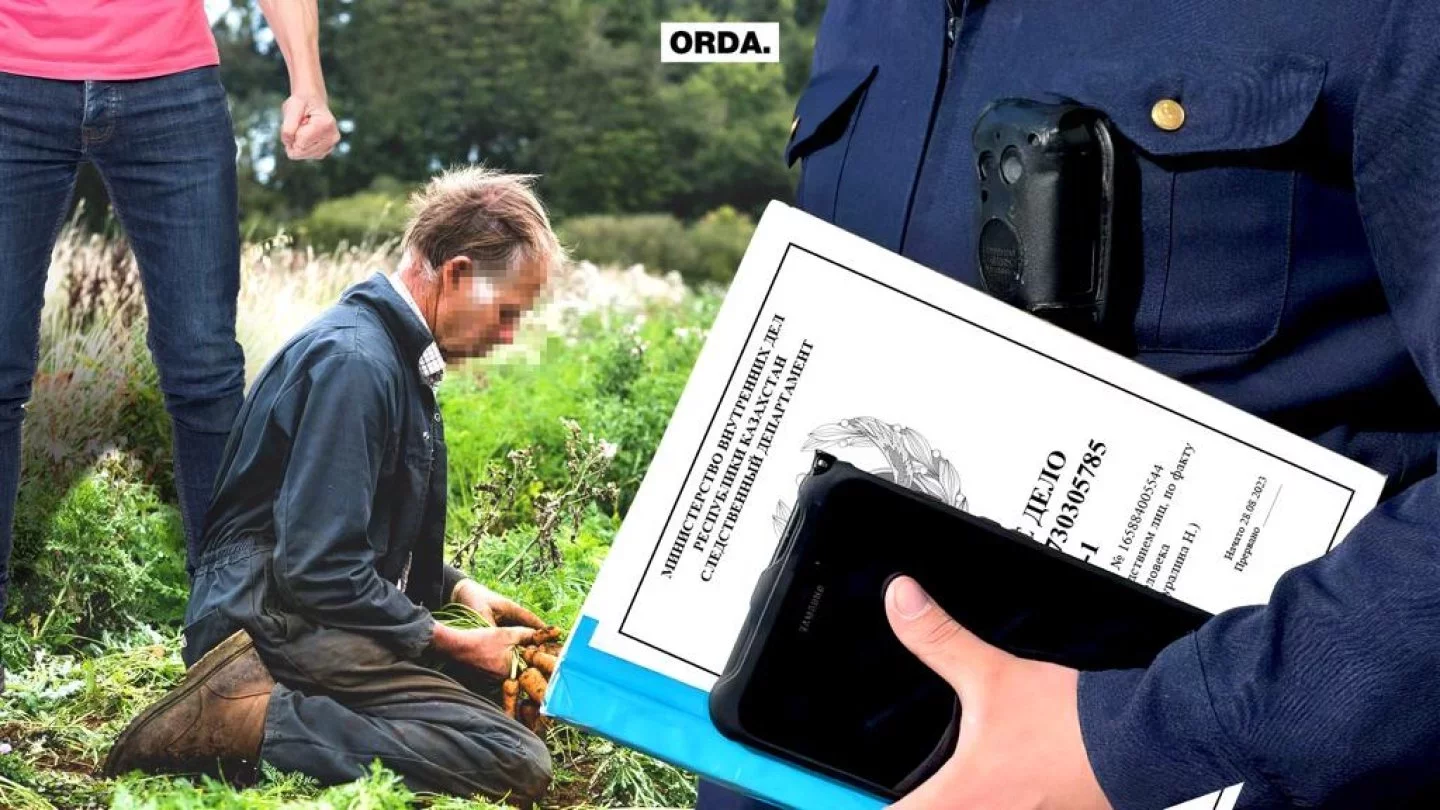 Photo: Orda.kz
Villager Oleg Rybalko says he spent five years working as a tractor driver on the private farm of the Kerbulak District police chief and his brothers, without receiving a single tenge in wages.
The editorial team at Orda.kz looked into why the 59-year-old man couldn’t simply walk away.
Rybalko’s story was shared with us by Almaty-based lawyer Serzhan Praliyev, who is now representing him. According to the attorney, he tried to settle the labor dispute amicably, but without success.
Despite promises from the police chief’s brother to pay up within two months, no money was ever transferred. As a result, Praliyev filed a complaint with the head of the Jetisu Regional Police Department, stating Major Rustem Abylkhanuly abused his authority and violated Kazakhstan’s Labor Code.
By Circumstance
O: Serzhan, how did you learn about Oleg Rybalko’s situation?
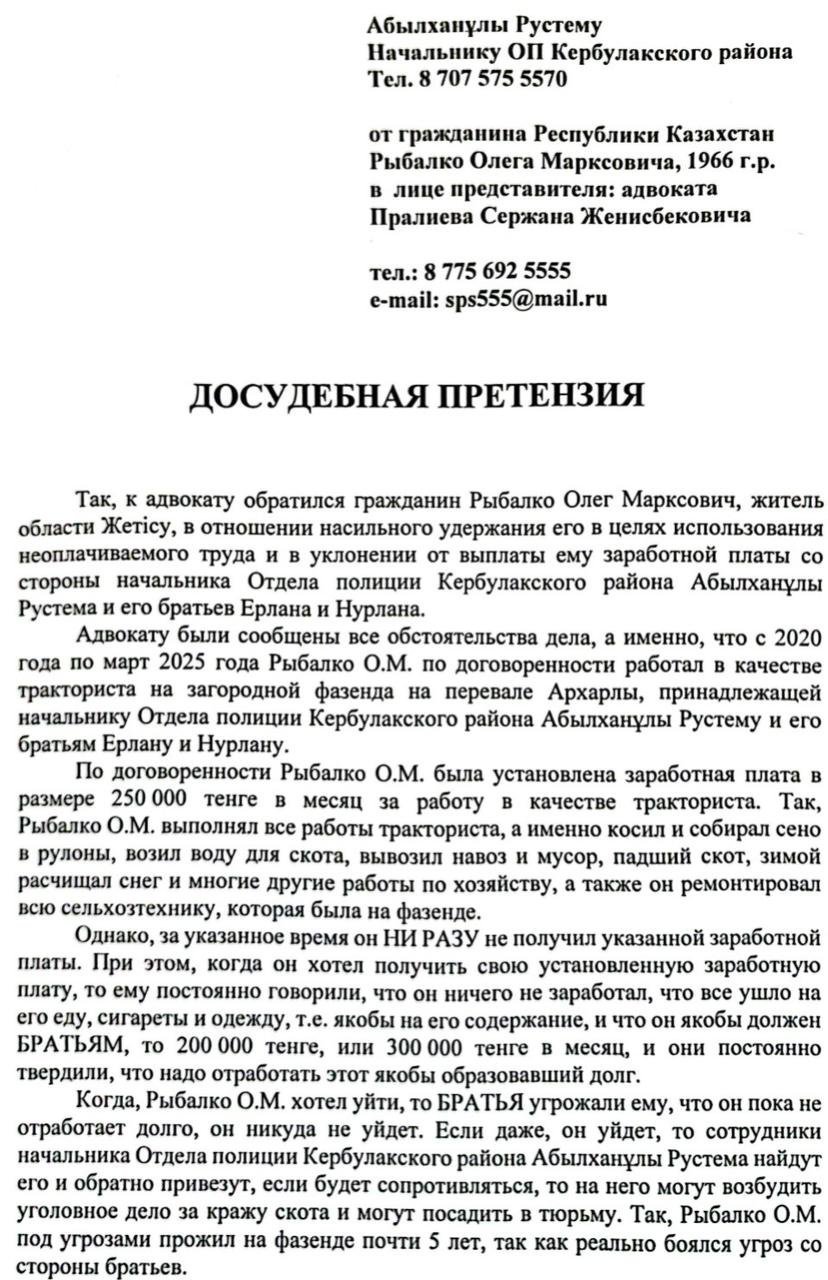
S: Directly from him. He came to my office in early April 2025 and told me everything that had happened. Oleg asked me to help him, and I, genuinely moved by his story, agreed. I signed an agreement to provide him legal assistance and immediately sent a pre-trial claim to the head of the Kerbulak District Police, Rustem Abylkhanuly.
I offered to settle the matter peacefully by paying Rybalko the 15 million tenge he was owed for working as a tractor driver from 2020 to 2025.
O: Are you representing him pro bono or for a fee? I ask because I know that some lawyers charge their clients a percentage of the money recovered through the court.
S: I never charge pensioners or people with disabilities. In Oleg’s case, I’m also working free of charge, considering his age and health issues.
O: How did Oleg end up working on the police chief’s family farm? Under what conditions was he supposed to work there?
S: Oleg knew Rustem Abylkhanuly’s father, who invited him to work as a tractor driver on the family farm near the Arkharly Pass in the Kerbulak district, and he agreed. While the father was alive, he paid Oleg on time.
After his passing, his sons — Rustem, Yerlan, and Nurlan — asked Oleg to stay. According to Oleg, they promised to pay him 250,000 tenge per month. No formal employment contract was signed; everything was agreed upon verbally.
O: What kind of work did he do? How many others were employed there?
S: Oleg says four men worked on the farm, including himself. All were of Russian ethnicity, and two had criminal records. They all lived in a temporary shelter. Oleg was the only one working in his trade. The others handled general tasks — herding cattle, for example.
Oleg, meanwhile, plowed the fields, hauled manure and waste, delivered hay, cleaned the farm territory, and repaired broken farm equipment. Oleg was never idle; he often did the work of two people.

O: Why didn’t he leave when the payments stopped? Why stay for five years?
S: Oleg is a quiet, modest, shy person by nature. He is not the kind to assert himself or create conflict. He waited, hoping the Abylkhanuly brothers would eventually pay him.
He did once demand his wages, but they shut him down harshly. He says they even threatened to report him for stealing cattle if he didn’t obey. If he had tried to leave on the tractor, they could’ve accused him of theft.
Oleg got scared and never asked again.
O: Was there any abuse? Did you see signs of violence?
S: Oleg says he was never physically abused. But he mentioned that another worker who once fled was caught, punished, and taken to another place. Oleg only complained about limited mobility in his right hand — an old injury from repairing a tractor.
He tore tendons and treated them himself, without seeing a doctor. It hasn’t healed properly.
O: Why didn’t family or friends look for him during those five years? Why didn’t he contact them?
S: At first, he was being paid and kept in touch. He called his sister, who lives in a nearby village, and told her things were fine. Later, when his phone broke, he called once from another number to say he’d be calling less.
When the calls stopped, she wasn’t overly concerned — she assumed he was just busy. Oleg’s been divorced for years and doesn’t have contact with his children. So no one came looking for him. He’s originally from the village of Malovodnoye in Jetisu.
O: Why was Oleg the only one who complained, while the other workers stayed on the farm?
S: Oleg says the other farmhands were satisfied with the arrangement. The owners provided food, shelter, and apparently gave them money from time to time, so they had no reason to complain.
But Oleg did — and even recorded a video at my request. In it, he appealed to the head of the regional police department and the Minister of Internal Affairs with a formal complaint against Abylkhanuly.
O: Why did Oleg finally decide to flee the farm?
S: One day, he was sent out on a tractor to fetch water. On the road, he happened to run into the brother of a good friend, Talgat, and told him about his situation. Oleg asked for help, and the man promised to relay the message.
Two days later, Talgat arrived at the farm.
Fortunately, the owners weren’t there at the time, and they were able to leave quietly, leaving a note with Talgat’s name and number. Credit to Talgat — he acted like a true friend. He brought Oleg home, fed him, helped him wash up, and assisted with restoring his documents. It turned out Oleg had lost his ID a long time ago. After that, he brought him to my office.
O: Did the farm owners reach out to Talgat or try to force Oleg back?
S: One of the brothers called Oleg’s sister and demanded that he return to the farm. She contacted me, and I offered to mediate. I suggested a meeting near my office to resolve the issue face-to-face.
O: Did the police chief attend that meeting?
S: No. As soon as he received the pre-trial claim, he called me back and said he would send his brothers to negotiate. The next day, his brother Yerlan came. According to him, Oleg had been paid, but only partially — they deducted food and housing from his salary.
After a discussion, Yerlan agreed to pay the remaining amount and asked for two months to finalize the calculations. I agreed. But the deadline passed, and Oleg still received nothing.
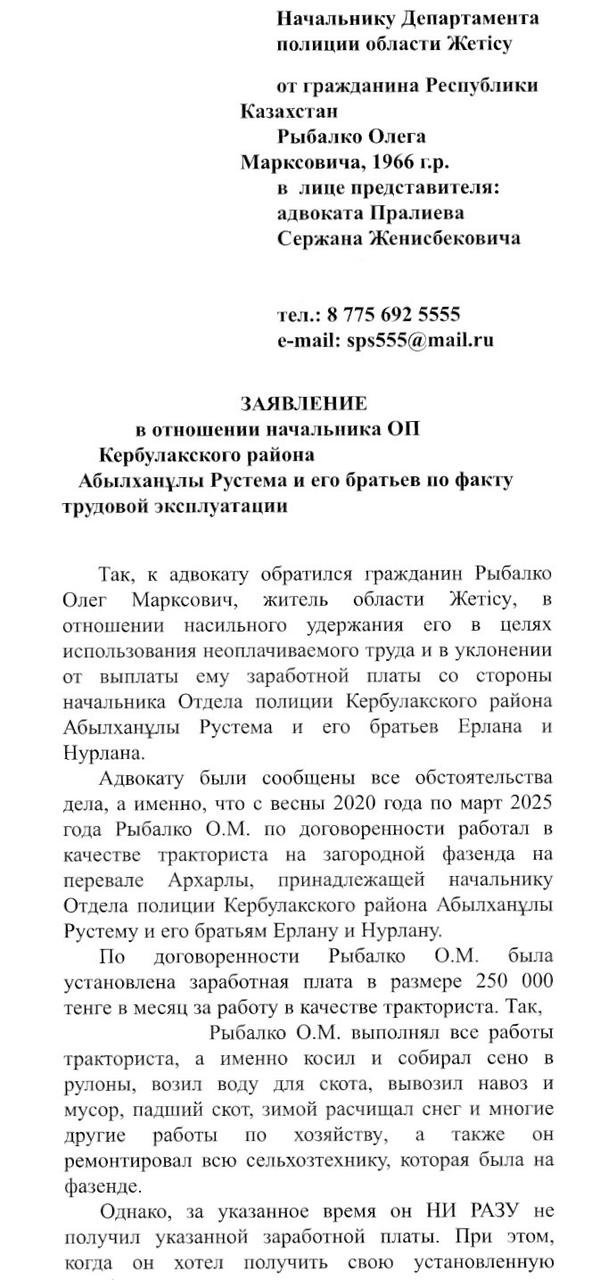
So, on June 19, 2025, I submitted an official complaint to the Jetisu Regional Police Department.
O: If there was no formal employment contract — just a verbal agreement — how will you seek compensation from the police major and his brothers?
S: We have Oleg’s own testimony, and there are witnesses. Let the former employers explain the conditions under which Oleg lived and worked, and how they assessed his labor. In my view, the Abylkhanuly brothers acted unjustly and illegally.
They violated both the Labor Code and the Code of Administrative Offenses of Kazakhstan.
Moreover, Major Abylkhanuly abused his official powers. I detailed all of this in my statement to the regional police chief. If no action is taken, I’ll escalate the matter to the Minister of Internal Affairs. But I hope it won’t come to that. In most cases, regional police officials take media reports seriously, so all hopes rest with you, Orda.kz.
O: Where is Oleg now, if you can share that? Is he concerned about retaliation?
S: Oleg is now living in the village of Kazatkom in the Yenbekshikazakh district. He works as a tractor driver on a private farm. At my insistence, he signed an official employment contract with his new employer.
He has a mobile phone now, and we stay in touch. Oleg isn’t afraid of retaliation and still hopes for a peaceful resolution. His “guardian angel,” Talgat, even offered to cover his health insurance so he could finally treat his injured hand at the local clinic.
Slowly but surely, Oleg’s life is getting back on track.
From The Editorial Office
We hope that following the publication of this article, Oleg Rybalko’s case will be resolved fairly, with compensation paid and an official apology offered.
Authorities — particularly the regional labor inspectorate and the internal security division of the Jetisu regional police — should review the validity of the tractor driver’s claims. If the head of the Kerbulak police department would like to share his side of the story, Orda.kz is ready to listen.
Original Author: Zhanar Kusanova
Latest news
- Statistics Show Where the Most Women Live and Work in Kazakhstan
- Kazakhstan Carries Out 12 Evacuation Flights From the Middle East
- Kazakhstan Labor Inspectors Find Wage Arrears at 102 Enterprises
- Police Raid in Shymkent Uncovers Widespread Violations Involving Foreign Nationals
- Tokayev Condemns Drone Strike on Nakhchivan Airport
- Eyewitnesses Share Photos of Kazakh Citizens’ Evacuation
- Tokayev Orders Tighter Security for Kazakhstan’s Critical Infrastructure
- Semey Teen Convicted Over Telegram Chat Targeting Foreign Students
- Gender Equality Index 2025: Is Kazakhstan Leading in the Region?
- UNICEF Highlights Children’s Digital Rights in Draft Constitution of Kazakhstan
- Kazakhstani Journalists Returning From Ukraine Detained at Astana Airport
- Kazakhstan Prosecutor Opposes Deportation of 16-Year-Old Russian Teen
- Russian TV Channels Taken Off Air in Kazakhstan
- Mistaken Claim? Kazakhstan Denies $1B Contribution to the Board of Peace
- How many Kazakhstanis remain in the Middle East — MFA
- Kazhydromet Warns of High Flood Risk in Five Regions in 2026
- MP Calls for Prosecutor Review of Kazakhstanis’ Dubai Property
- Kazakhstan Moves to Legalize Private Detective Work
- Kazakhstan to Extend Gas Export Ban for Six More Months
- Majilis MP Calls to Soften Liability for Kazakhstanis Drawn into Foreign Wars for Pay
