

Analyst Arman Beisembayev Explains the Record-Breaking Exchange Rate
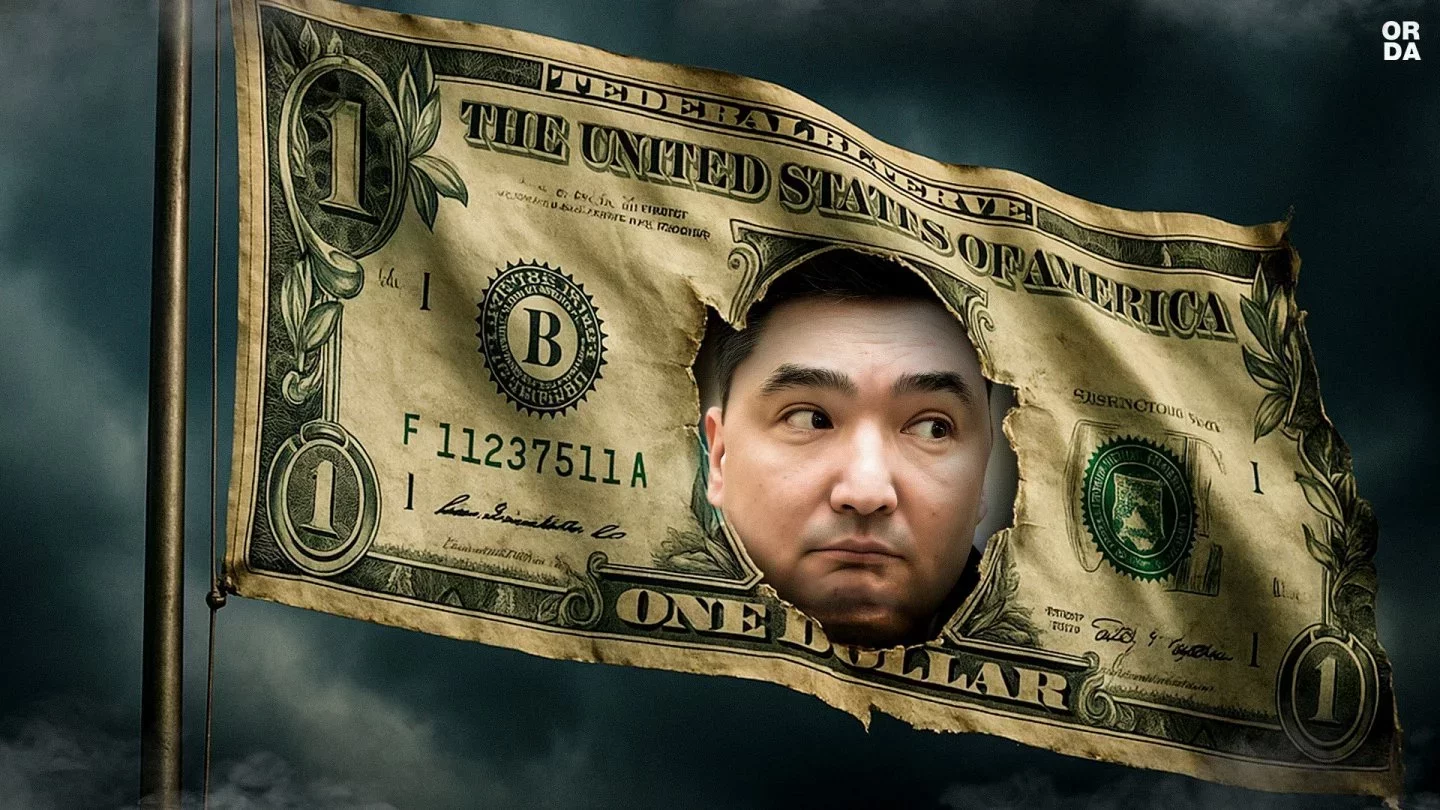 Photo: Orda.kz
On July 17, the National Bank’s official exchange rate for the U.S. dollar reached a record 532.7 tenge. The national currency has never fallen this low. Economist Arman Beisembayev spoke to Orda.kz about what’s behind the tenge’s decline, where the dollar might go next, and what role Prime Minister Olzhas Bektenov may have played.
It’s tempting to link the tenge’s sharp depreciation to the U.S. President Donald Trump’s recent threats, specifically, the imposition of secondary sanctions on Russia’s trading partners. But Arman Beisembayev doesn’t think Trump is to blame this time.
Arman Beisembayev acknowledged that while Kazakhstan is likely at some risk from the potential sanctions, he says there is no immediate threat.
The systematic weakening of the tenge has been happening since March. It had been strengthening earlier in the year, but in March it began to pull back. There was a long pause during April and May, and then from mid-June, we entered the current wave. This trend has been building for a while. If you recall, in early March the dollar was trading around 488 tenge.
He explains that both external and internal factors influence the exchange rate. And while external conditions haven’t shifted much in recent months—the ruble remains stable, oil prices hover around $68–70 per barrel, and the global dollar index is falling — the tenge continues to lose value.
Beisembayev notes that exchange rate fluctuations are, to some extent, seasonal. But this time, internal pressures are piling on top of existing market tensions.
The causes are all internal. The tenge is weakening because demand for foreign currency inside the country has risen. There’s been an explanation from the Prime Minister, from the Ministry of Economy through Zhumangarin, and from the National Bank via Suleimenov. They all pointed out that investment activity in our economy is cyclical. In the first half of the year, plans are made, and design documents for infrastructure and public programs are approved. By mid-year, funds start being disbursed, and in the second half, the projects are rolled out. But to launch these projects, a lot of imported equipment, components, and materials must be purchased. That means tenge from the budget must be converted into dollars, creating significant extra demand for foreign currency from both the state and the private sector.
There may also be a “Russian factor” at play. Some Russian companies could be using Kazakhstan as a channel to access U.S. dollars or repatriate cash to Russia. It’s not a flood, but it’s more than a trickle, and it certainly adds pressure.
National Bank Head Timur Suleimenov has suggested summer holidays. At first glance, it might seem unlikely that tourists could sway the exchange rate — but there are hundreds of thousands of them. When they all head to exchange offices at once, it inevitably creates demand spikes in the currency market.
We know from statistics that approximately one million to one and a half million Kazakhstanis travel abroad during the holiday period. The most popular destinations are the UAE, Türkiye, and Southeast Asia. Only a few go to Europe, but they still go. And the total number of citizens who travel outside the country also creates additional demand for foreign currency. They won't go abroad with tenge. They need foreign currency, and first of all, the US dollar.
Meanwhile, Prime Minister Olzhas Bektenov recently stated Kazakhstan's budget will be drawn up based on the exchange rate of 540 tenge per dollar.
Economists refer to this as “verbal intervention” — the market listens to such high-level signals and begins to act accordingly, gradually adjusting to the suggested level.
The market saluted and went to fulfill Bektenov's wish – the verbal intervention worked. And we see that the rate is already very close to 540. I think that 540 is the minimum mark that we will reach. I see the likelihood of reaching 550 by the end of the year. Maybe even 580 will be reached if the external and internal situation is really bad. If, for example, oil falls below 60 dollars per barrel, if the ruble flies to 100, if some secondary sanctions and duties are introduced against us – this is all a negative situation. With a stable negative background, there is a chance that the rate can jump to 580. The probability, of course, is quite small, and I would not like such a scenario to happen. But we must keep it in mind.
Beisembayev doesn’t think Bektenov is to blame. He argues that the trend had already been forming — the tenge had been weakening steadily for four months. The PM, in his view, simply acknowledged the reality, and the market responded to the signal. As a result, the 540 mark is likely to become the new normal.
At the 540 mark, they will probably react. Maybe the National Bank will join in. It will conduct verbal interventions, and maybe even real ones, to stop this movement. Not to reverse, but to smooth it out. We are still watching,” the expert concluded.
Original Author: Nikita Drobny
Latest news
- Statistics Show Where the Most Women Live and Work in Kazakhstan
- Kazakhstan Carries Out 12 Evacuation Flights From the Middle East
- Kazakhstan Labor Inspectors Find Wage Arrears at 102 Enterprises
- Police Raid in Shymkent Uncovers Widespread Violations Involving Foreign Nationals
- Tokayev Condemns Drone Strike on Nakhchivan Airport
- Eyewitnesses Share Photos of Kazakh Citizens’ Evacuation
- Tokayev Orders Tighter Security for Kazakhstan’s Critical Infrastructure
- Semey Teen Convicted Over Telegram Chat Targeting Foreign Students
- Gender Equality Index 2025: Is Kazakhstan Leading in the Region?
- UNICEF Highlights Children’s Digital Rights in Draft Constitution of Kazakhstan
- Kazakhstani Journalists Returning From Ukraine Detained at Astana Airport
- Kazakhstan Prosecutor Opposes Deportation of 16-Year-Old Russian Teen
- Russian TV Channels Taken Off Air in Kazakhstan
- Mistaken Claim? Kazakhstan Denies $1B Contribution to the Board of Peace
- How many Kazakhstanis remain in the Middle East — MFA
- Kazhydromet Warns of High Flood Risk in Five Regions in 2026
- MP Calls for Prosecutor Review of Kazakhstanis’ Dubai Property
- Kazakhstan Moves to Legalize Private Detective Work
- Kazakhstan to Extend Gas Export Ban for Six More Months
- Majilis MP Calls to Soften Liability for Kazakhstanis Drawn into Foreign Wars for Pay
