

Will Kazakhstan and Europe Fall Out Over Russia?
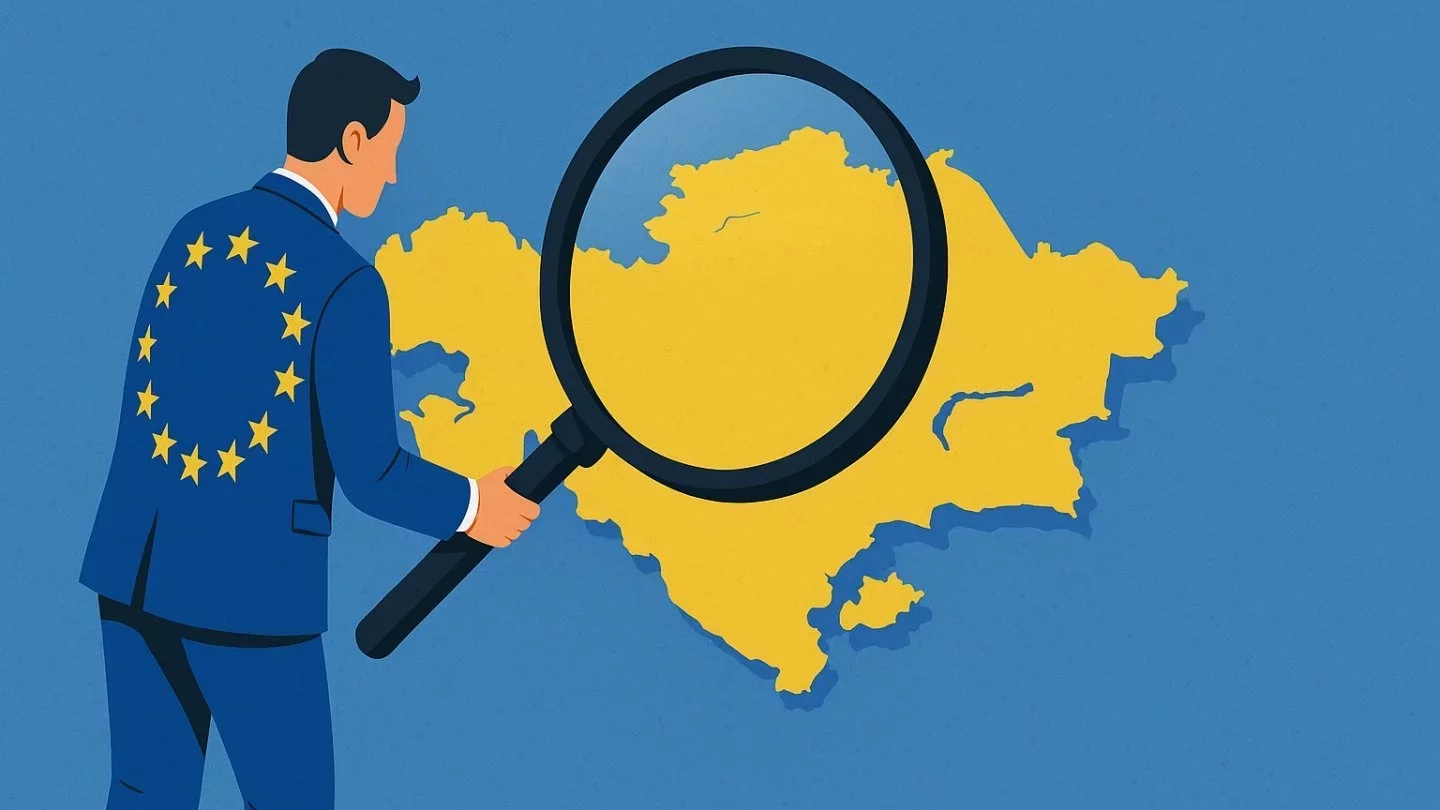 Photo: Dall-E, illustrative purposes
The European Union has postponed indefinitely consideration of its 19th package of sanctions against Russia.
This package could, for the first time, include economic restrictions targeting Kazakhstan. Orda.kz examines whether Kazakhstan should be worried about secondary EU sanctions.
Sanctions “Instruments”
Bloomberg first reported last week that EU authorities plan to include measures “against evading sanctions” aimed at Kazakhstan in the 19th package targeting Russia. Although the package has been postponed indefinitely and details remain unclear, the signal is evident: Kazakhstan’s close economic ties with Russia risk straining its relations with the EU, an equally vital trading partner.
If the EU introduces such measures, it could restrict imports of goods and technologies suspected of being re-exported to Russia. Kazakhstan-based companies involved in such schemes may face blocked transactions, sanctions, and difficulties with European banks, insurance, and logistics, political analyst Valery Volodin explained.
The Ministry of Trade has said it has received no notifications or warnings from the EU.
The Ministry insisted that Kazakhstan complies with its international obligations and takes measures to prevent sanctions circumvention. It also noted that it has recently agreed to allow Kazakh coal to be shipped to Europe via Russia — a move that could be resolved diplomatically if Brussels raises concerns.
Prohibited Goods
In January 2025, the EU’s special sanctions envoy, David O’Sullivan, named Kazakhstan-registered companies that have drawn Brussels’ suspicion. These firms were inactive before 2022 and then suddenly entered the market and sharply increased their activity. That pattern alone is not enough — sanctions require irrefutable evidence. In other words, the segment of Kazakh business truly at risk of EU pressure is narrow.
To impose sanctions, convincing evidence is needed that the exports are actually used for military purposes. Dual-use goods are most vulnerable first — electronics, machine tools, optics, components for drones, Valery Volodin says.
The previous, 18th package included restrictions on oil products refined from Russian crude (a potential threat to the Pavlodar Oil Chemistry Refinery). Individual Kazakh companies working with Russia have also ended up on blacklists before. But none of this has so far caused a serious rupture in EU-Kazakhstan relations.
The 17th package included China’s Poly Technologies Inc., which has a representative office in Astana; the company was targeted for supplying components for military helicopters to Russia.
The 16th EU package listed two Kazakhstan-based companies — Kazstanex and Metallstan LLP — but both had already been blacklisted by the UK and the US. The EU cited the supply of industrial machine tools that, it said, were used in military equipment production.
The list of items whose re-export to Russia could expose Kazakhstan:
- Components for assembling drones
- Industrial machines
- Spare parts for dual-use equipment
- Microchips
- Chemicals used in missile production
The last item is illustrated by the case of United Trading Group. In January 2025, investigative journalists found that hydrochloric acid had been supplied to Belarus through that company. This chemical is needed to produce microcircuits; those chips can be incorporated into missiles used by Russia to shell Ukrainian cities.
Kazakhstan also “exports” people to Russia. This is not about general labor migration — Kazakhstan and Russia are both in the Eurasian Economic Union (EAEU), which allows free labor exchange. The issue concerns specific projects sending Kazakh citizens to production sites linked to the war in Ukraine.
One example, previously reported in detail, involved recruiting Kazakh women to work at a combat drone assembly plant in Tatarstan.
Interests Come First
Political scientists say the likelihood of real sanctions against Kazakhstan is minimal — partly because several EU states are deeply tied to Kazakhstan through trade and energy supplies.
At this stage, this looks more like the EU flexing its diplomatic and political muscles than actually preparing to impose tough secondary sanctions — especially against a major partner like Kazakhstan. The threat isn’t zero, but large-scale measures won’t follow: the EU values Kazakh oil and its own interests too much, says political analyst Valery Volodin.
He adds that Brussels is in no rush to apply “sanctions circumvention tools” against Kazakhstan, since the EU itself sometimes exploits loopholes in its own restrictions.
Kazakhstan and other Central Asian countries often appear in unconfirmed investigations as transit points for dual-use goods that later end up in Russia’s defense sector. But neither Kazakhstan, nor Uzbekistan, nor Kyrgyzstan circumvent sanctions as actively as EU states themselves. So far the EU hasn’t created a full-fledged system of secondary sanctions — because in investigations, the biggest risk is accidentally exposing yourself. Valery Volodin
Political analyst Andrey Chebotarev also agrees that sanctions against Kazakhstan are against EU interests. He notes that Astana can use diplomatic leverage to highlight Brussels’ double standards: Europe still imports Russian energy, while Western economies rely heavily on Kazakh raw materials.
It would be strange, he argues, if countries like Romania or Hungary, which depend on Kazakhstan for energy, supported sanctions threatening such trade.
Objectively, it is not in the EU’s interests to impose new sanctions. First, Kazakhstan can point to the Enhanced Partnership and Cooperation Agreement with the EU, which does not oblige it to follow European sanctions against third countries. Second, reports show the EU has not only continued buying Russian gas but increased imports this year. In that case, Kazakhstan can highlight Europe’s double standards in dealing with Russia. Third, if some obscure Kazakh companies are sanctioned, it won’t affect trade much — but politically, relations will suffer, reducing the EU’s influence here and across Central Asia.Andrey Chebotarev.
The analyst notes that European sanctions have already targeted not only Kazakh firms but also Kyrgyz companies such as Muller Markt and Profflab.
This has further heightened tensions between the EU and Central Asia, a region where European businesses have major interests, particularly in geological exploration and the production of critical minerals.
I do not rule out that officials within the EU’s governing bodies — particularly from countries like Hungary, Italy, or France, which are most interested in fostering mutually beneficial relations with Kazakhstan — may block the introduction of secondary sanctions against it,said Andrey Chebotarev.
For now, the EU is making threats, but Kazakhstan is not afraid. With consideration of the 19th sanctions package postponed indefinitely, the real risk of direct or indirect European sanctions against Kazakhstan remains close to zero.
Original Author: Nikita Drobny
Latest news
- Suspect In Serial Fraud Case Extradited To Kazakhstan From Russia
- The National Bank Will Be Less Likely To Inform Kazakhstanis About Inflation
- Kazakhstan Extends Toll Road Payment Deadline
- Kazakhstan’s Industry Fell 3.1% In January–February Despite February Growth
- From Utilities to Security, Kazakhstan Approves New Smart Cities Methodology
- Tokayev Announced A Criminal And Administrative Amnesty Following The Adoption Of The New Constitution
- Tokayev Signed A Decree On The Implementation Of The New Constitution
- Casinos for Foreigners Only to Open in Kazakhstan
- Analysts Record a Sharp Surge in Immigration From China to Kazakhstan
- Baikonur Prepares To Launch Progress MS-33 Cargo Mission To The ISS
- Kazakhstani Scientists Are Preparing a Cancer-Prevention Supplement From Tomatoes and Watermelons
- Garbage Fines Now Fall Under Akimats: What the Changes Mean and What Risks Citizens Face
- CEC Announces Final Results Of Constitution Referendum
- Applications Begin For Bolashak And Scientific Internships In Kazakhstan
- Road Construction Violations Worth Hundreds of Billions of Tenge Uncovered in Kazakhstan
- Winter Paralympics End In Italy As Cortina Hosts Closing Ceremony
- CEC Announces Preliminary Results Of Vote On New Constitution
- Gasoline Has Risen In Price Again In Kazakhstan
- New Constitution Day And Parliamentary Elections: Tokayev’s Key Statements
- Nazarbayev Confirms Support For Tokayev And The New Constitution
