

Why Have Former USSR Countries Stopped Celebrating Victory Day?
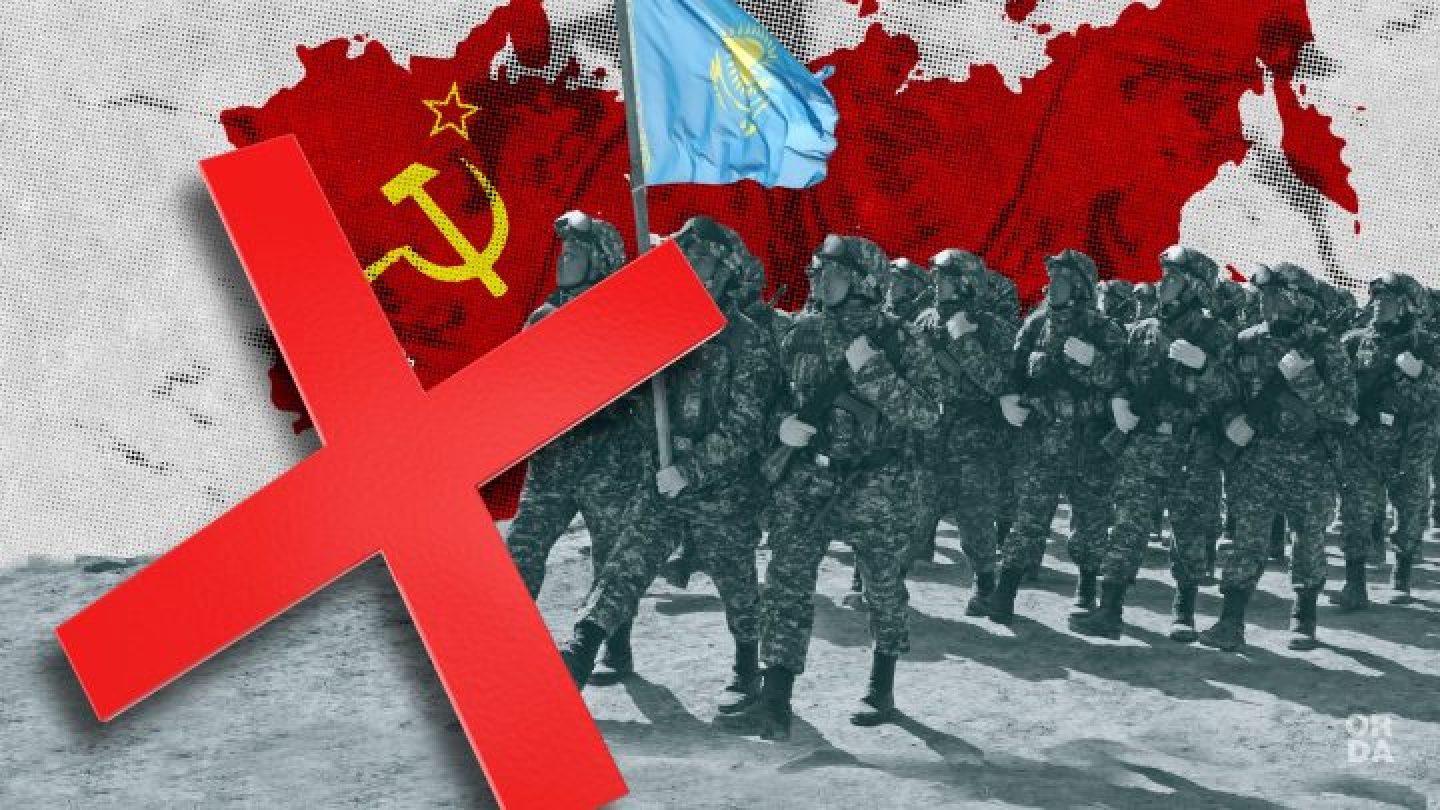
At the end of April, it became known that there would be no military parade on May 9 in Kazakhstan due to budget savings. The Ministry of Defense of the Republic of Kazakhstan announced this. This is not the first time this has occurred. Orda looked into the situation and made relevant comparisons with other nations that had traditionally celebrated the holiday.
May 9, by decree of the Presidium of the Supreme Soviet of the USSR, was declared Victory Day over Nazi Germany and "A Day of national celebration." Victory Day had been one of the most important holidays in the Soviet Union for decades. This date began to be widely celebrated in Russia under Russian President Vladimir Putin. Officials use the day not only to honor the memory of the millions who gave their lives but also to demonstrate the latest military equipment.
Other former Soviet republics also traditionally held Victory Day celebrations, although the events were usually more scaled back.
However, during the pandemic in 2020, the processions had to be suspended. But it is noteworthy that some countries of the former Union resumed celebrations, while some renounced Victory Day on a legislative level.
Silent Diplomacy Or The Search For Self-identification
The last Victory Day military parade in Kazakhstan was held back in 2019. Such events were banned due to the coronavirus pandemic in 2020 and 2021. The parade also did not take place last year in 2022. The country's Defense Ministry explained that it would be better to redirect funds meant for the event to military personnel’s combat training. The reason was the same this year.
Yet Russian political emigrant, leftist activist and publicist, Alexey Sakhnin, believes that references to economic difficulties are a decoy.
"Celebrations, even on a large scale, are not comparable to the capabilities of the state budget. They don't create problems. We are not at such a stage of the economic crisis now, when there is a struggle for every tenge. I think this is an excuse to justify or hide the real considerations behind these steps."
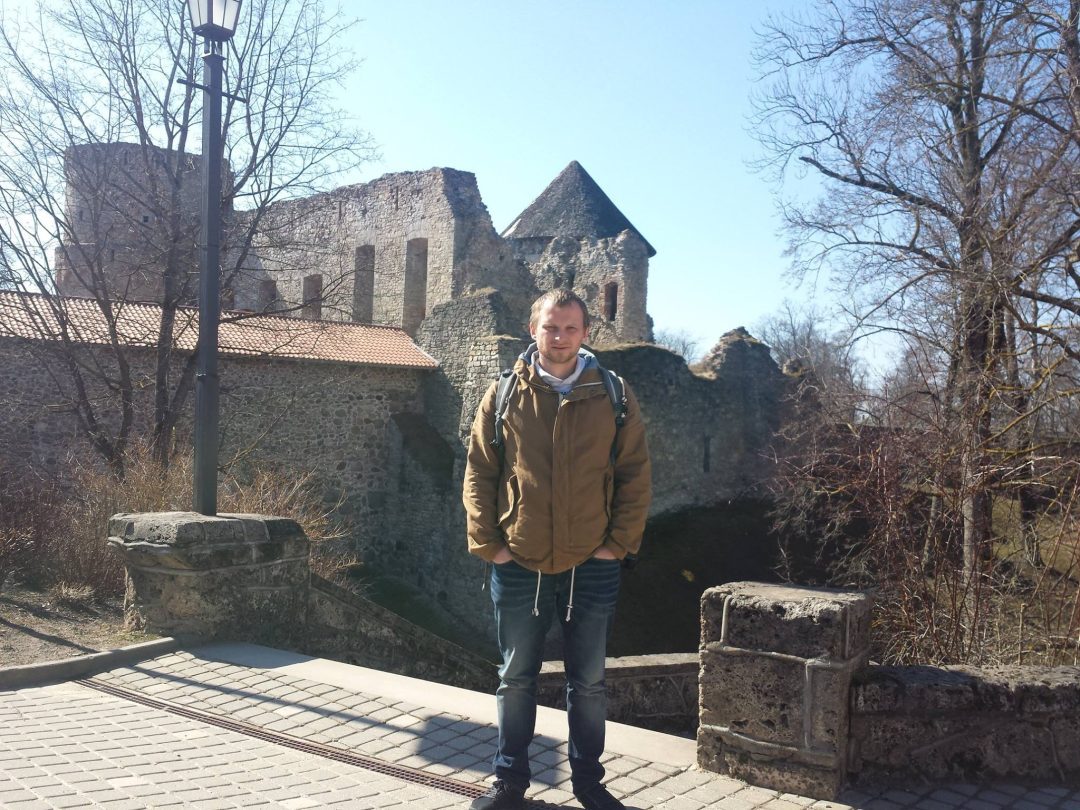
The main reason, according to Sakhnin, is that the previously formed cult and memorial complex around this event, which was designed to bring nations together, lost its significance after Russia's invasion of Ukraine.
"Under Yeltsin in 1995, 50 years of victory passed on a large scale. Then came what the Russian authorities called a staple. This has become an important element of the Russian state myth. And as Russia gained, or seemed to gain, strength, the countries of the former Soviet Union borrowed these symbols and these events. Thus, the countries were united on the basis of a common historical memory and a common cult. But after February 24, the Russian leadership achieved unprecedented "successes" in strengthening its international authority. This called into question what this memorialization was for: the need to get closer to Russia, maintain common cultural codes with it, create an ideologically unified space, has disappeared."
According to the activist, many citizens and regimes do not wish to be associated with what the Kremlin is doing in Ukraine. They are using this moment to distance themselves from Russia and gain greater independence.
Kazakh political scientist Aidar Amrebayev also believes that it is quite logical for Kazakhstan’s state apparatus to abandon the parade in the context of de-Sovietization.
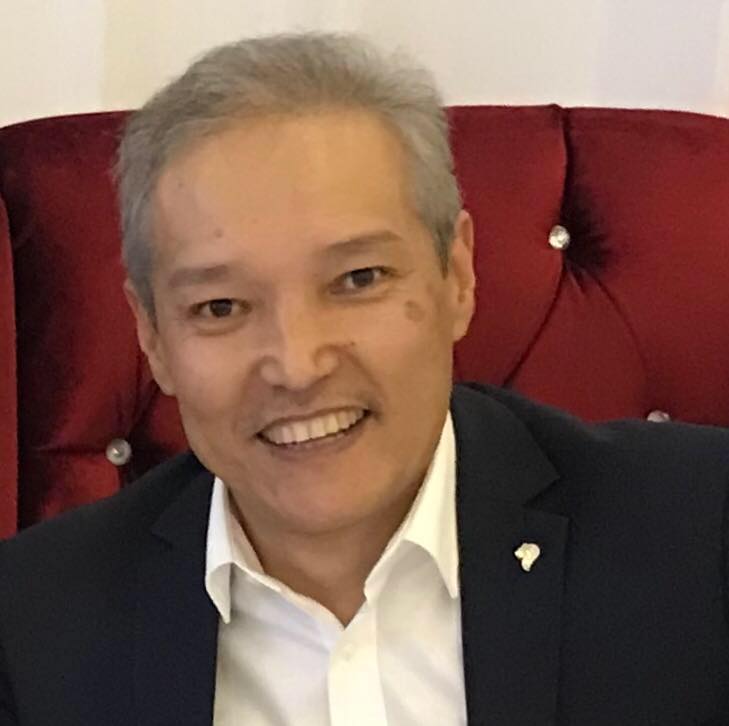
"When we talk about historical memory, unfortunately, it becomes the object of various and not always correct interpretations. New historical facts are emerging, there are cultural interests of the people associated with a new civilized model of national identity. I believe that the restoration of our objective historical memory is an urgent issue for Kazakhstan. It cannot be painted in the black and white colors characteristic of Soviet ideological discourse. This picture must be overcome and closed as a tragic page in our history."
You Can't Forget to Remember
In 2022, the Baltic states began to collectively ban symbols directly related to the Great Patriotic War. For example, in Latvia last year, mourning was declared throughout the country and celebrations were banned. They explained that it was completely inappropriate to do such things in the current situation.
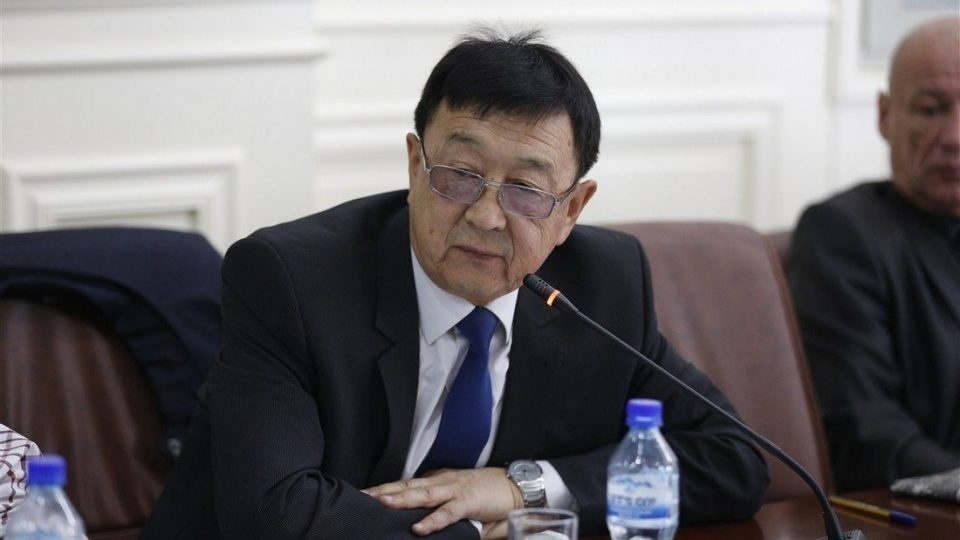
Kyrgyz political scientist Murat Beishenov connects such actions with the influence of the West.
"The Anglo-Saxon civilization is not happy that the Soviet Union won the Second World War. This is all done by the West so that there will be no Victory Day at all. The work to achieve this goal is being carried out successfully. As an example, you can look at the Baltic countries. However, you cannot do that. After all, we defeated fascism, we gave 30 million lives to just forget everything now? Therefore, we must defend ourselves and hold parades. Do not disown your history. Whoever does this has no future."
Alexey Sakhnin also notes that the Baltic countries have introduced a consistent and open ideological campaign aimed at severing ties with the Russian Federation while using anti-democratic methods towards Russian-speaking minorities. In Kazakhstan, according to the activist, they are not ready for such a radical ideological separation yet.
"Kazakhstan is acting more moderately, but in the same direction. We will not hold a parade, but we will also not beat with batons Russian pensioners who go to the park either. And in Riga, maybe, they will, as dangerous ideological saboteurs. Despite all the criticism of the authorities of Latvia, Lithuania or Kazakhstan, the Kremlin, of course, gave the opportunity and the reason for such restrictions."
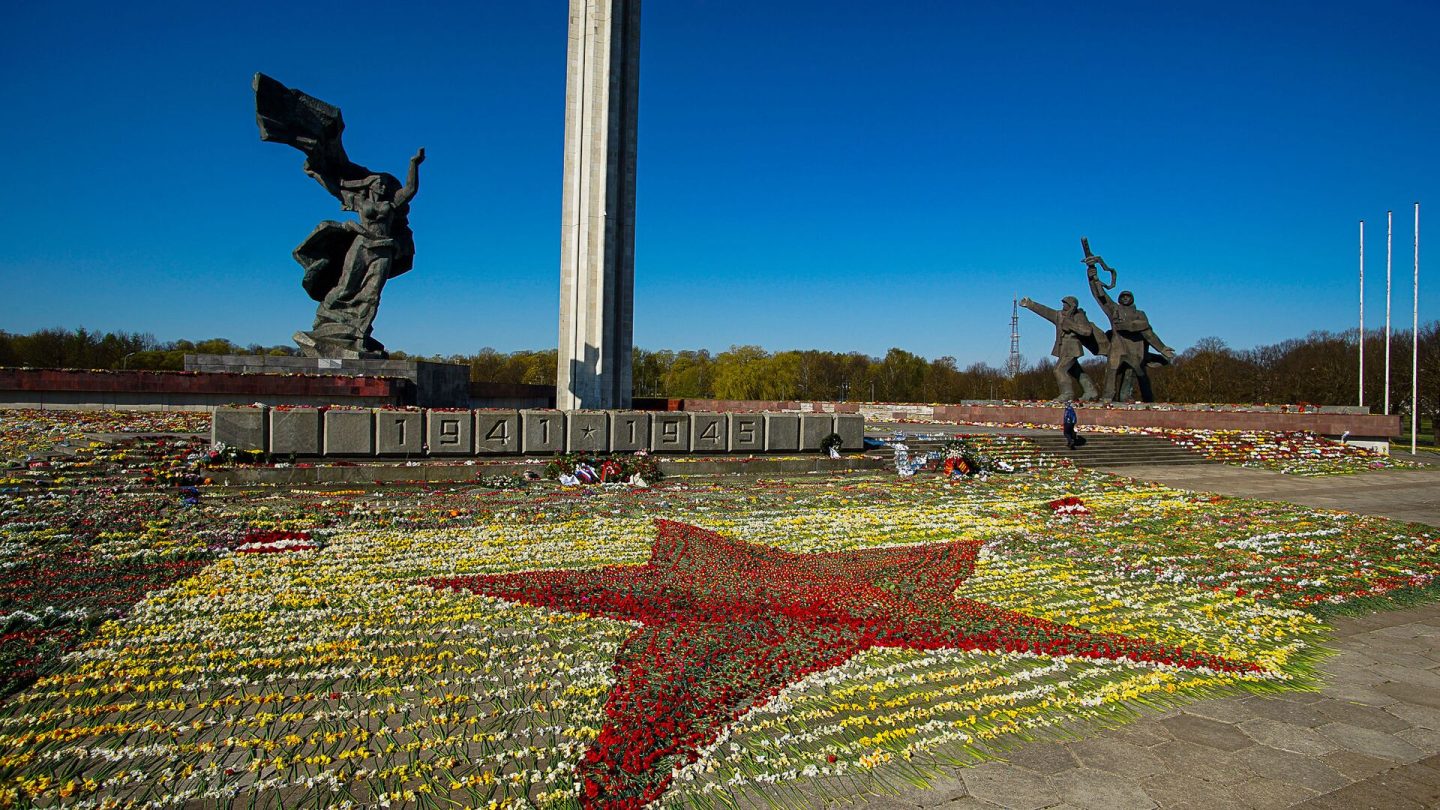
In addition to the Kremlin's actions, there is another factor – the inconsistency of the Soviet period.
Aidar Amrebayev shared that the years of the Union were not as white and fluffy as once imagined.
"We understand the inconsistency of the events that took place both before, during and after the Second World War. Before it began, Kazakhstan experienced the tragedy of the 1930s associated with Holodomor and political repression, when the brutal Stalinist regime created a concentration camp out of our republic. Then thousands of our compatriots died on the battlefields, fulfilling their military duty at any cost. If we proceed from the simplest human feeling of compassion, then who will celebrate holidays in such a situation and launch fireworks on the bones of the dead and repressed? This is a desecration of the memory of these people, their relatives and friends."
Dancing on Bones and Power Demonstrations
Kazakh political scientist Aidar Amrebayev also believes that the parades held during the current war are the height of cynicism.
"In some countries, this is a day of mourning and commemoration of the victims of this tragedy. Some use this excuse to extract political dividends to justify today's crimes. I believe that in the situation of the ongoing war in Ukraine, when civilians are being killed, towns and villages are being destroyed, holding Victory parades with separatist St. George ribbons and slogans "We can repeat" is the height of cynicism. It's like dancing on the bones of dead people."
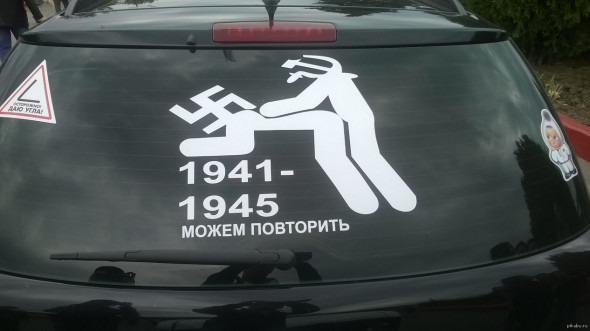
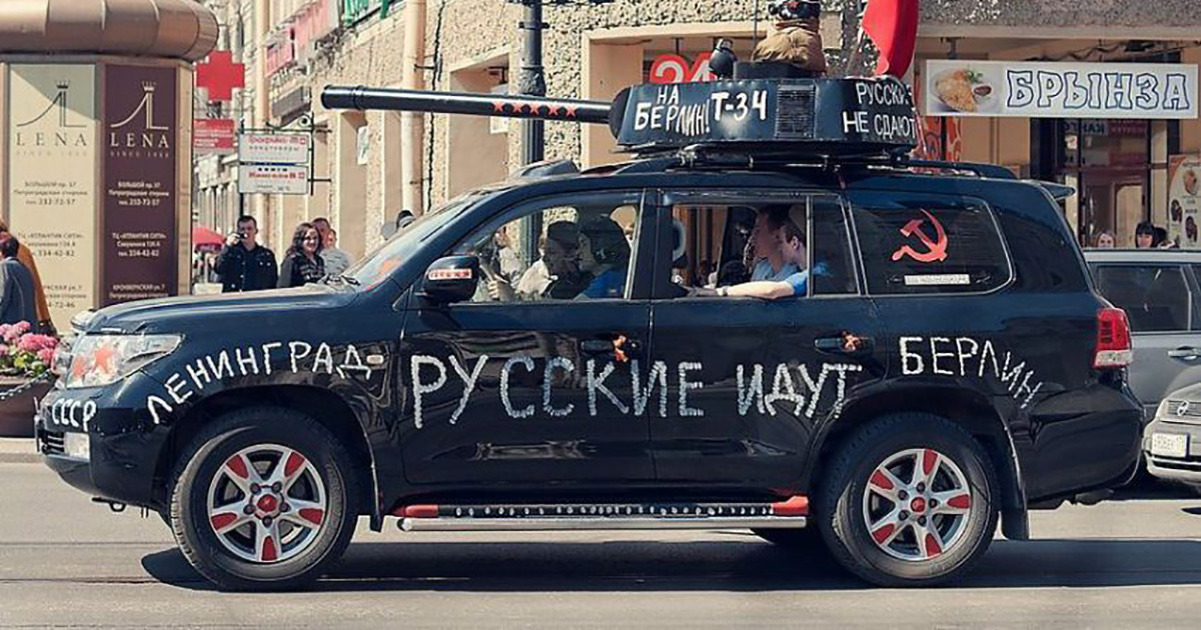
Sakhnin also speaks about the slogan "We can repeat". He notes that this changes the living memory of a generation to a symbolic and invented memorialization that denies the consequences of a terrible war.
"In the post-Soviet period, the slogan "We can repeat" appeared in Russia, which Russians put on their cars. This is a complete denial of the real war. From that war, the peoples of not only the Soviet Union, but of Europe and the world, put forth a completely opposite slogan – "Never again." Millions of people who were burned in their huts, captured to work in Germany or turned into shaving brushes. This should never happen again."
Alexey Sakhnin also draws attention to the fact that the holiday turned into a demonstration of national military power in Putin's and Yeltsin's interpretation.
"Here we can roll out threatening rockets, turn the whole world into dust and atomic ash, and in general we can repeat. However, it turned out that this demonstration of military equipment is complete nonsense and a bluff."
Indeed, in 2015, the newest Russian T-14 Armata tank stalled during a rehearsal for the Victory Parade on Red Square in Moscow.
Holiday or Memory
On May 8, 2023, President of Ukraine Volodymyr Zelenskyy submitted to the Verkhovna Rada a bill to turn May 8 into the Day of Remembrance and Victory over Nazism in World War II and make May 9 the Day of Europe.
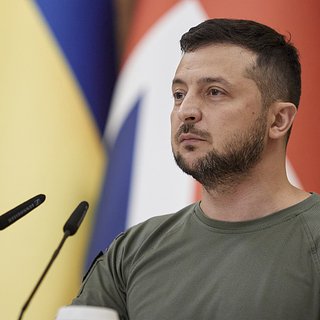
"We will never forget the contribution of the Ukrainian people to the victory over Nazism. And we will not allow the lie that victory in that war could have taken place without the participation of any country or people. As then we destroyed evil together, so now we are destroying the same evil together. Unfortunately, the evil has returned. Although now it is a different aggressor, the goal is the same – enslavement or destruction,"
Zelenskyy
In February, a group of deputies submitted a bill on the abolition of holidays on March 8, May 1 and May 9 to the Verkhovna Rada.
In an explanatory note, the initiators of the bill indicated that in order to avoid economic losses, "communist rudiments should be eliminated" – the celebration of May 1 and May 9.
"The end of the Second World War is celebrated on May 8. However, in other states, this is not a holiday, but a day of mourning in memory of tens of millions of victims. The appropriate character should be returned to Ukraine, which allows us to do without celebrations on bones,"
the initiators of the bill emphasize.
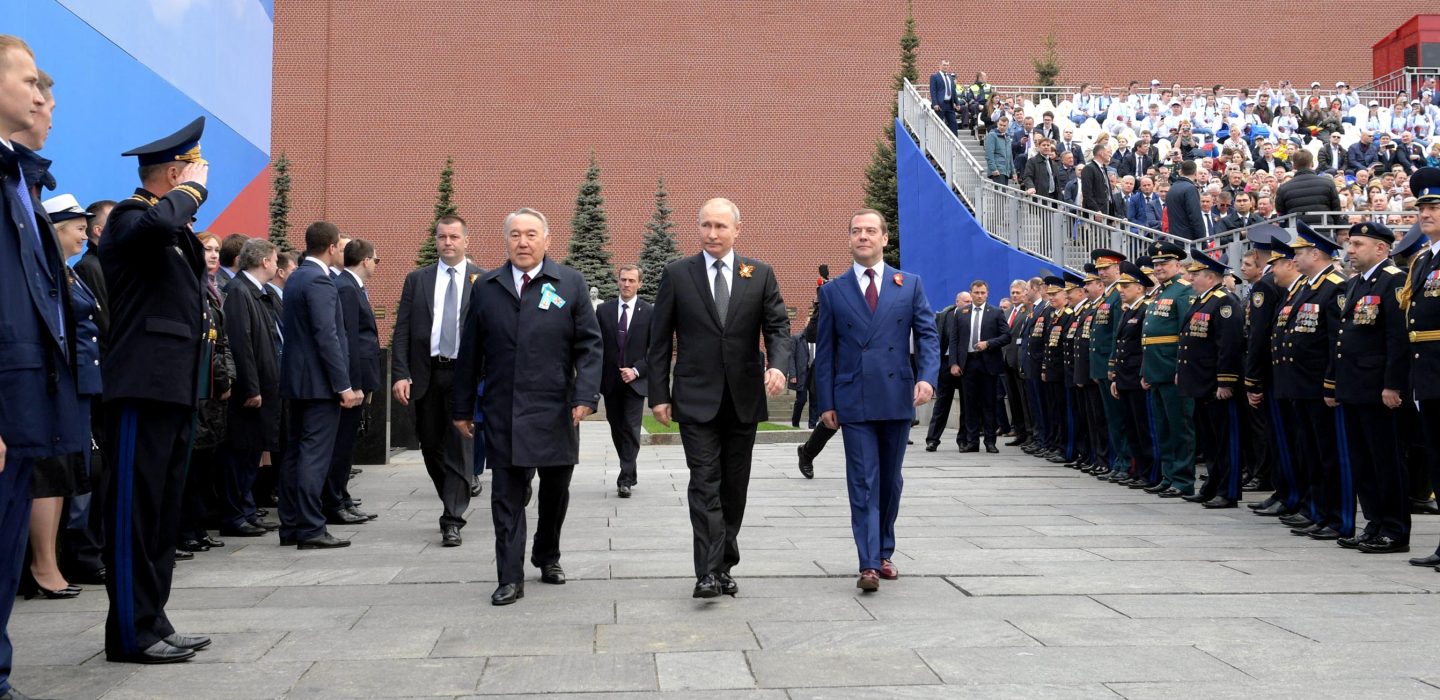
According to Amrebayev, Kazakhstan should also reconsider turning the celebrations into a commemoration.
"It is necessary to mark the day of May 9 as a Day of commemoration of the victims of the Second World War, support for the relatives of those who died or participated in it. We need some new ethical basis for holding such events. There should be a very humane attitude to this day, as to an event that claimed a huge number of human victims."
The celebration is treated more neutrally in the countries of Central Asia. Kyrgyz political scientist Murat Beishenov, said that he himself would go on the march to spite "the enemies".
"The Immortal Regiment campaign will definitely be held in Kyrgyzstan. We still adhere to this ideology and neutrality. It is sad that many people think that once they have spoken out about the war between Russia and Ukraine, it means that everything should be forgotten on May 9 and May 1. For me, as a Soviet person, of course, it is insulting and sad that history is being forgotten. I myself will definitely go out with my friends to the procession to spite the enemies. People of the Soviet period from different countries, I think, will also have the courage and come out.”
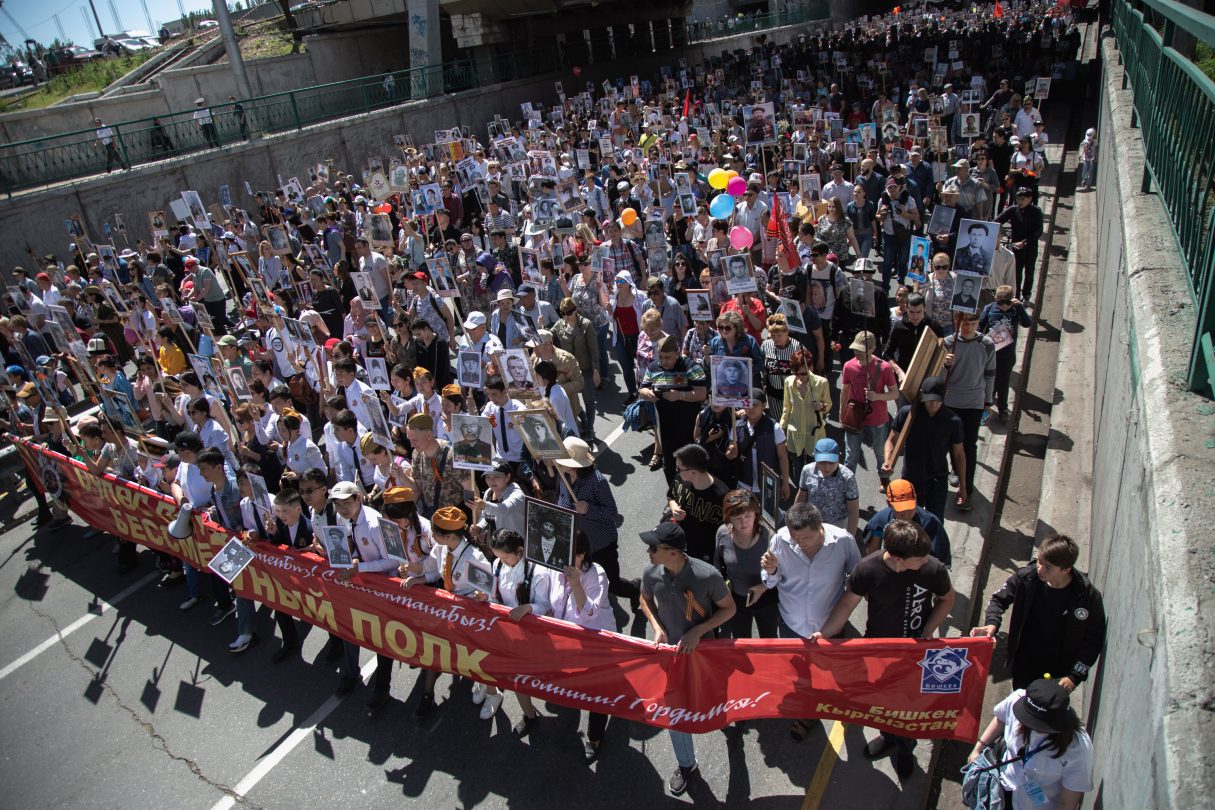
Kyrgyzstan held the traditional campaign “Immortal Regiment” this year. A festive fireworks display was organized in Uzbekistan on May 9.
In Russia, the military parade took place as usual. Qasym-Jomart Toqayev confirmed his participation in the event only on the evening of May 8. Tajik President Emomali Rahmon, Kyrgyz President Sadyr Zhaparov, Turkmen President Serdar Berdimuhamedow, Belarusian President Alexander Lukashenko, and Armenian Prime Minister Nikola Pashinyan were also present.
Original Author: Silam Aqbota
Disclaimer: This is a translated piece. The text has been modified the content is the same. Please refer to the original article in Russian for accuracy. The original article was written on 09/05/2023, It has been edited to reflect the current situation as of 10/05/2023.
Latest news
- Orda.kz Editorial Team to Cease Operations on September 1
- The Price of a Degree: How Students in Kazakhstan Pay for University
- Second Przewalski’s Horse Foal Born as Species Returns to Kazakhstan
- Kazakh Mining Companies Can Recalculate Purchases if Tenge Weakens
- Kazakhstan Names First Vice President in Three Decades
- What Almaty’s Bus Shelters Are Missing
- 400-Truck Queue Builds at Kazakh–Kyrgyz Border
- Kazakhstan Ready to Help Feed and Rebuild Gaza
- Tokayev Establishes New Presidential Security Body
- Almaty Takes Back Its Nearly Century-Old Hippodrome
- No More Guesswork on Savings: Kazakhstan Tightens Energy Audits for Businesses
- Public Money Could Be Used to Rescue Failing Kazakh Banks
- Third Kazakh Woman Reported Missing in Nepal-China Flood Zone
- Falconer Convicted Over 35 Protected Birds, Spared Punishment Under Amnesty
- Kazakh Citizen Detained in Yakutia in Phone Fraud Case
- Yuan Instead of Dollars? KazMunayGas Draws Record Demand in Asia
- China Gains Oil-Market Influence as OPEC+ Weakens
- Kazakhstan to Divide Smartphones Into White, Gray and Black Lists
- Kazakhstan’s Government Formally Resigns as First Kurultai Session Opens
- Rare Lynx Sighting Recorded in Northern Kazakhstan
