

Week In Review: Pipelines, Gas, Talks, And More...
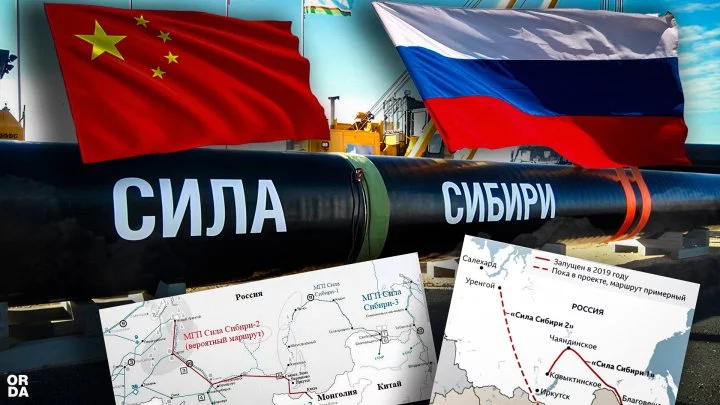 Photo: Orda
Orda.kz has put together a brief synopsis of last week's news. This edition focuses on recent announcements made about the Power of Siberia 2.
A Deal Struck?
On September 2, 2025, Gazprom chief executive Alexey Miller announced the signing of a legally binding memorandum with China for the construction of the Power of Siberia-2 gas pipeline and the Soyuz–Vostok transit route through Mongolia.
The deal envisions 30 years of gas supplies at an annual volume of 50 billion cubic meters.
The parties also agreed to expand the Power of Siberia pipeline’s capacity from 38 to 44 billion cubic meters per year, and to increase throughput on the Far Eastern route to 12 billion cubic meters annually.
Gazprom and China National Petroleum Corporation signed a memorandum on strategic cooperation, which Miller described as “a new stage” in joint projects.
Reports in November 2024 had suggested the possibility of a separate pipeline via Kazakhstan, but China’s ambassador to Russia, Zhang Hanhui, voiced skepticism at the time, pointing to the need for entirely new infrastructure.
He instead highlighted the Power of Siberia-2.
Experts Speak Out
While Moscow framed the new memorandum as a breakthrough, experts cautioned against overstating its significance. Commentators, including Viktor Gao and Alexander Gabuev, noted that the document outlines intentions rather than final commitments, lacking key commercial terms such as pricing and timelines.
During the Eastern Economic Forum in Vladivostok, President Vladimir Putin said that gas exports via Power of Siberia-2 would use the same pricing formula applied to European deliveries, though market indicators in Asia and Europe differ; Asian benchmarks are generally lower.
Following Moscow's invasion of Ukraine, Russia lost its dominance in the European gas market. It has since sought replacements, including proposals for a pipeline via Kazakhstan to Uzbekistan.
Russian Energy Minister Sergey Tsivilyov confirmed the project remains in a preliminary feasibility stage, with clearer schedules expected in the coming year.
Bottom Line
Analysts stress that Beijing holds the upper hand in negotiations. Orda's Week In Review team has also pointed out this element.
Read also:
- Week In Review: Power Plays, Fractured Fronts, And More...
- Week in Review: Long-range Missiles, Dismissals, and More.
Energy economist Tatiana Lanshina told The Insider that China has no urgent need for additional gas supplies and is in a position to dictate terms. Prices for Chinese deliveries are projected to remain below those once paid by Europe, which is set to halt Russian gas purchases entirely by 2027.
Lanshina added that Power of Siberia-2 is designed to divert Western Siberian gas flows that historically went to Europe, with the Mongolian route considered the most direct and practical option.
Chinese media, meanwhile, reported on a package of 20 agreements with Russia but made no specific reference to Power of Siberia-2, according to The Financial Times. The pipeline has long been negotiated, with little clarity on the details.
In the given circumstances, Russia has little bargaining power regarding The Power of Siberia 2, and the stakes are high, as the investment may not pay off, considering potentially lower prices, a long construction timeframe, and China's ability to dictate whether gas will flow.
Moscow will still push forward, as few other options remain for the gas earmarked for the project. Beijing will also likely allow it to move forward, considering its renewed tariff battle with the U.S., albeit with very little to lose and further balancing of its energy import, so as not to become overreliant.
Latest news
- Orda.kz Editorial Team to Cease Operations on September 1
- The Price of a Degree: How Students in Kazakhstan Pay for University
- Second Przewalski’s Horse Foal Born as Species Returns to Kazakhstan
- Kazakh Mining Companies Can Recalculate Purchases if Tenge Weakens
- Kazakhstan Names First Vice President in Three Decades
- What Almaty’s Bus Shelters Are Missing
- 400-Truck Queue Builds at Kazakh–Kyrgyz Border
- Kazakhstan Ready to Help Feed and Rebuild Gaza
- Tokayev Establishes New Presidential Security Body
- Almaty Takes Back Its Nearly Century-Old Hippodrome
- No More Guesswork on Savings: Kazakhstan Tightens Energy Audits for Businesses
- Public Money Could Be Used to Rescue Failing Kazakh Banks
- Third Kazakh Woman Reported Missing in Nepal-China Flood Zone
- Falconer Convicted Over 35 Protected Birds, Spared Punishment Under Amnesty
- Kazakh Citizen Detained in Yakutia in Phone Fraud Case
- Yuan Instead of Dollars? KazMunayGas Draws Record Demand in Asia
- China Gains Oil-Market Influence as OPEC+ Weakens
- Kazakhstan to Divide Smartphones Into White, Gray and Black Lists
- Kazakhstan’s Government Formally Resigns as First Kurultai Session Opens
- Rare Lynx Sighting Recorded in Northern Kazakhstan
