

Week In Review: Drills, Denials, And More...
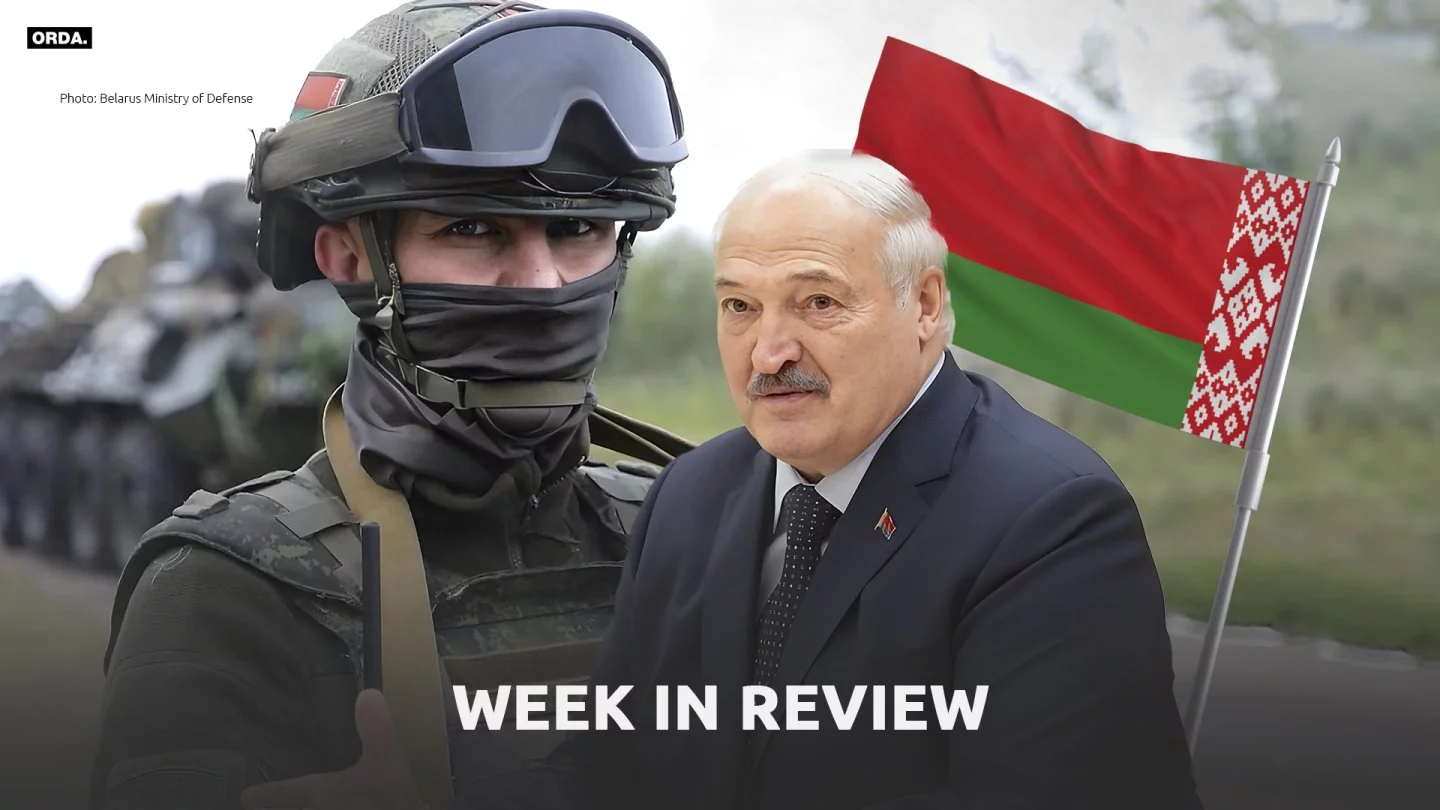 Photo: Orda
Orda.kz has put together a brief synopsis of last week's news. This edition focuses on Belarus.
Side note: the Week In Review team will be taking an extended hiatus after this edition.
Statkevich’s Release and Return to Prison
Belarusian opposition leader Nikolai Statkevich, 69, was released on September 11 as part of a U.S.-brokered deal that freed 52 political prisoners.
However, Statkevich defied the arrangement, insisting he would remain in Belarus and not depart for Lithuania. His decision led to his return to a prison colony in Hlybokaye, where he had already endured over two years of strict isolation since his 2021 sentencing for “organizing mass unrest.”
President Alexander Lukashenko later confirmed the reincarceration:
He went there, apparently into the neutral zone, crossed over to the Lithuanians. They asked him: ‘Do you want to go back to Belarus? You’ll end up in prison…’ [Statkevich replied]: ‘I’ll go to prison.’ Well, fine. (…) They took him back. We couldn’t just leave him there. After all, he’s our guy. Or rather, our citizen. They brought him back to Belarus. Why offend him?! But if he wants to be a leader in burning cars and police houses, then let him stay there [in prison]. If he wants to arrange his old age somehow and live it out like a human being <…> well, enough — he’s fought his battles a bit, that’s another story. One has to approach this humanely
Family members say they have been denied official confirmation of his whereabouts, with his wife filing a missing persons report.
Further Pardons Ahead of Unity Day
Lukashenko later announced the pardon of 25 prisoners convicted of “extremist crimes” ahead of Belarus’s Unity Day holiday. Officials emphasized that all had admitted guilt and expressed remorse. The gesture followed the above release.
The U.S. subsequently lifted sanctions on Belarus’s national airline, Belavia.
Lukashenko publicly thanked former U.S. President Donald Trump for “peace efforts” and hinted at the possibility of a broader “global deal” with Washington. The Belarusian president has previously made similar pardons, one going back as far as January.
Zapad-2025 Military Exercises
From September 12–16, Belarus hosted Zapad-2025, a joint Russian-Belarusian military exercise. The drills included nuclear weapons planning scenarios and testing of the “Oreshnik” medium-range ballistic missile.
Notably, foreign military observers, including representatives from 23 countries — notably NATO members Türkiye, Hungary, and the United States — attended. The U.S. defense attaché was given front-row access, a move that Belarusian officials highlighted as a sign of transparency.
The exercises also involved contingents from CSTO, SCO, and other partner states.
Against that backdrop, Poland had announced it would deploy 40,000 troops to its eastern border and close crossing points. Meanwhile, Estonia claimed three Russian MiG-31s violated its airspace near Vaindloo Island on Sept. 19, while Russia denied the incursion.
And, on September 20, during a massive Russian missile and drone strike on Ukraine, Poland again scrambled its own and allied fighter jets. Ground-based air defense and radar systems were placed on high alert to prevent any cross-border spillover. The strike, according to Ukraine’s Air Force, involved 579 Shahed drones, 8 Iskander ballistic missiles, and 32 Kh-101 cruise missiles.
This was the second such response in September, following a similar scramble on the 13th, after drones crossed into Polish territory during strikes on western Ukraine. Warsaw has since appealed to NATO allies for additional air defense systems and counter-drone technologies.
Latest news
- Kazakhstan Suspended 11 Polling Stations Abroad Due to Middle East Escalation
- Kazakhstan’s Foreign Ministry Comments on Disappearance of Citizen After South Korea Factory Fire
- ChatGPT Among AI Tools Recommended for School Lessons in Kazakhstan
- Missing Kazakh Woman Found in Vietnam Four Days Later
- Seven-Year-Old Kazakh Girl Returned From Georgia Following Six Months of Diplomatic Efforts
- Kazakhstan Plans to Rent 11 Helicopters for 22 Billion Tenge Ahead of the Fire Season
- Flights Delayed and Canceled at Astana Airport Due to Bad Weather
- More Than 8,500 Kazakhstanis Evacuated From the Middle East
- Kazakh Experts Explain Why AI Is Becoming the Main Weapon of Modern Warfare
- Kazakhstan Dismisses Reports of “Acid Clouds From Iran” Heading Toward Central Asia
- Kazakhstan Continues Middle East Evacuation, More Than 7,300 Brought Home
- Kazakhstan Recommended for U.S. Watch List as Vorontsov Case Draws New Attention
- Putin Bans Extradition of Foreign Nationals Who Served in the Russian Army
- Kazakh Researcher Reportedly Jailed in Xinjiang for “Misinterpreting” Abay
- Almaty Residents Warned of Elevated Air Pollution
- Over 6,000 Kazakhstanis Return Home From the Middle East
- The National Bank Invests $350 Million in Crypto-Related Assets
- Tokayev Congratulates Kazakhstani Women on International Women’s Day
- Building a House in Kazakhstan Has Become Cheaper
- Kazakhstan May Allow Crypto Payments for Goods and Services
