

Week In Review: A Rumbling South Caucasus, And More
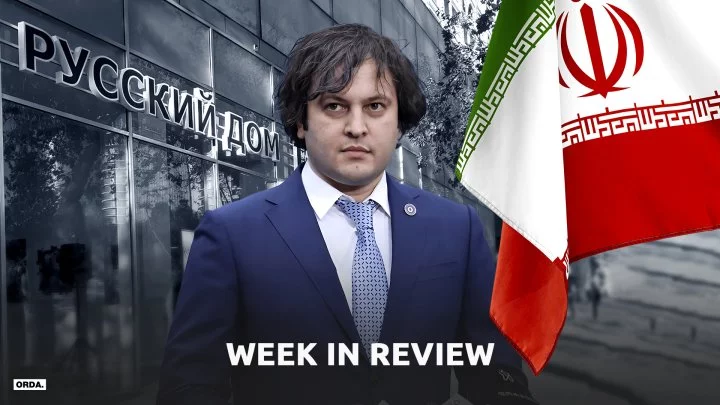
Orda has put together a brief synopsis of last week's news.
Georgia's Ongoing Internal Crisis
Georgia's parliament passed stricter administrative laws targeting protesters, increasing potential detention periods from 15 to 60 days. The legislative body, dominated by the ruling Georgian Dream party, also voted on February 5 to terminate the mandates of 49 opposition MPs.
Amid the Trump Administration's crackdown on USAID, the nation's Parliament Speaker Papuashvili raised the stakes even further.
Papuashvili demanded transparency from the European Democracy Fund regarding its activities in Georgia.
Georgia is not a top priority for the Trump administration compared to China, Russia, Ukraine, US border security, and the Middle East, creating uncertainty about potential intervention — especially given already suspended ties.
The above trends have also strengthened the opposition's claims of increasing authoritarianism.
Trump's team sending confusing signals regarding peace talks to end Russia's war against Ukraine also does not inspire confidence about his administration's effectiveness and genuineness in such international affairs.
Armenia's Strategic Pivot?
Prime Minister Pashinyan, speaking at the Atlantic Council in Washington, announced Armenia's diversification of international relations.
While maintaining normal relations within the Eurasian Economic Union, Armenia "has frozen" its Collective Security Treaty Organization membership and pursues strengthened ties with the EU and US.
A recent Strategic Cooperation Charter with the United States looks to have marked a notable shift in Armenian foreign policy.
Meanwhile, Iran has expressed readiness to facilitate dialogue between Armenia and Azerbaijan, emphasizing the importance of regional stability. Its role in this capacity is questionable, given past tensions between Baku and Tehran.
Iranian Ambassador to Armenia Mehdi Sobhani revealed ongoing work on a comprehensive strategic document between Iran and Armenia, aiming to increase bilateral trade from $75 million to $3 billion.
Trump's administration has already signaled that pressure on Tehran will return, potentially putting Yerevan on a diplomatic tightrope.
At the same time, Iranian Ambassador to Armenia Mehdi Sobhani stated that Armenian authorities assured Tehran their strategic partnership with the US is not directed against Iran.
Yerevan is keen on maintaining relations with Tehran to counterbalance other regional actors. Indeed, Iranian officials have consistently voiced support for Armenian territorial integrity.
Yerevan will still have to balance relations between the West and Iran while continuing to navigate strained ties with Moscow.
Belarus Considers Chinese-Style Governance, Troubling News from Tajikistan
On February 4, the Moscow Times reported that Belarus's Central Election Commission head, Igor Karpenko, proposed abandoning direct presidential elections.
He suggested a Chinese-style system where the All-Belarus People's Assembly would appoint the head of state. Alexander Lukashenko secured his seventh term with 86.82% of the vote, a result unrecognized by Western countries.
Not long before, a violent incident occurred on February 3 at Tajikistan's Vahdat prison, 24km from Dushanbe.
Nine inmates attempted to take hostages and escape.
The official statement from Tajikistan's Justice Ministry reports three prison staff were seriously injured, and three inmates were killed. Independent media outlet TajNews documented seven inmate casualties, with a potential ISIS* affiliation. This follows previous major prison riots in 2018 and 2019 that were claimed by ISIS,* banned in Kazakhstan.
Later in the week, Tajikistan's Supreme Court concluded a closed-door "attempted coup" trial, delivering severe sentences to prominent figures.
Before this, the OSCE announced on February 4 the cancellation of its parliamentary election observation mission.
The Tajik authorities' failure to guarantee observer accreditation prompted the withdrawal despite plans to deploy 170 observers to monitor election administration, process integrity, and democratic freedoms.
Russian PM Catches Flack
A dispute emerged because Russian Minister Mikhail Mishustin raised concerns about "unfounded claims" against Russian companies operating in Kyrgyzstan. He characterized some actions as "illegal and occasionally extortionate."
Kyrgyz officials did not stand idly by.
Tax Service Chief Almamat Shykmamatov diplomatically suggested he may lack "objective information," describing the situation as a routine administrative matter that has been unnecessarily politicized.
He emphasized that Kyrgyzstan's tax regulations apply uniformly to all companies, regardless of origin.
A Kyrgyz Parliament Member, Zhanar Akaev, also revealed that Yandex.Taxi had paid over $100 million in previously undisclosed taxes following investigations.
Allegedly, $5 million is still outstanding. The company faces additional controversy over its 21% commission rate for drivers.
MP Kamila Talieva also chimed in.
She criticized Prime Minister Adylbek Kasymaliev's delayed response to Mishustin's statements, particularly objecting to Mishustin's use of "Kirgizia" instead of the country's official name, the Kyrgyz Republic.
Such a rebuke stands out, considering the widespread use of Kirgizia among Russian media.
Flashy statements aside, Kyrgyzstan's political trajectory and Russia's ongoing isolation will keep the two aligned. Still, an allegedly leaked and unverified document points to Russian authorities' concerns about losing influence in Central Asia.
Azerbaijan Shows Foreign Entities The Door
Azerbaijan announced on February 6 the closure of USAID and Russia's Rossotrudnichestvo offices.
USAID's departure was long anticipated, having effectively ceased operations since June 2024.
The expulsion of Russia's soft power agency is still peculiar, given the traditionally close ties between Baku and Moscow.
The move could be linked to Azerbaijan's frustrations over the December AZAL aircraft crash and Moscow's demonstrating hesitance and reiterating the preliminary nature of the recently released investigation report.
Other reports, however, suggest that internal policies, including concerns over espionage activities, drove the decision.
Against this backdrop, President Aliyev approved $1 million in humanitarian aid to Ukraine, though Baku has demonstrated support before.
The closure of the Russian House, officially attributed to documentation issues, leaves room for potential reinstatement should relations improve, leaving the ball in Moscow's court.
* Terrorist organization recognized as extremist in Kazakhstan: ISIS (Islamic State, by decision of the court of the Yesil district of Astana dated October 15, 2015)
Latest news
- Orda.kz Editorial Team to Cease Operations on September 1
- The Price of a Degree: How Students in Kazakhstan Pay for University
- Second Przewalski’s Horse Foal Born as Species Returns to Kazakhstan
- Kazakh Mining Companies Can Recalculate Purchases if Tenge Weakens
- Kazakhstan Names First Vice President in Three Decades
- What Almaty’s Bus Shelters Are Missing
- 400-Truck Queue Builds at Kazakh–Kyrgyz Border
- Kazakhstan Ready to Help Feed and Rebuild Gaza
- Tokayev Establishes New Presidential Security Body
- Almaty Takes Back Its Nearly Century-Old Hippodrome
- No More Guesswork on Savings: Kazakhstan Tightens Energy Audits for Businesses
- Public Money Could Be Used to Rescue Failing Kazakh Banks
- Third Kazakh Woman Reported Missing in Nepal-China Flood Zone
- Falconer Convicted Over 35 Protected Birds, Spared Punishment Under Amnesty
- Kazakh Citizen Detained in Yakutia in Phone Fraud Case
- Yuan Instead of Dollars? KazMunayGas Draws Record Demand in Asia
- China Gains Oil-Market Influence as OPEC+ Weakens
- Kazakhstan to Divide Smartphones Into White, Gray and Black Lists
- Kazakhstan’s Government Formally Resigns as First Kurultai Session Opens
- Rare Lynx Sighting Recorded in Northern Kazakhstan
