

Russia Promises New Route for Kazakh Oil to Europe After Druzhba Halt
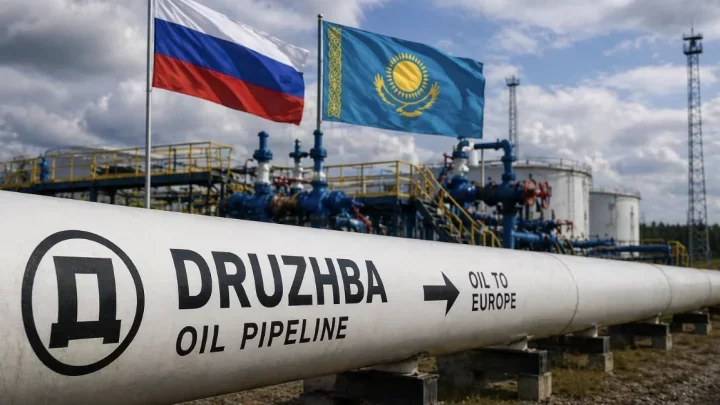 AI-generated illustration
Kazakh oil that until recently was supplied to Germany via the Druzhba pipeline through Russian territory will now be redirected through other routes, Russian Deputy Prime Minister Alexander Novak said. Russia has explained the disruption of supplies through Druzhba by citing technical problems, Orda.kz reports.
From May 1, the volume of Kazakh oil supplies via Druzhba, which previously went to Germany, will indeed be redirected to other available logistics routes. This is due to current technical capabilities.Novak said.
Russian presidential press secretary Dmitry Peskov also explained the halt in oil pumping through Druzhba by referring to “technical issues.” According to him, the interests of Kazakhstan’s partners will be ensured through the use of other routes.
Disruptions in deliveries via Druzhba became known in the middle of the week. Energy Minister Yerlan Akkenzhenov said on Wednesday, April 22, that Moscow had not officially warned Astana about the unavailability of the main route, but that his ministry had received confirmation of this information through “unofficial channels.”
The minister also suggested that the problems were linked to Ukrainian strikes on Russian energy infrastructure, including Druzhba facilities. At the same time, Akkenzhenov stressed that Astana had the ability to redirect export volumes through other routes. One possible option is the Caspian Pipeline Consortium, where there have been no problems in recent weeks despite frequent disruptions at the end of last year and the beginning of this year.
In 2026, the refinery in Schwedt, which belonged to Rosneft until 2022 and was then placed under temporary management by the German government, planned to receive 3 million tons of Kazakh oil, compared with 2.1 million tons in 2025. The minister did not specify whether these plans would still be fulfilled.
In recent months, the Druzhba pipeline has also been a source of disagreement between Ukraine, Slovakia and Hungary. The latter two countries continue to receive Russian oil through this route, while the rest of the European Union has abandoned it. In January, deliveries westward along the southern branch of Druzhba stopped. Ukraine, through whose territory that branch passes, explained the disruption by citing technical damage and promised to resolve the problem by spring, but repairs were delayed several times. Amid the dispute, the Hungarian government led by Viktor Orbán blocked another package of European aid to Kyiv. At the end of April, it became known that transit would resume in the coming days. Kazakhstan uses the northern branch of Druzhba.
Original author: Alexey Afonsky
Read also:
Latest news
- Orda.kz Editorial Team to Cease Operations on September 1
- The Price of a Degree: How Students in Kazakhstan Pay for University
- Second Przewalski’s Horse Foal Born as Species Returns to Kazakhstan
- Kazakh Mining Companies Can Recalculate Purchases if Tenge Weakens
- Kazakhstan Names First Vice President in Three Decades
- What Almaty’s Bus Shelters Are Missing
- 400-Truck Queue Builds at Kazakh–Kyrgyz Border
- Kazakhstan Ready to Help Feed and Rebuild Gaza
- Tokayev Establishes New Presidential Security Body
- Almaty Takes Back Its Nearly Century-Old Hippodrome
- No More Guesswork on Savings: Kazakhstan Tightens Energy Audits for Businesses
- Public Money Could Be Used to Rescue Failing Kazakh Banks
- Third Kazakh Woman Reported Missing in Nepal-China Flood Zone
- Falconer Convicted Over 35 Protected Birds, Spared Punishment Under Amnesty
- Kazakh Citizen Detained in Yakutia in Phone Fraud Case
- Yuan Instead of Dollars? KazMunayGas Draws Record Demand in Asia
- China Gains Oil-Market Influence as OPEC+ Weakens
- Kazakhstan to Divide Smartphones Into White, Gray and Black Lists
- Kazakhstan’s Government Formally Resigns as First Kurultai Session Opens
- Rare Lynx Sighting Recorded in Northern Kazakhstan
