

Separatism in Kazakhstan: Who, Why, and How?

In 1994, in Ust-Kamenogorsk, about 10 thousand people staged a rally demanding the creation of Russian autonomy, the introduction of dual citizenship, and to make the Russian language the state language. Pro-Russian separatist statements have been observed in Kazakhstan since independence. Though their occurrences seem to be making the news a lot lately. What is the reason for this and how does one go about combating separatism? An Orda correspondent tried to sort this sensitive issue out with experts.
According to Andrey Chebotarev, director of the Center for Topical Studies "Alternative", it is necessary to distinguish two forms of separatism. They are defined in modern socio-political sciences as such:
1) Political, whose representatives advocate the separation of part of the country's territory in order to create a new sovereign state or annex it to another country;
2) Ideological (mental), which does not have a clear political form and manifests itself at the level of attitudes and discourse of certain people.
"It is the first of them that is the most serious and dangerous, up to an armed clash of its representatives with the authorities of their country. This includes calls for the annexation of certain regions of Kazakhstan to Russia. However, such separatism is at the level of discourse expressed by individuals and unrelated to each other. That is, there is no organized political force expressing it,"
explains Andrey Chebotarev.
Yet if you analyze Kazakhstan’s history, the type of pro-Russian separatism was political in the first half of the 1990s. In the spring of 1996, the leaders of the Cossack army tried to organize an uprising in the Kokshetau region in order to create a "state" like Abkhazia. And, in 1999, a group of people were going to seize the local administration in the East Kazakhstan region and create a republic called "Russian Land" (Russkaya Zemlya).
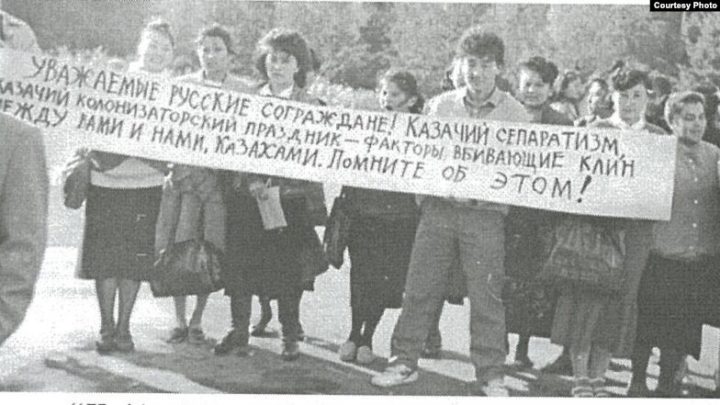
In order to prevent Russian separatism in 1994-1997, Kazakhstan’s government merged the ethnically Russian-dominated northern regions of the country with regions predominantly populated by Kazakhs. With time the strategy proved to be effective. Separatism currently manifests itself in posts on social media and in Chatroulette
For example, in February last year, Maxim Yakovchenko, a resident of Uralsk, announced on a social network that the border areas of Petropavlovsk, Pavlodar and Uralsk "should be given back to Russia." His comment brought about societal backlash. After the police had looked into the matter, a criminal case was opened against him under the articles "Incitement of National, Social, Religious Discord" and "Separatist Activity". But in October, despite travel restrictions, the 35-year-old man managed to flee to Russia.
Maxim Yakovchenko was detained in the Rostov region in December last year, though extraditing him to Kazakhstan within a year would end up being out of the question. He has received refugee status in Russia.
In December 2021, a couple from Petropavlovsk expressed their thoughts on Russia annexing the North Kazakhstan region in Chatroulette. They received five years in prison.
According to political strategist Dina Shaikhislam, pro-Russian separatism has become more frequent since 2020 due to Russia's disinformation aimed at destabilizing the region:
"Back in 2005, in his message, Putin described the collapse of the USSR as a major geopolitical catastrophe, but in 2020 he has already announced his agenda and the Kremlin's agenda. If you remember, he touched base on the topic of "Russian gifts".
Then Vladimir Putin said in an interview with Russia 1 TV channel:
"If one or another republic became part of the USSR, but received a huge number of traditionally Russian historical territories in its baggage, and then suddenly decided to withdraw from this union, but at least then it (should have - Ed.) left with what it came with. And (It shouldn’t - Ed.) have taken away gifts from the Russian people with it."
According to Shaikhislam, Putin thereby stated that many territories of the former Soviet republics belong to Russia, which is hardly true. His press secretary Peskov, on the contrary, convinced everyone that Russia has no territorial claims against its neighbours. Whatever it was, Russian deputies later followed Putin's lead. Only they specifically singled out Kazakhstan this time.
In December 2020, Vyacheslav Nikonov, a member of the ruling United Russia faction, called the territory of Kazakhstan "a great gift from Russia and the Soviet Union" on the First Channel of the Russian Federation. This rhetoric gradually intensified. In January 2022, the late Russian politician Vladimir Zhirinovsky confidently called Kazakhstan an "artificial state". Then came the threats. In June, the head of the State Duma Committee on CIS Affairs, Konstantin Zatulin, threatened Kazakhstan with a situation "like Ukraine".
Dina Shaikhislam believes that such statements are proof that information attacks and fakes began to be prepared and spread at the highest level in the Kremlin:
"This is how the tools of info-attacks and hybrid wars work: an emotional message is formed ("these are our lands, gifts of our Russian people"), which affects feelings more than the mind. Thus, their audience, Russian citizens, is warming up, because you can't just attack the state. First, (they - Ed.) need to invent a "sacred mission" for themselves, for example, the return of "native Russian" lands; secondly, to depersonalize and dehumanize the enemy: Russians are already being discriminated against in Kazakhstan, plus fakes and disinformation in Russian Telegram channels about "bad Kazakhs" allegedly killing, raping Russians. What is meant here is the prevalence, volume and delivering of the message."
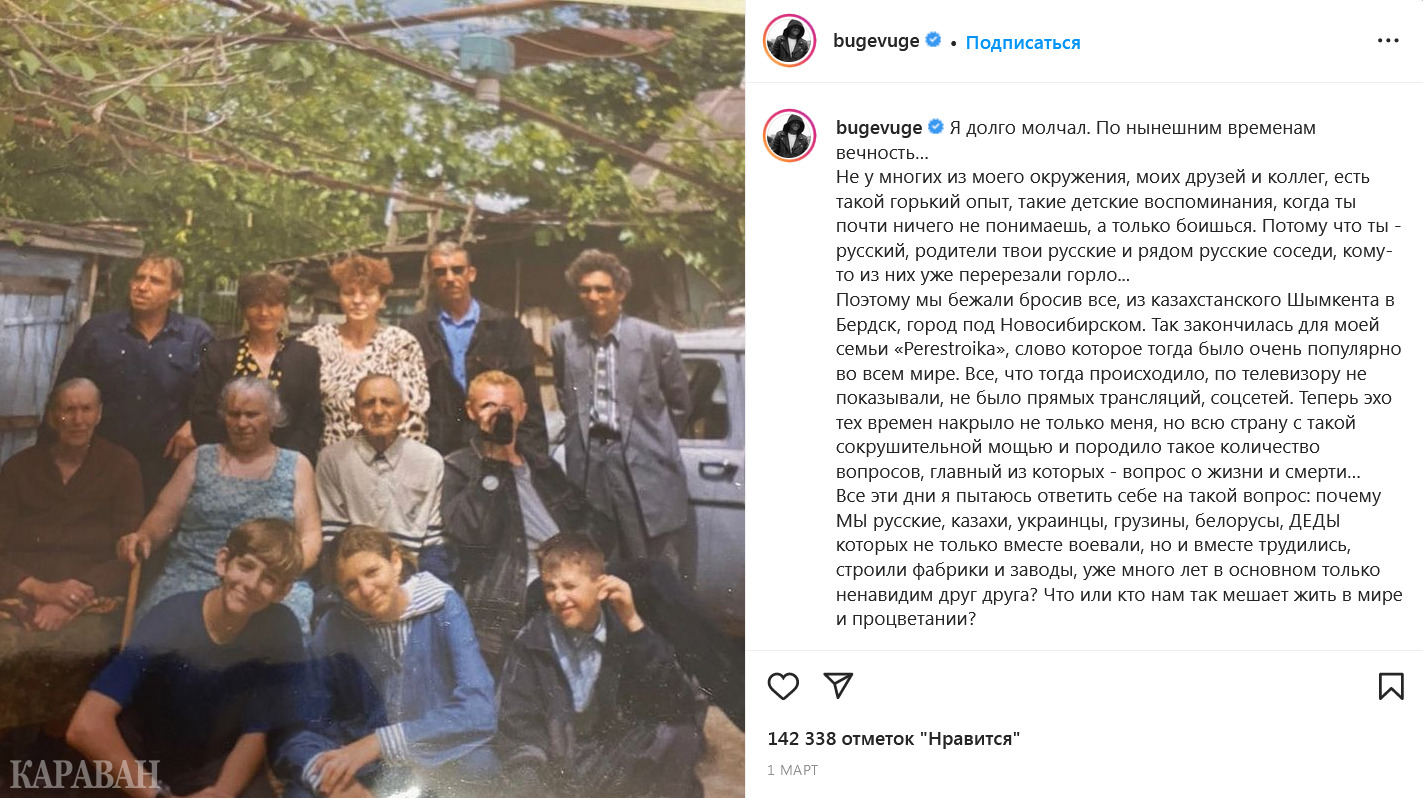
In March last year, the popular Russian actor, Pavel Priluchny, wrote a post about his childhood in Kazakhstan. In it, he claimed that Russians were hated and killed in Shymkent. Many liked the actor's post. Meanwhile, Kazakhstani readers viewed it critically. Priluchny later deleted the post.
Meanwhile, political scientist Marat Shibutov believes that the separatist statements of Kazakhstanis in the "Chatroulette" are the work of the Security Service of Ukraine (SBU):
"Its agents operate according to a simple scheme: they sit in Chatroulette, find interlocutors from Kazakhstan there, as a rule, Russians or Germans. If they see that the interlocutor is easily manipulated, they provoke him to (say - Ed.) separatist statements. Then they put these recordings either into the channels, under their control, of Ablyazovsty (Ablyazov’s supporters - Ed.) living in Ukraine or into joint chats with Kazakh nationalists. From there, it all unwinds: a media scandal, a surge of Russophobia, a criminal case."
What does the SBU have to gain? As Shibutov explains, pro-Russian separatism affects Kazakhstan's relations with Russia. And Ukraine's goal is precisely to deprive Russia of allies. Admittedly, even in this version, where separatism outbreaks have become more frequent in the country, the fact of Kazakhstanis' vulnerability to external influences is still present.
According to researchers of the Royal Institute of International Relations Chatham House, after the collapse of the USSR, the concept of a "Soviet citizen" lost its relevance. This forced non-Kazakhs living in Kazakhstan to look for a new form of self-identification. And this process has not been successful for everyone.
"Representatives of Russian–speaking minorities and Russian–speaking Kazakhs have fallen into the "trap of blurred self-identification", when, figuratively speaking, they continue to live in Kazakhstan with their bodies and with their minds in Russia, identifying themselves more with the Russian political, ideological, and information field,"
the institute's experts explain.
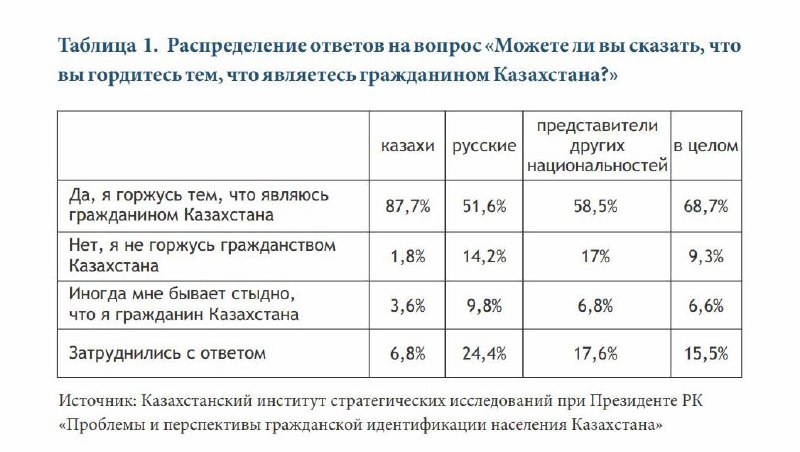
In 2015, a survey by The Kazakhstan Institute For Strategic Studies Under The President Of Kazakhstan (KAZISS) showed that the share of those who are proud to be citizens of Kazakhstan among Kazakhs is 88%, and among Russians – only 52%.
Experts say that the concept of Kazakhstan's identity has not been solidified.
"For example, we associate the United States with the Constitution (human rights) and the so-called American dream. What about Kazakhstan? What makes us Kazakhstanis? There is no answer. Because building institutions is a complex process that takes years. We have no unifying national idea, plus our ruling power is illegitimate in the eyes of the people. This is the most favorable ground for sabotage and separatist movements,"
says Dina Shaikhislam.
Regarding the creation of Kazakhstani identity, the government has not been sitting idly by. Indeed, the "Doctrine of National Unity of Kazakhstan" was adopted in 2010. Its goal was to determine the priorities of national unity. However, it never achieved its goal and was eventually forgotten. In 2015, the doctrine was partially reincarnated as the "Concept of strengthening and developing Kazakhstan's identity and unity." But what kind of work is being done on this concept and what has already been achieved is not very clear.
Taking everything into account, separatism is noteworthily common. It exists in the USA and in most European countries. In the opinion of political scientist Chebotarev, Kazakhstan's stability has not yet reached the level of several European countries, where the authorities treat various manifestations of ideological separatism (the "Free City of Christiania" in Denmark, the "League of the North" in Italy) with leniency. Plus, the current situation is heating up in connection with the war in Ukraine.
Back in 2014, when Russia annexed Crimea and supported the Donbas separatists, the issue of self-determination of Kazakhstan’s Russian community began to be discussed. And now this topic has come to the fore once again. This undoubtedly worries both society and the authorities. Calls for illegal changes to the territorial integrity of Kazakhstan are punishable by up to 10 years in prison.
According to political scientist Dina Shaikhislam, the government is combating the consequences rather than the causes. She believes that it is necessary to strengthen statehood, as it is impossible to separate a strong statehood and a strong society.
“Democracy, compliance with laws, non-discrimination, absence of corruption, fight against ethnic organized criminal groups, and meritocracy aid well against separatism. There should also be a constant dialogue, we need more openness. Purely forceful measures do not work – political ones are also needed here,"
says Marat Shibutov.
In addition, according to Chebotarev, law enforcement and other authorized state agencies should periodically conduct comprehensive studies in order to identify factors contributing to all kinds of separatism’s manifestations.
"It is also necessary to conduct information and explanatory work with the population, including on the relevant provisions of criminal legislation,"
he added.
In short, Kazakhstan has to solve a lot of problems to rid itself of separatism.
Original Author: Zhansaya Aliyeva
DISCLAIMER: This is a translated piece. The text has been modified, the content is the same. Please refer to the original article in Russian for accuracy.
Latest news
- Kazakhstan Considers Molecular Markers To Track Fuel Supply Chains
- Tengiz Oil Production Gradually Restored After Operational Failure
- Tokayev Meets Cuban Vice President To Discuss AI And Medicine
- Karaganda Zoo Shows Newborn Amur Tiger Cubs For The First Time
- Putin and Tokayev Consolidate New Format of Relations, Political Analyst Says
- Kazakhstan Releases Prices For All Non-Prescription Medicines
- Higher Salaries, Fewer Diseases? Kazakhstan Plans Major Veterinary Reform
- Six Foreigners Sentenced To Up To Eight Years For Kidnapping In Astana
- Kazakhstan Plans To Build Three Schools In Russia
- Child Suicides And Violence Rise In Kazakhstan
- Thousands Of Kazakh Graduates Risk Entering An Oversaturated Labor Market
- Eurasian Economic Forum Opens In Astana
- Russia To Give Kazakhstan Loan For First Nuclear Power Plant
- Kazakhstan And Russia To Swap Tenge And Rubles Without Dollar Intermediary
- Deputies Criticize Kazakh Language Test For Ethnic Kazakh Returnees
- New Traffic Bill Proposes Green Plates For Electric Cars
- Four Amur Tigers From Russia Brought To Kazakhstan
- Tokayev And Putin Sign Statement On “Seven Foundations Of Friendship” In Astana
- Kazakhstan’s E-Commerce Market Grows, Marketplaces Take 84%
- Kazakhstan And NCOC Still Arguing Over Kashagan Repair Schedule
