

Kazakhstan And Russia To Swap Tenge And Rubles Without Dollar Intermediary
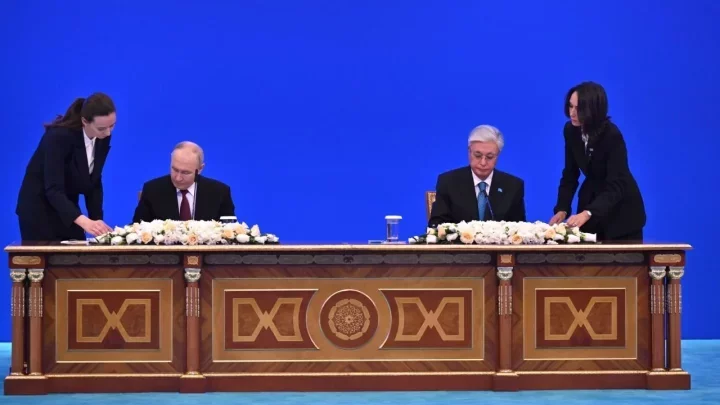 Photo: Central communications service
Kazakhstan and Russia have signed an agreement on a currency swap between the National Bank of Kazakhstan and the Central Bank of Russia, Orda.kz reports.
The document creates a mechanism for direct exchange of tenge and rubles between the two countries’ central banks.
Economist Arman Beisembayev explained that a currency swap is a temporary currency exchange with an obligation to exchange the money back later.
Without a swap, the U.S. dollar would have to be used as an intermediary. Kazakhstan needs rubles. It would sell dollars to Russia and buy rubles with those dollars. Russia definitely needs dollars, but it does not need tenge, especially in such volumes,the economist said.
According to him, similar mechanisms have been used by other countries. For example, the U.S. has provided currency swaps to the UAE and Argentina.
The details of the agreement have not yet been disclosed. It is unknown what volume of operations is being discussed, how long the mechanism will operate, and in what cases the parties will be able to use it.
The currency swap agreement was part of a large package of documents signed during Vladimir Putin’s visit to Kazakhstan.
The two sides also agreed to provide a Russian state export loan to finance the nuclear power plant project in Kazakhstan.
In addition, Kazakhstan and Russia agreed to expand cooperation in the oil sector and signed a memorandum of cooperation between the National Bank of Kazakhstan and the Central Bank of Russia.
The parties also strengthened cooperation in financial monitoring. Kazakhstan’s Finance Ministry and Rosfinmonitoring signed an additional agreement on cooperation in combating money laundering and terrorist financing.
Documents were also signed on transport digitalization, development of rail freight transportation between Kazakhstan Temir Zholy (Kazakhstan Railways) and Russian Railways, as well as agreements in education, health care, and nuclear safety.
Original author: Alexander Zhdanov
Read also:
- Tokayev And Putin Sign Statement On “Seven Foundations Of Friendship” In Astana
- Putin’s Kazakhstan Visit: Routine Diplomacy Or Political Signal?
- Putin Writes About Kazakhstan Ahead Of Visit: Nuclear Plant, Investments, And Alliance
Latest news
- Orda.kz Editorial Team to Cease Operations on September 1
- The Price of a Degree: How Students in Kazakhstan Pay for University
- Second Przewalski’s Horse Foal Born as Species Returns to Kazakhstan
- Kazakh Mining Companies Can Recalculate Purchases if Tenge Weakens
- Kazakhstan Names First Vice President in Three Decades
- What Almaty’s Bus Shelters Are Missing
- 400-Truck Queue Builds at Kazakh–Kyrgyz Border
- Kazakhstan Ready to Help Feed and Rebuild Gaza
- Tokayev Establishes New Presidential Security Body
- Almaty Takes Back Its Nearly Century-Old Hippodrome
- No More Guesswork on Savings: Kazakhstan Tightens Energy Audits for Businesses
- Public Money Could Be Used to Rescue Failing Kazakh Banks
- Third Kazakh Woman Reported Missing in Nepal-China Flood Zone
- Falconer Convicted Over 35 Protected Birds, Spared Punishment Under Amnesty
- Kazakh Citizen Detained in Yakutia in Phone Fraud Case
- Yuan Instead of Dollars? KazMunayGas Draws Record Demand in Asia
- China Gains Oil-Market Influence as OPEC+ Weakens
- Kazakhstan to Divide Smartphones Into White, Gray and Black Lists
- Kazakhstan’s Government Formally Resigns as First Kurultai Session Opens
- Rare Lynx Sighting Recorded in Northern Kazakhstan
