

Russia Launches Migrant Worker Tracking App in Moscow and Moscow Region
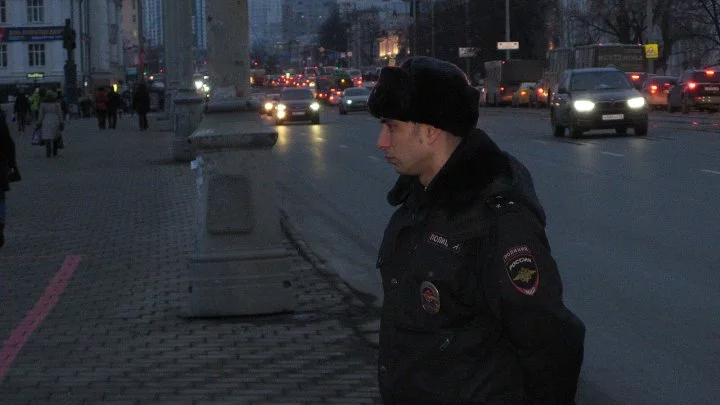 Photo: Russian Police Officier, Ill. Purposes, Creative Commons Attribution-Share Alike 4.0 International license.
Starting September 1, in Moscow and the Moscow region, citizens of nine former Soviet countries, including Kazakhstan, will be required to provide their geolocation data to the Russian authorities, Orda.kz reports.
In Russia, this has been called an “experiment in migrant registration,” conducted in the two regions mentioned above.
Foreigners will be tracked through an application called “Amina.” Along with Kazakh citizens, it must also be installed by citizens of Uzbekistan, Tajikistan, Kyrgyzstan, Armenia, Georgia, Azerbaijan, Moldova, and Ukraine.
According to Interfax, this applies to those who have come for work purposes.
The app must be installed independently. For authorization, a foreign citizen’s card is required, which in turn can only be obtained after applying for a work permit. If the card is lost, authorization in “Amina” can be done using passport data.
Amina’ will allow registration at the address of the Multifunctional Migration Center (MMC) and remote notification of the Interior Ministry about one’s place of residence and any changes, the outlet writes.
The app will not only transmit residence information, but also actual geolocation data.
If the app records that the data is not being transmitted for several days, the foreign citizen will receive a notification requiring confirmation of their location or reporting a change of address to the Interior Ministry. It will not be necessary to appear in person at the Interior Ministry or the MMC, Interfax quotes the Multifunctional Migration Center.
If geolocation data is not transmitted within three working days, the foreign worker will be removed from registration in the MMC.
This may become grounds for being entered into the Ministry of Internal Affairs’ Register of Controlled Persons — a list of individuals whose stay in Russia is considered unlawful.
However, as previously reported by Azattyq, the register also includes foreigners who have not broken any laws.
Original Author: Igor Ulitin
Latest news
- Orda.kz Editorial Team to Cease Operations on September 1
- The Price of a Degree: How Students in Kazakhstan Pay for University
- Second Przewalski’s Horse Foal Born as Species Returns to Kazakhstan
- Kazakh Mining Companies Can Recalculate Purchases if Tenge Weakens
- Kazakhstan Names First Vice President in Three Decades
- What Almaty’s Bus Shelters Are Missing
- 400-Truck Queue Builds at Kazakh–Kyrgyz Border
- Kazakhstan Ready to Help Feed and Rebuild Gaza
- Tokayev Establishes New Presidential Security Body
- Almaty Takes Back Its Nearly Century-Old Hippodrome
- No More Guesswork on Savings: Kazakhstan Tightens Energy Audits for Businesses
- Public Money Could Be Used to Rescue Failing Kazakh Banks
- Third Kazakh Woman Reported Missing in Nepal-China Flood Zone
- Falconer Convicted Over 35 Protected Birds, Spared Punishment Under Amnesty
- Kazakh Citizen Detained in Yakutia in Phone Fraud Case
- Yuan Instead of Dollars? KazMunayGas Draws Record Demand in Asia
- China Gains Oil-Market Influence as OPEC+ Weakens
- Kazakhstan to Divide Smartphones Into White, Gray and Black Lists
- Kazakhstan’s Government Formally Resigns as First Kurultai Session Opens
- Rare Lynx Sighting Recorded in Northern Kazakhstan
