

The OTS Seeks Influence — Can The Turkic Union Become A Real Political Player?
 Collage: Orda.kz
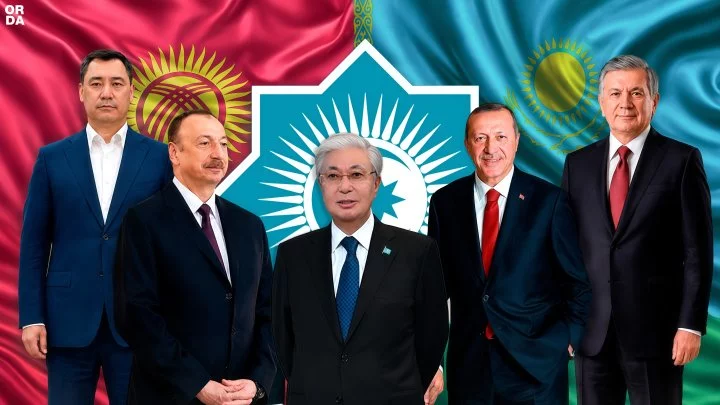
Turkestan, the symbolic cradle of the Turkic world, hosted an informal summit of the Organization of Turkic States this week. The summit stood out because of its focus on AI technologies and digital development. Given that Tokayev declared 2026 the Year of Artificial Intelligence, Kazakhstan’s role as the host platform is not surprising.
But the summit was not only about AI. The larger question is whether the OTS can become a real political actor amid serious international instability, or whether it will remain a convenient showcase of Turkic unity. Orda.kz looks at this in a political review.
Political Significance Or Showcase?
Turkic unity is often overstated, and there are many reasons to question it. The cultural and symbolic dimension of relations is certainly emphasized by all Turkic states, but regardless of public statements, national interests still come first. Political analyst Aidar Amrebayev also believes that in modern international politics, states act primarily from pragmatic interests, and organizations such as the OTS become practical tools for them.
I am far from the idea that the OTS is an altruistic club of countries that speak similar languages or share the same religion. Today, every state is thinking about how to increase its functional power and become a capable player in this difficult and turbulent international situation. Turkey, Kazakhstan, Azerbaijan, Uzbekistan and others expect that through the OTS they will be able to gain more of these important advantages,Amrebayev said.
This suggests that although the organization cannot cover a broad range of major international issues, it is quite capable of addressing regional problems and developing economic cooperation.
Amrebayev also links the relevance of the OTS to the growing role of middle powers. In his view, amid the weakening of global institutions, countries such as Kazakhstan and Turkey are taking greater responsibility for regional stability and for finding practical solutions without waiting for signals from major powers.
Today, global international institutions are not effective enough in regulating relations and conflicts. The burden is increasingly shifting to middle powers. Hence the relevance of the Organization of Turkic States as a platform where specific, coordinated decisions can be made,Amrebayev said.
Kazakhstan and other OTS members are also political actors, even if they are less influential than major powers. Their domestic agendas and achievements can still be useful for their partners.
Digital Leadership
At last year’s main OTS summit, regional security was one of the key topics. Tokayev spoke about cybersecurity at the time and proposed creating a separate council in this area. The current informal summit in Turkestan can therefore be seen as a logical continuation of that line, this time through AI and digitalization — topics that are urgent for the whole world.
Aidar Amrebayev also stressed that Kazakhstan has made serious progress in this area, although he did not directly compare the country with other Turkic states.
It is hard to say who is first, second or third. What matters is that Kazakhstan’s leadership is in line with current global trends. We have taken quite serious steps. We already have a wide range of public services available electronically, as well as e-government and electronic petitions. Many delegations, including from the Turkic world, come to Kazakhstan to study these developments,Amrebayev said.
Kazakhstan’s digital development shows that the country has grounds to claim leadership in this area, and not only within the OTS.
But leadership in a Turkic organization is also a conditional matter. Most often, Turkey is mentioned in this context because of Ankara’s economic and political weight, as well as Erdogan’s personal role. However, Amrebayev does not believe that Turkey or its president should be seen as the unquestioned center of the entire Turkic world.


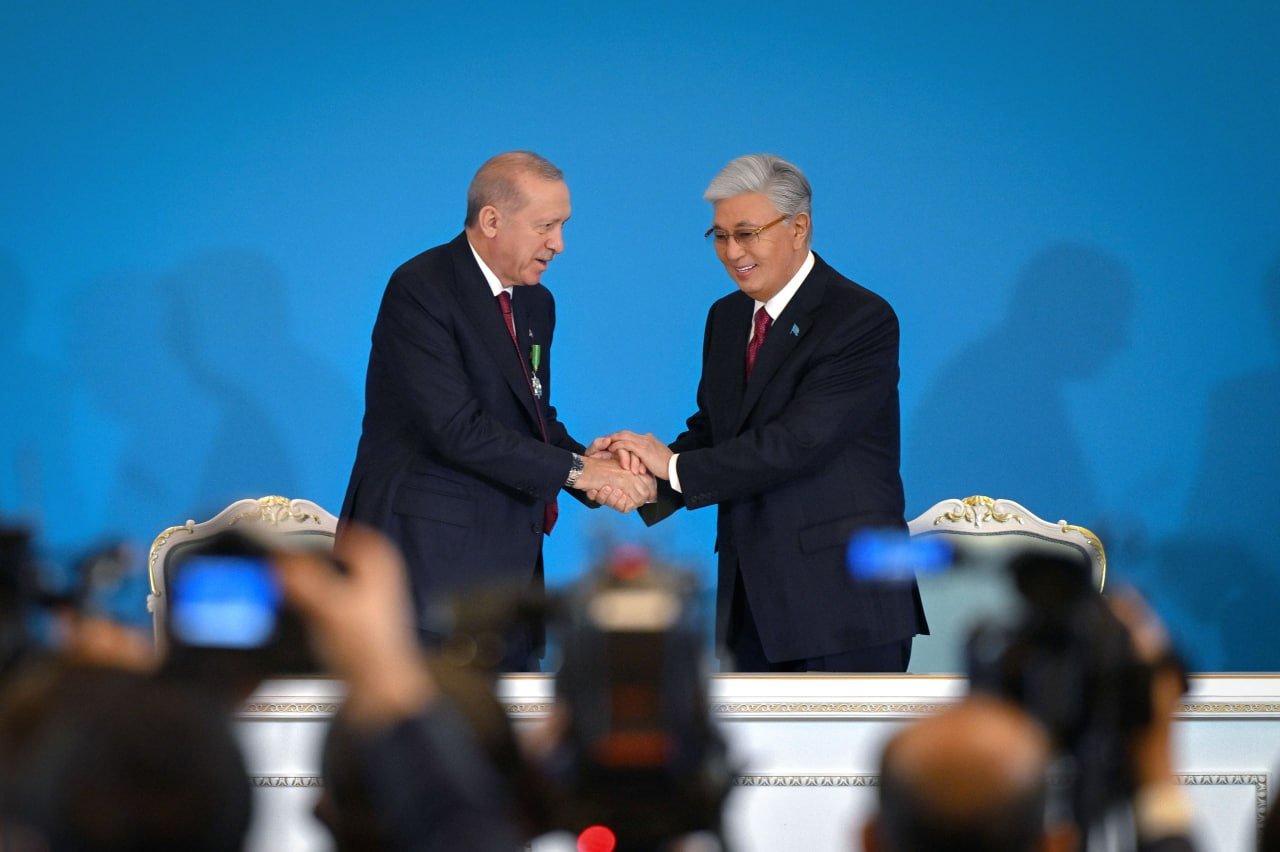
According to him, the OTS is built as a union of equal states, with no “first” and “last.” Therefore, yesterday’s awarding of the Order of Qoja Ahmet Yasaui to Erdogan should be seen not as a clear recognition of his leadership over the Turkic world, although Tokayev stated this openly, but as symbolic recognition of his political weight.
There is no need to attach more meaning to this than was stated. If we are talking about a union of Turkic states, then this is a union of equal states, where there are no former or last members. There are sovereign, independent and self-sufficient actors. Erdogan’s award is rather a symbolic recognition of his merits as a global politician,Amrebayev said.
“Business In Kazakh With Turkey”
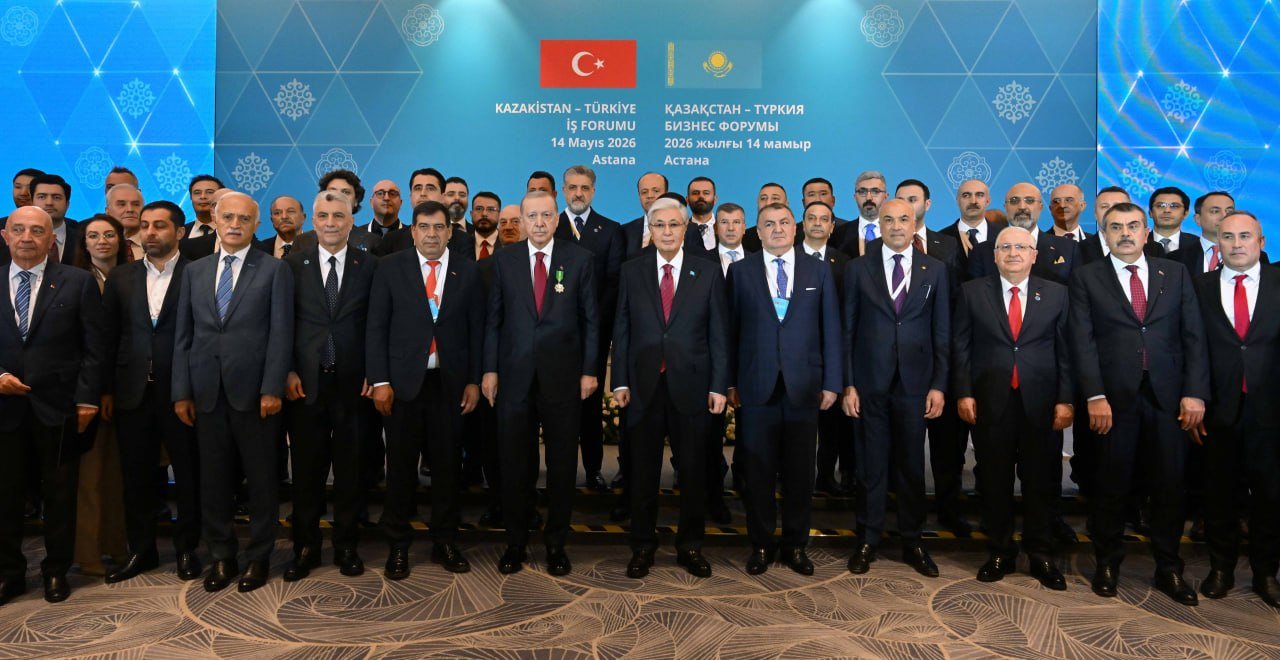
Yesterday’s bilateral meeting and business forum with Tokayev and Erdogan, after which a package of agreements was signed, only confirmed that relations between Kazakhstan and Turkey are becoming closer.
As political analyst and international relations expert Ilyas Baktygaliyev noted, the results of the meeting covered a wide range of initiatives — from cultural centers, education and investment to oil and gas projects, logistics, medicine and joint production.
For a visit of this level, this is quite an indicative result. For example, the agreement on cultural centers is an attempt to update cultural interaction between the two countries. The document creates an opportunity to agree on how platforms for language, culture, educational and humanitarian events will be opened and operated. This is a very useful document for our soft power and the same educational exchanges,Baktygaliyev said.
In his opinion, the agreement on mutual promotion and protection of investments also looks significant. This document should give investors from both countries clearer legal guarantees.
Another important point is the agreements between KazMunayGas and Türkiye Petrolleri Anonim Ortaklığı in the oil services sector.
This document provides for joint work to attract oil service assets for projects in Kazakhstan, Turkey and third countries. That means it will promote cooperation in drilling, services, equipment, geology and maintenance of oil and gas projects,Baktygaliyev said.
He noted that such agreements usually protect investors not only from direct seizure of property, but also from discriminatory or arbitrary actions by the state.
As already noted, the main advantage is the reduction of legal uncertainty for investors. It should be understood that it will be easier for Turkish companies to invest in airports, hospitals, production, logistics and energy in Kazakhstan if they understand that there are international guarantees for capital protection,Baktygaliyev said.
Still, practice shows that incidents sometimes occur in major projects. One example is the flooding at Almaty airport, which was built by a Turkish company. But according to Baktygaliyev, the construction company is not necessarily to blame.
The flooding at the airport was an unpleasant incident, but it should be remembered that after the terminal roof leak in May 2026, the airport was brought to administrative responsibility, and the technical manager was disciplined. At the same time, what happened was not necessarily the result of engineering miscalculations. It could also have involved operational errors, which can occur in any complex infrastructure project,Baktygaliyev said.
Baktygaliyev believes the presence of Turkish companies can still bring positive results for Kazakhstanis, especially residents of Turkestan and Petropavlovsk, where the Turkish side will build hospitals. In his view, such projects will have a direct impact on regional healthcare.
As for the remaining agreements, their impact will be more indirect. One way or another, they may affect the state of the economy and the quality of doing business,Baktygaliyev said.
From Informal To Formal
The current meeting in Turkestan was the third informal OTS summit. A full-fledged summit of the organization’s member states is expected to be held in Turkey this fall. Its agenda has not yet been announced.
The NATO summit is scheduled to take place in Ankara in August. The agenda of the OTS autumn summit will likely become clearer after that. Only then will it be possible to understand whether the organization is capable of responding to international challenges, or whether it still functions mainly as a platform for “its own.”
However, it is not entirely clear how much the OTS needs such capacity — or how possible it is for the Turkic states. Linguistic proximity and a shared cultural background alone are not enough to speak of major common interests. The organization’s members have different foreign policy priorities and different relations with Russia, China and the West. That means they also have different limits on how far they are willing to go in a shared political direction.
Read also:
Latest news
- Orda.kz Editorial Team to Cease Operations on September 1
- The Price of a Degree: How Students in Kazakhstan Pay for University
- Second Przewalski’s Horse Foal Born as Species Returns to Kazakhstan
- Kazakh Mining Companies Can Recalculate Purchases if Tenge Weakens
- Kazakhstan Names First Vice President in Three Decades
- What Almaty’s Bus Shelters Are Missing
- 400-Truck Queue Builds at Kazakh–Kyrgyz Border
- Kazakhstan Ready to Help Feed and Rebuild Gaza
- Tokayev Establishes New Presidential Security Body
- Almaty Takes Back Its Nearly Century-Old Hippodrome
- No More Guesswork on Savings: Kazakhstan Tightens Energy Audits for Businesses
- Public Money Could Be Used to Rescue Failing Kazakh Banks
- Third Kazakh Woman Reported Missing in Nepal-China Flood Zone
- Falconer Convicted Over 35 Protected Birds, Spared Punishment Under Amnesty
- Kazakh Citizen Detained in Yakutia in Phone Fraud Case
- Yuan Instead of Dollars? KazMunayGas Draws Record Demand in Asia
- China Gains Oil-Market Influence as OPEC+ Weakens
- Kazakhstan to Divide Smartphones Into White, Gray and Black Lists
- Kazakhstan’s Government Formally Resigns as First Kurultai Session Opens
- Rare Lynx Sighting Recorded in Northern Kazakhstan
