

New Algae Species Threatens Caspian Sea's Delicate Balance
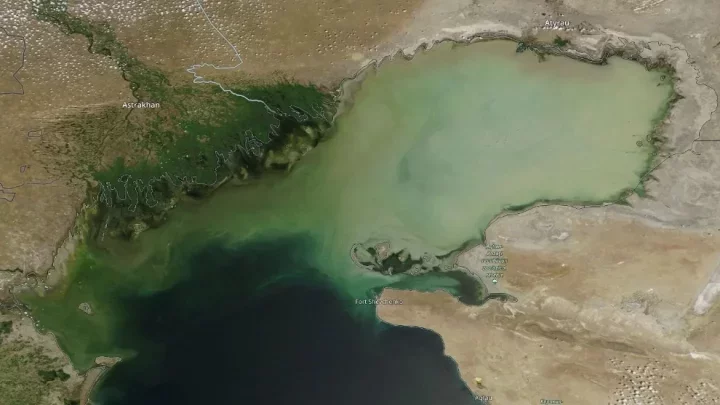 Photo: kazhydromet.kz
For the first time, a species of dinophyte algae known as Ceratium tripos var. balticum has been found in the Middle Caspian waters.
These plankton-related species participate in water blooms and can affect the ecosystem by reducing the oxygen content in the water, Orda.kz reports.
All-Russian Research Institute of Fisheries and Oceanography publication notes that identifying these algae based on appearance was quite challenging. This is mainly due to the significant changes in the shape and size of their cells. In the case of Ceratium, the cellular "horns" can vary greatly — they can elongate or even disappear, making classification difficult.
The Caspian Sea has already faced the challenges posed by invasive phytoplankton species.
In 1934, the diatom Pseudosolenia calcar-avis entered the area, rapidly displacing smaller phytoplankton species. However, its cells were too large for most algae-eating animals, which added stress to the local ecosystem and its species.
A new species of algae have even larger cells than previous varieties. Scientists believe that the larger cells will make it difficult for zooplankton to access phytoplankton for food. They assume that the new species will only become part of the food chain after the cells die and turn into organic matter.
While alive, these new algae will likely remain largely inaccessible to most marine animals.
Research indicates that this new algae is rapidly spreading and could lead to profound changes in the Caspian Sea ecosystem, including decreased zooplankton biomass. This decline could, in turn, jeopardize the food supply for Caspian sprats and reduce the sea's overall productivity.
Additionally, experts have observed a growing number of alien species in the Caspian Sea, mainly due to increased pathways for organisms to enter the water and favorable conditions created by climate change that promote their survival and spread.
The Caspian Sea has experienced declining water levels for over a decade, which have worsened in recent years. Environmentalists attribute this trend to climate change and human activity. Experts predict that if the shallowing continues at this rate, the region could face an environmental disaster within the next decade.
The declining fish population in the Caspian Sea, caused by the shallowing of the sea, changes in river beds, and the lack of spring floods, compounds these issues. Fishermen and environmentalists are raising alarms about the impending depletion of the region's water resources.
Original Author: Ruslan Loginov
Latest news
- Orda.kz Editorial Team to Cease Operations on September 1
- The Price of a Degree: How Students in Kazakhstan Pay for University
- Second Przewalski’s Horse Foal Born as Species Returns to Kazakhstan
- Kazakh Mining Companies Can Recalculate Purchases if Tenge Weakens
- Kazakhstan Names First Vice President in Three Decades
- What Almaty’s Bus Shelters Are Missing
- 400-Truck Queue Builds at Kazakh–Kyrgyz Border
- Kazakhstan Ready to Help Feed and Rebuild Gaza
- Tokayev Establishes New Presidential Security Body
- Almaty Takes Back Its Nearly Century-Old Hippodrome
- No More Guesswork on Savings: Kazakhstan Tightens Energy Audits for Businesses
- Public Money Could Be Used to Rescue Failing Kazakh Banks
- Third Kazakh Woman Reported Missing in Nepal-China Flood Zone
- Falconer Convicted Over 35 Protected Birds, Spared Punishment Under Amnesty
- Kazakh Citizen Detained in Yakutia in Phone Fraud Case
- Yuan Instead of Dollars? KazMunayGas Draws Record Demand in Asia
- China Gains Oil-Market Influence as OPEC+ Weakens
- Kazakhstan to Divide Smartphones Into White, Gray and Black Lists
- Kazakhstan’s Government Formally Resigns as First Kurultai Session Opens
- Rare Lynx Sighting Recorded in Northern Kazakhstan
