

Kazakhstan Ratifies CSTO Protocol To Speed Up Troop Transit During Crises
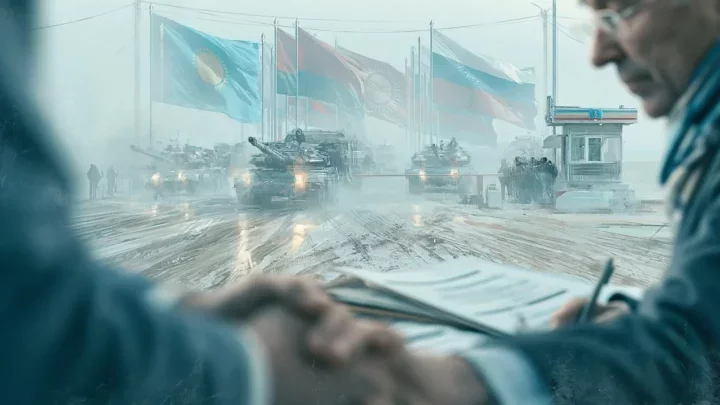 AI-generated illustration
Kazakhstan’s Mazhilis has ratified a protocol changing the rules for the temporary stay of CSTO collective security forces on the territory of member states, Orda.kz reports.
The protocol was signed on November 28, 2024, by the leaders of Kazakhstan, Belarus, Kyrgyzstan, Russia, and Tajikistan.
CSTO countries want to simplify procedures in advance in case of a crisis, when troops and equipment may need to be quickly transferred from one country to another.
Deputy Askhat Rakhimzhanov spoke about two key documents included in the agreement. The first clarifies how CSTO military units may temporarily stay on the territory of another member state and who will command them.
The first document is a protocol amending the 2010 agreement on the status of formations of the forces and assets of the collective security system. Its purpose is to eliminate bureaucratic gaps and clearly regulate the temporary stay of military formations and their command structure,he said.
The second document simplifies the transport of military personnel, equipment, property, and military goods across the borders of CSTO member states. In practice, this should reduce the number of approvals and bureaucratic procedures required for transit.
The main changes include:
The agreement now sets out in more detail the cases in which military formations may be sent to the territory of a host state.
If an emergency response is needed, the deadline for submitting applications for military transport is reduced from three days to one day after a decision by the CSTO Collective Security Council.
When military formations are transported or transit through member states to carry out their assigned tasks under a decision of the Collective Security Council, the receiving or transit state will provide reception, dispatch, airfield technical support, parking areas, and aircraft security at all airfields free of charge.
Air navigation services for state and military aircraft of the member states will also be provided free of charge.
Aircraft refueling with fuel, lubricants, special fluids, and gases will be carried out using the resources of the transit or receiving state on the basis of relevant agreements and arrangements.
Original author: Ilya Astakhov
Read also:
- Putin and Tokayev Consolidate New Format of Relations, Political Analyst Says
- Dushanbe: No Negotiations With CSTO on Russian Troop Deployment
- Armenia Says CSTO Exit Not Under Discussion, Despite Absence at Bishkek Summit
Latest news
- Orda.kz Editorial Team to Cease Operations on September 1
- The Price of a Degree: How Students in Kazakhstan Pay for University
- Second Przewalski’s Horse Foal Born as Species Returns to Kazakhstan
- Kazakh Mining Companies Can Recalculate Purchases if Tenge Weakens
- Kazakhstan Names First Vice President in Three Decades
- What Almaty’s Bus Shelters Are Missing
- 400-Truck Queue Builds at Kazakh–Kyrgyz Border
- Kazakhstan Ready to Help Feed and Rebuild Gaza
- Tokayev Establishes New Presidential Security Body
- Almaty Takes Back Its Nearly Century-Old Hippodrome
- No More Guesswork on Savings: Kazakhstan Tightens Energy Audits for Businesses
- Public Money Could Be Used to Rescue Failing Kazakh Banks
- Third Kazakh Woman Reported Missing in Nepal-China Flood Zone
- Falconer Convicted Over 35 Protected Birds, Spared Punishment Under Amnesty
- Kazakh Citizen Detained in Yakutia in Phone Fraud Case
- Yuan Instead of Dollars? KazMunayGas Draws Record Demand in Asia
- China Gains Oil-Market Influence as OPEC+ Weakens
- Kazakhstan to Divide Smartphones Into White, Gray and Black Lists
- Kazakhstan’s Government Formally Resigns as First Kurultai Session Opens
- Rare Lynx Sighting Recorded in Northern Kazakhstan
