

Kazakhstan Becoming a Major Eurasian Logistics Hub, Forecasts Show
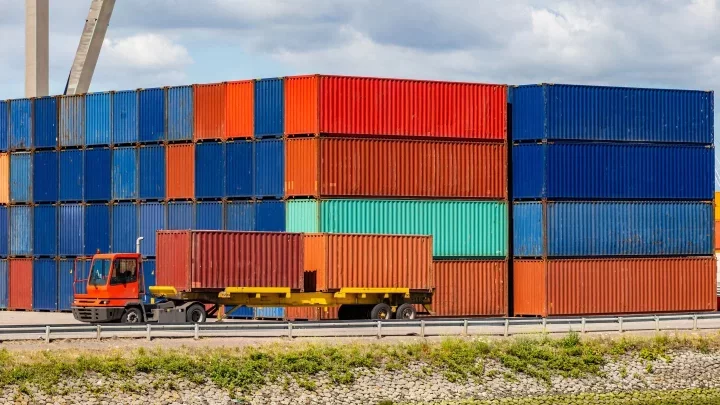 Photo: Elements.envato.com, ill purposes
Kazakhstan is fast emerging as a critical logistics hub in Eurasia. International analysts predict that the volume of cargo transit through the country could nearly triple by 2030, Orda.kz reports.
According to Logistics Middle East, cargo throughput via Kazakhstan grew 7.1% last year, reaching 34.6 million tonnes, with 27.5 million tonnes transported by rail and the rest by road.
Robust investments in railways, ports, and innovative logistics infrastructure have positioned Kazakhstan as a key crossroads linking the Trans‑Caspian route and the North‑South corridor.
In early 2025, the country’s economy expanded by 6%, the strongest growth in 12 years, with transport playing a significant role. In 2024, transit cargo totalled 34.6 million tonnes — 27.5 million by rail.
By 2030, that volume could reach 100 million tonnes, largely thanks to a deal with China to raise annual freight trains from 600 to 3,000.
This surge reflects Kazakhstan’s strategic position within 13 international transport corridors, connecting China, Europe, Russia, the Caspian region, the Gulf, and South Asia. Key corridors include TRACECA, the North-South International Transport Corridor, and the rapidly emerging Middle Corridor (Trans-Caspian International Transport Route), which is gaining global prominence as a resilient alternative trade route between Asia and Europe, said analyst Charles Whitmore.
In 2025, Kazakhstan plans to modernize 13,000 km of highways and 6,100 km of railways.
Additionally, five rail projects valued at 2.3 trillion tenge are underway, aimed at strengthening Central Asia–China economic connectivity. Another 11,000 km of rail is slated for upgrades by 2029, speeding up shipping lanes from Khorgos, Almaty, and Astana to the west, down to the port of Aqtau.
On roads, 847 km of highways are scheduled for rehabilitation this year, as part of a broader project to modernize 9,000 km. A key initiative—the Center–West highway—will cut the distance between Astana and Aqtau by 889 km.
Air logistics are also expanding. Three new airports are under construction, and several existing ones are getting upgrades. Presently, six domestic carriers operate 669 weekly flights to 31 countries.
New routes launching in 2025 include Budapest, Guangzhou, Munich, Busan, Rome, and Shanghai. By 2026, direct flights to the U.S. are projected.
By 2029, the country aims to serve 65 million passengers and process 500,000 tonnes of air cargo annually. A new private cargo airline has also launched operations with an initial fleet of three aircraft, Whitmore added.
Kazakhstan also plans to add 17 vessels to its merchant fleet, including four ferries. In the Mangystau region, Quryq port has completed a million‑tonne grain terminal, while the Sarzha terminal’s expansion will boost capacity to 11 million tonnes annually.
A new container hub opened in Aktau in June, and a Kazakh cargo terminal now operates in Poti, Georgia. Kazakhstan is also establishing terminal networks in Xi’an (China), the Moscow region (Russia), Tashkent (Uzbekistan), Azerbaijan, and Hungary.
International businesses registered at the Astana International Financial Centre are contributing to Kazakhstan’s transformation into a global logistics hub.
These investments are expected to generate substantial returns by accelerating trade flows and increasing transit capacity across the region. Currently, Central Asia, with a combined GDP of over $400 billion and a population exceeding 80 million, is becoming an increasingly relevant economic bloc. Kazakhstan’s leadership in transport, digitalisation, and infrastructure modernisation positions it as a cornerstone of this transformation, emphasized Whitmore.
Since 2022, when world markets were disrupted, Kazakhstan’s global logistics role has steadily strengthened. Positioned between Europe and Asia, the country is primed to become a leader in cargo movement — if it seizes the opportunity.
Earlier, we reported that a record volume of Chinese cargo passed through Kazakhstan, breaking a 12‑year record.
Original Author: Nikita Drobny
Latest news
- Orda.kz Editorial Team to Cease Operations on September 1
- The Price of a Degree: How Students in Kazakhstan Pay for University
- Second Przewalski’s Horse Foal Born as Species Returns to Kazakhstan
- Kazakh Mining Companies Can Recalculate Purchases if Tenge Weakens
- Kazakhstan Names First Vice President in Three Decades
- What Almaty’s Bus Shelters Are Missing
- 400-Truck Queue Builds at Kazakh–Kyrgyz Border
- Kazakhstan Ready to Help Feed and Rebuild Gaza
- Tokayev Establishes New Presidential Security Body
- Almaty Takes Back Its Nearly Century-Old Hippodrome
- No More Guesswork on Savings: Kazakhstan Tightens Energy Audits for Businesses
- Public Money Could Be Used to Rescue Failing Kazakh Banks
- Third Kazakh Woman Reported Missing in Nepal-China Flood Zone
- Falconer Convicted Over 35 Protected Birds, Spared Punishment Under Amnesty
- Kazakh Citizen Detained in Yakutia in Phone Fraud Case
- Yuan Instead of Dollars? KazMunayGas Draws Record Demand in Asia
- China Gains Oil-Market Influence as OPEC+ Weakens
- Kazakhstan to Divide Smartphones Into White, Gray and Black Lists
- Kazakhstan’s Government Formally Resigns as First Kurultai Session Opens
- Rare Lynx Sighting Recorded in Northern Kazakhstan
