

Is There Political Repression in Kazakhstan?
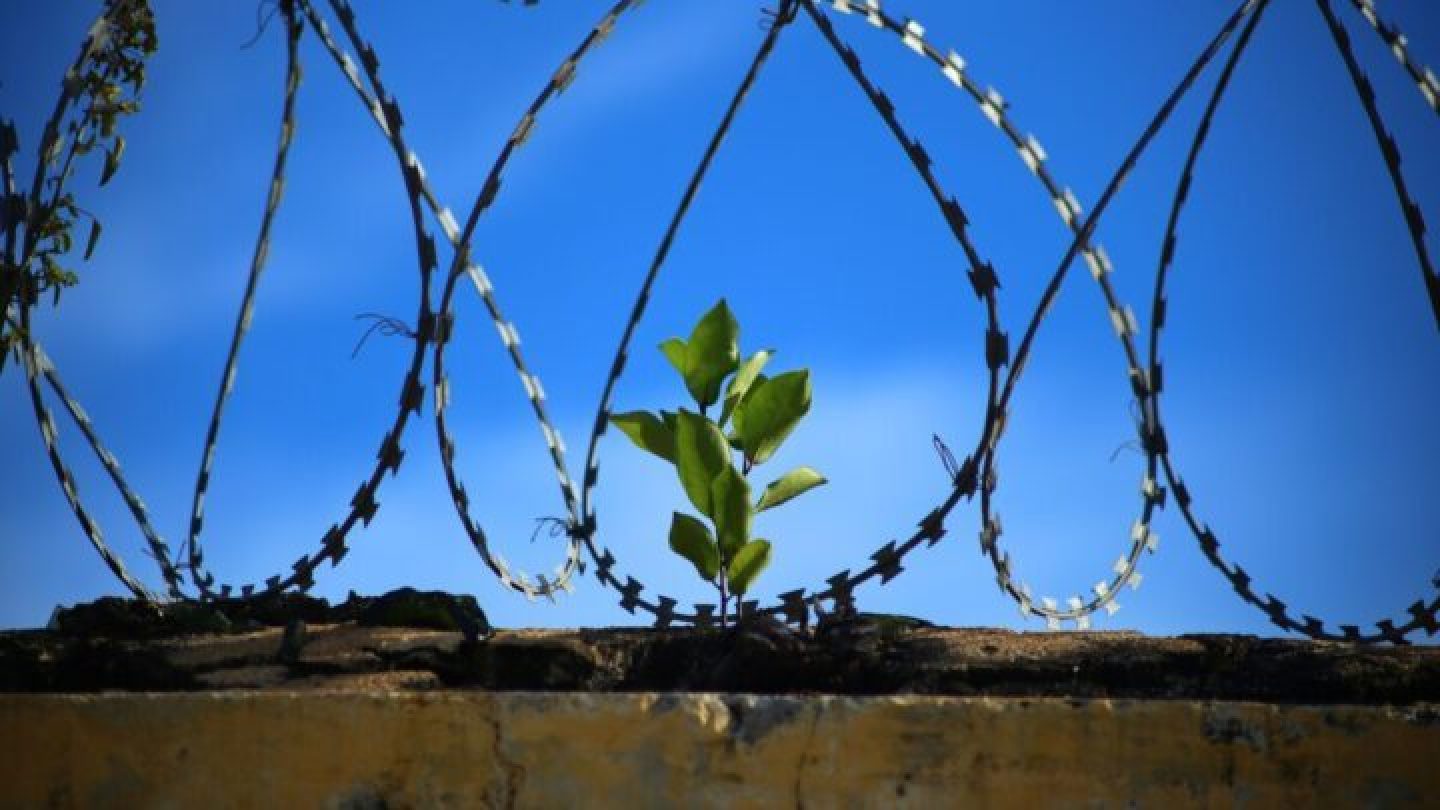 Pixabay.com .
Dissidents’ persecution is present in Kazakhstan, but whether it is possible to call it "political repression" is debatable. Unlike the totalitarian regimes of the past, where almost anyone could become a victim regardless of their political weight and social status, repressive mechanisms work very selectively and in coordination with the highest officials of the country in autocratic post-Soviet states,
On May 31, Kazakhstan celebrates the Day of Remembrance of Victims of Political Repression. On this day, those who died, disappeared, or suffered from political repression during the Soviet period are honored.
There are current claims that political repression is not the property of the Soviet past alone, as it takes place in modern Kazakhstan.
Among the victims of the repressive state apparatus: the leader of the unregistered Alga party, Vladimir Kozlov, accused of calling for the overthrow of the constitutional order, Atyrau activists Max Bokaev and Talgat Ayan, who opposed the government land reform, Almaty lawyer Alnur Ilyashev, who accused the Nur Otan party of corruption and was accused of "spreading deliberately false information", leader unregistered Democratic Party of Kazakhstan Zhanbolat Mamay, accused of "organizing mass riots" during the January 2022 events, the deceased civil activist Aron Atabek, who was imprisoned over the "Shanyrak case", and others.
An Orda correspondent talked to experts about what they think about dissidents’ struggle in Kazakhstan.
Not The Same Scale
According to political scientist Talgat Kaliev, there is no political repression in Kazakhstan, as repression is on a massive scale. If it does not target the entire population, then it is directed at specific groups.
Particular criminal articles are created for repression. During the Stalinist terror, for instance, it was the 58th article "Treason to the Motherland". In subsequent periods, this was done through accusations of anti-Soviet activities, reading and distributing banned literature, etc.
Although political repression in the classical sense is not present in Kazakhstan, there are politically motivated persecutions of specific individuals through administrative responsibility or criminal prosecution mechanisms. Such cases are pursued under the guise of criminal or antisocial cases. Administrative liability is levied for participation in unauthorized rallies.
"So this can no longer be called repression, but rather described as acts of intimidation. Cases that were politically motivated in nature can most likely be linked to actions against DVK leaders. Although criminal articles were also applied against them. And when it was difficult to bring to criminal responsibility, people simply died there. We still don't know exactly what happened to Zamanbek Nurkadilov or Altynbek Sarsenbayuly,"
Kaliyev says.
At the same time, there are signs of liberalization in Kazakhstan: there is no taboo on criticism of the authorities, rallies and peaceful assemblies can be held via prior notification, requirements for registration of political parties have been reduced, the mixed principle of formation of the majilis of parliament and maslikhats has been restored, that is, the institute of public policy has been revived. And where there is a public policy, repression is simply excluded, Talgat Kaliyev noted.
Crackdowns Began In The 90s
Human rights activist and journalist, Andrey Grishin, claims that the first political prisoners in Kazakhstan appeared in the 1990s. Among them are the leaders of the trade union movement Malel Ismailov and Sergey Kolokolov. In 1997, one of the leaders of the Socialist Movement of Kazakhstan, Ainur Kurmanov, was arrested by the State Investigative Committee (SIK) for distributing leaflets and putting anti-presidential slogans on walls. But, according to Grishin, these were isolated cases and the persecution of dissidents was not widespread:
"But with the emergence of a more powerful and organized political opposition in the republic, which threatened the Nazarbayev regime, repressions against the government’s opponents began to be used on a wider scale. These were first the Republican People's Party of Kazakhstan (RPPK), and after it the Democratic Choice of Kazakhstan (DVK) in its original version. A new round of political repression came out after the Zhanaozen events, when dozens of people were in prison. And the last surge of political repression occurred in connection with Qantar in 2022."
According to him, today the main instruments of dissidents’ persecution in Kazakhstan are Article 405 of the Criminal Code "Organization and participation in the activities of a public or religious association or other organization after a court decision banning their activities or liquidation in connection with their extremism or terrorism," as well as Article 274 of the Criminal Code "Dissemination of deliberately false information." Activists may also be held accountable for hooliganism or for insulting police officers.
We Can Only Discuss Repression’s Intensity
Political commentator Viktor Kovtunovsky believes that persecution for political reasons has always taken place in sovereign Kazakhstan, one can only discuss their intensity in certain periods. Their nature and their roots are in the political system’s authoritarianism. According to him, the ruling group is afraid of losing power, which is sufficient for cracking down on their critics.
The question of who should be considered victims of political repression is not as simple as it seems. Those who have caught our repressive authorities’ attention, i.e. the police, the prosecutor's office, the courts, and the special services, are ready to bear this title. Kovtunovsky believes that it is necessary to understand each case individually. Nevertheless, there is one fundamental criterion. The expression of a critical position towards the authorities should precede genuine repression. In many cases, those persecuted by the authorities "see the light" only after falling into disgrace.
"Based on this, I have never considered, for example, Rahat Aliyev a victim of political repression. Unlike Galymzhan Zhakiyanov or Zhanbolat Mamay, the son-in-law of the former Elbasy, before falling out of favor with his father-in-law, the existing regime was not criticized. Moreover, being a member of the KNB’s leadership, he himself was engaged in organizing provocations and acts of violence against representatives of the political opposition and the independent press. On the other hand, there is no fair justice system as such in Kazakhstan. All repressive bodies are dependent on the executive power and carry out its instructions."
In this sense, all citizens of our country are victims of the existing political regime, Viktor Kovtunovsky stressed.
Quite The Waiting List
According to human rights activist Bakhytzhan Toregozhina, Kazakhstani activists in 2013 developed a criterion in accordance with the standards of the Parliamentary Assembly of the Council of Europe (PACE) and Amnesty International. It clearly states what type of persecution is politically motivated.
"We are very scrupulous and responsible about such a concept as "political prisoners". And we receive a lot of requests for obtaining the status of political prisoners. And we are carefully considering each application,"
the activist noted.
This status can only be obtained by persons who are in places of deprivation of liberty or in pre-trial detention facilities. But they cannot include persons who have actually committed criminal offenses.
According to Bakhytzhan Toregozhina, at one time PACE became the first major intergovernmental organization that developed specific criteria for determining who is a political prisoner. A person can be considered a "political prisoner" in the following cases:
- If the deprivation of liberty was carried out in violation of one of the basic guarantees enshrined in the European Convention for the Protection of Human Rights, in particular freedom of thought, conscience and religion, freedom of speech and information, freedom of assembly and association;
- If the deprivation of liberty was carried out for purely political reasons;
- If the length of detention or its conditions are clearly disproportionate to the offense;
- If a person is detained in discriminatory conditions compared to other persons;
- If the deprivation of liberty is the result of a trial that was clearly unfair, and this is due to the authorities’ political motives.
"My fellow human rights activists and I took up this issue closely in 2012 after the bloody events in Zhanaozen. Then political terror became a reality. Since we are very scrupulous and responsible about such a concept as "political prisoners", we receive a lot of requests for the status of political prisoners,"
the human rights activist stressed.
According to Bakhytzhan Toregozhina, last year there were 77 people in Kazakhstan who received the status of political prisoners.
Original Author: Danil Utyupin
DISCLAIMER: This is a translated piece. The text has been modified, the content is the same, please refer to the original piece in Russian for accuracy.
Latest news
- Orda.kz Editorial Team to Cease Operations on September 1
- The Price of a Degree: How Students in Kazakhstan Pay for University
- Second Przewalski’s Horse Foal Born as Species Returns to Kazakhstan
- Kazakh Mining Companies Can Recalculate Purchases if Tenge Weakens
- Kazakhstan Names First Vice President in Three Decades
- What Almaty’s Bus Shelters Are Missing
- 400-Truck Queue Builds at Kazakh–Kyrgyz Border
- Kazakhstan Ready to Help Feed and Rebuild Gaza
- Tokayev Establishes New Presidential Security Body
- Almaty Takes Back Its Nearly Century-Old Hippodrome
- No More Guesswork on Savings: Kazakhstan Tightens Energy Audits for Businesses
- Public Money Could Be Used to Rescue Failing Kazakh Banks
- Third Kazakh Woman Reported Missing in Nepal-China Flood Zone
- Falconer Convicted Over 35 Protected Birds, Spared Punishment Under Amnesty
- Kazakh Citizen Detained in Yakutia in Phone Fraud Case
- Yuan Instead of Dollars? KazMunayGas Draws Record Demand in Asia
- China Gains Oil-Market Influence as OPEC+ Weakens
- Kazakhstan to Divide Smartphones Into White, Gray and Black Lists
- Kazakhstan’s Government Formally Resigns as First Kurultai Session Opens
- Rare Lynx Sighting Recorded in Northern Kazakhstan
