

Illusion of Stability: Expert Says Housing in Kazakhstan Could Rise in Price by Fall
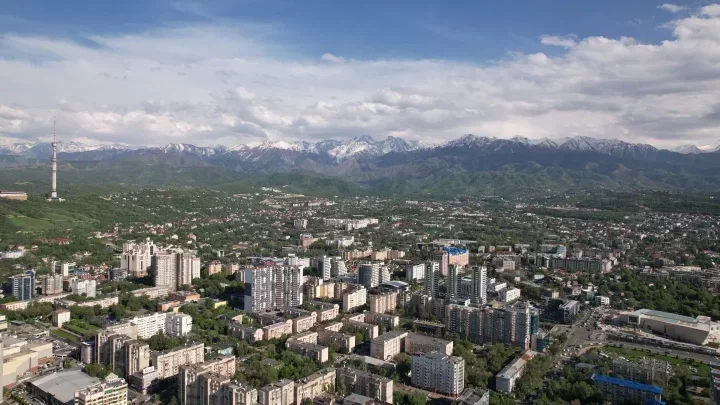 Photo: Islam Abdukaparov, Orda.kz
Kazakhstan’s housing market may look stable today, but construction expert Dilyara Seitnurova believes it is entering a phase of hidden change, and housing prices could rise significantly by the fall of 2026, Orda.kz reports.
Seitnurova believes that promotions such as “discounts until the end of the year” and “parking at a special price” are linked to developers’ desire to sell properties built under the old rules as quickly as possible. In her view, the key role is being played by changes to the Tax Code for 2026 and the entry into force of the new construction code. She illustrates her conclusions using the example of prices in Almaty.
The expert says both documents affect the construction cycle at the same time, creating conditions for price growth. To explain her position, she points to the factors underlying her analysis.
Factor No. 1: VAT and Cost
According to Seitnurova, the introduction of 16% VAT will not automatically push prices up by the same amount. She notes that the tax is charged on value added, while part of the cost base already includes input VAT.
By her estimates, the final effect on construction costs could be around 12–15%.
The expert believes that in the economy segment, developers are likely to pass most of the increase on to buyers, while in more expensive segments they may absorb part of the burden.
She also stresses that equity participation agreements signed before January 1, 2026 will be protected from price revision. In practice, this gives those buyers an advantage over people entering the market later.
Factor No. 2: Construction Code
Seitnurova believes the market will change more sharply from July 1, 2026. According to her, extending the warranty period to five years for a building and up to 10 years for load-bearing structures will increase developers’ costs.
She estimates the additional reserves required at 0.8–1.5% of total project cost. At the same time, in her view, restrictions on revising detailed planning projects could have an even greater impact.
The expert says this may reduce the number of new projects, especially in central districts of Almaty such as Bostandyk, Medeu and Almaly.
She also believes that tighter construction oversight may reduce the amount of housing commissioned.
What Could Happen to Prices
Seitnurova believes price growth could begin as early as the third or fourth quarter of 2026. In her forecast, the dynamics may look like this:
- economy class — up 10–14%;
- comfort class — up 8–12%;
- business class — up 6–10%;
- premium class — up 5–8%.
The changes, she says, will affect buyers with limited budgets the most.
What Buyers Can Do
The expert outlines three possible scenarios.
The first is to close a deal before the fall of 2026 in order to lock in the price.
The second is to wait until the winter of 2026–2027 in the hope of possible stabilization, although she notes the risk that mortgage conditions may worsen.
The third is to consider the secondary market, which, according to her, is not subject to VAT, but may face other restrictions after the new code comes into force.
After July 1, 2026, buyers will check apartments against the new technical requirements of the construction code. Older panel housing from the 1980s and 1990s without major repairs will be harder to sell in 2027. That discount is already being built into prices now.
What the Expert Recommends
According to the expert, with a budget of up to 60 million tenge, buyers should consider:
- comfort-class housing;
- established neighborhoods;
- properties scheduled for delivery in the first half of 2026;
- apartments with a registered equity participation agreement.
Seitnurova believes these options are better at preserving value even if the market cools.
Original author: Alexander Zhdanov
Read also:
Latest news
- Orda.kz Editorial Team to Cease Operations on September 1
- The Price of a Degree: How Students in Kazakhstan Pay for University
- Second Przewalski’s Horse Foal Born as Species Returns to Kazakhstan
- Kazakh Mining Companies Can Recalculate Purchases if Tenge Weakens
- Kazakhstan Names First Vice President in Three Decades
- What Almaty’s Bus Shelters Are Missing
- 400-Truck Queue Builds at Kazakh–Kyrgyz Border
- Kazakhstan Ready to Help Feed and Rebuild Gaza
- Tokayev Establishes New Presidential Security Body
- Almaty Takes Back Its Nearly Century-Old Hippodrome
- No More Guesswork on Savings: Kazakhstan Tightens Energy Audits for Businesses
- Public Money Could Be Used to Rescue Failing Kazakh Banks
- Third Kazakh Woman Reported Missing in Nepal-China Flood Zone
- Falconer Convicted Over 35 Protected Birds, Spared Punishment Under Amnesty
- Kazakh Citizen Detained in Yakutia in Phone Fraud Case
- Yuan Instead of Dollars? KazMunayGas Draws Record Demand in Asia
- China Gains Oil-Market Influence as OPEC+ Weakens
- Kazakhstan to Divide Smartphones Into White, Gray and Black Lists
- Kazakhstan’s Government Formally Resigns as First Kurultai Session Opens
- Rare Lynx Sighting Recorded in Northern Kazakhstan
