

I Can Bring The Certificate from a Psychiatrist: Witness Zhumasultanov Testifies in Bek Air Crash Case
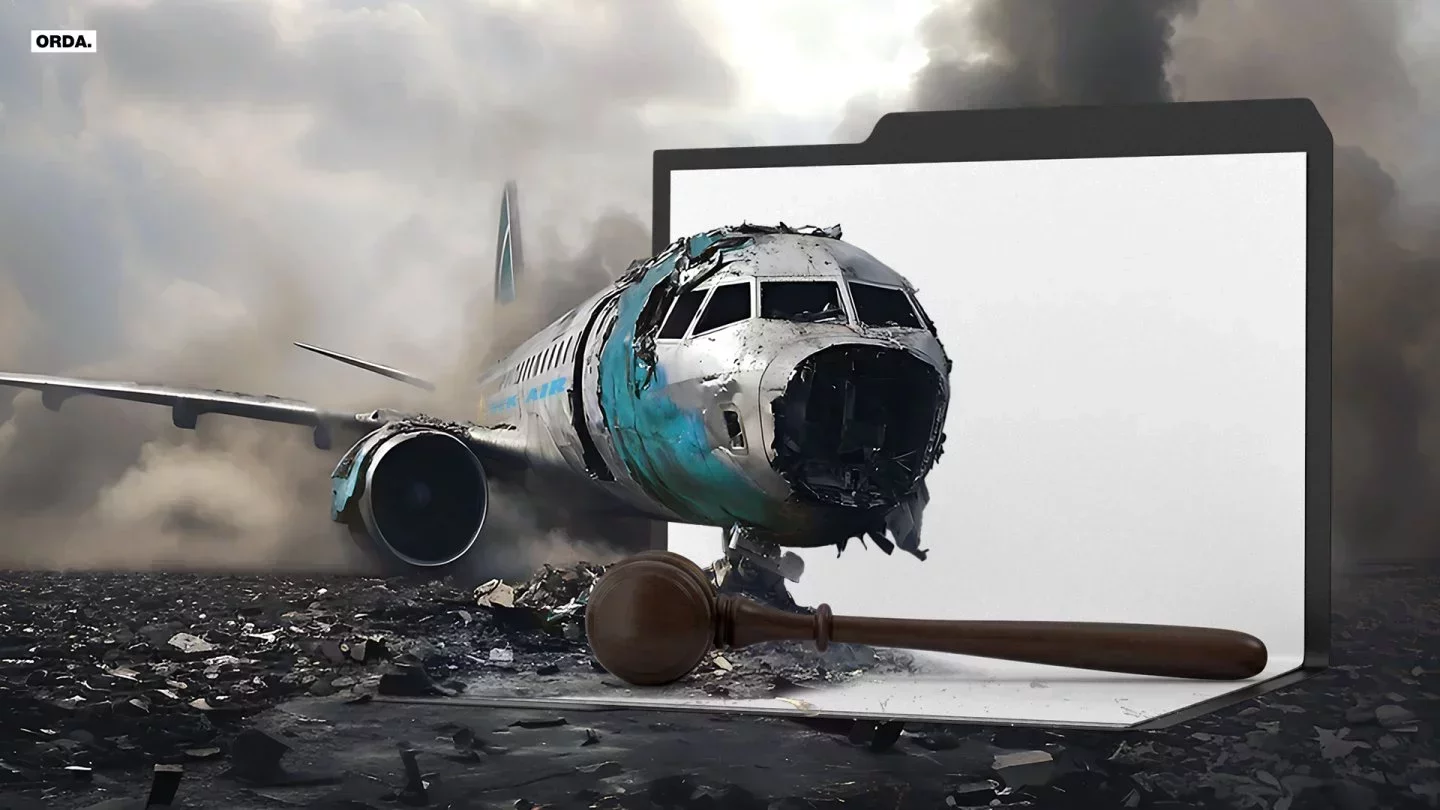 Photo: Orda.kz
The Turksib District Court of Almaty is continuing the trial over the crash of a Bek Air Fokker 100 aircraft that occurred on the morning of December 27, 2019. According to the prosecution, the deceased pilots, Marat Muratbayev and Mirzhan Muldakulov, are responsible for the tragedy that claimed the lives of 12 people, Orda.kz reports.
In the previous issue, we began to cover the testimony of witness Nurlan Zhumasultanov. He denies being the founder of Bek Air and disagrees with some of the experts’ conclusions — for example, that the airline’s pilots had a financial incentive to cut costs on aircraft de-icing, or that they, along with the aviation doctor, concealed their medical conditions for fear of being suspended from flights.
We continue here with what Zhumasultanov told the court while answering questions from the state prosecution and other participants in the trial.
Questionable Certificates
Let us explain why we are so focused on Mr. Zhumasultanov’s testimony.
Firstly, he was a member of the government commission that investigated the crash, meaning he is familiar with the case’s details. Secondly, he positions himself as a “representative of the aircraft owner,” with the authority to influence Bek Air’s policy, making him aware of the company’s management’s plans and objectives. Thirdly, he is an aviation specialist with 36 years of experience.
Who else but him can describe what was happening at the airline from its founding in 2015 until its closure in 2020 — and explain the crew’s actions on that tragic morning?
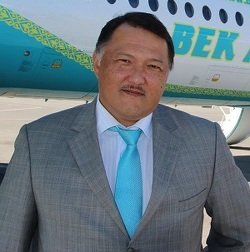
The prosecution focused on violations in the training of the airline’s flight crews. For example, a psychological assessment of the crews showed that some pilots did not have certificates of additional training. Prosecutors asked the witness to explain how Bek Air management had allowed them to fly.
Each company undergoes training for spring–summer and autumn–winter navigation twice a year. This usually happens in March and September, and the documents are filled out at the same time. Maybe some documents were not completed? In November 2019, the airline was certified, Zhumasultanov replied.
According to him, the airline’s flight service was responsible for training and retraining pilots.
Prosecutors then asked why the crews had not undergone anti-icing training between 2017 and 2019, even though it is a mandatory part of their instruction.
I don’t know where you found this, but they did undergo training. The airline even passed ICAO certification and became its official carrier,” he said.
The state prosecutor pressed further: why was co-pilot Muldakulov allowed to fly despite failing the SKY test and not being cleared for instrument flights? How could the responsible official at the airline have given the go-ahead for him to fly?
The director of the flight service, Saparov, could not have authorized Muldakulov to fly, since this has been under the authority of the Civil Aviation Committee since 2014. Before 2013, the operator — the airline — could give such permission… We cannot control the aviation authorities; they control us! Zhumasultanov said.
The psychological assessment also indicated that, because of management’s directive to cut costs, Captain Muratbayev may have developed a flawed decision-making model. According to the experts, Bek Air captains were implicitly expected to use anti-icing fluid only in the most extreme cases, on the unwritten orders of the bosses.
The prosecutor asked the witness to comment on this conclusion.
And where did you get that from? Where did they get it from? Zhumasultanov replied with a counter-question.
The prosecutor reminded him that it is forbidden to question the state prosecution in court; he should only answer.
This information is not true. There were no instructions to save on anything! On the contrary — when the Fokker was treated with anti-icing fluid, 153 liters were applied to the stabilizer. The standard is 40–45 liters.
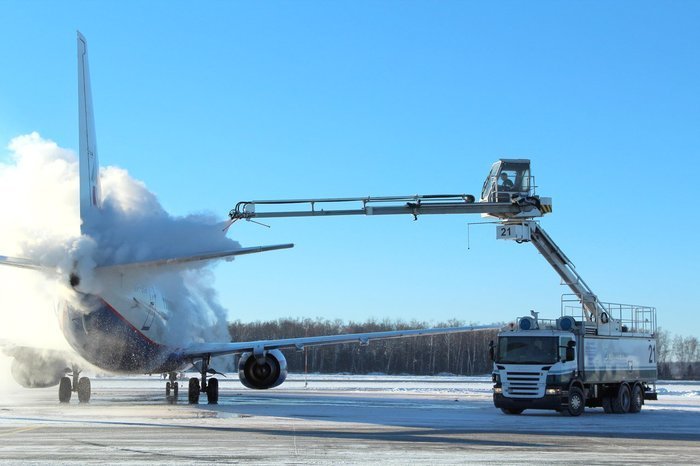
When asked the reasonable question of why so much fluid had been used on the stabilizer, Zhumasultanov replied that he did not know.
Mistakes, Not Violations
Next, questions were addressed to other participants in the hearing, who joined the trial online. Lawyer Zhanetta Kameleva took the floor. Below is an almost verbatim account of her exchange with Zhumasultanov (K–Kameleva, Zh –Zhumasultanov).
K: Witness, in January 2020, during the pre-trial investigation, you testified that all decisions related to Bek Air JSC were made by you. Do you confirm this now?
Zh: I confirm some of it, but not all.
K: What exactly do you not confirm?
Zh: In 2020, everyone was in a state of shock. So when, in March this year, the investigator asked me if I stood by the testimony I had given earlier, I said I only partially confirmed it.
K: You told the court that you were in a state of shock. How can you prove this? Do you have any medical records or reports?
Zh: I can bring the certificate from a psychiatrist.
K: You also explained that permission to fly is issued by the Civil Aviation Committee (CAC). Based on what documents did the CAC issue flight clearance for the pilots?
Zh: Based on the documents sent by the operator (the airline — Ed.). The examiners collected the documents, we sent them to the CAC. If something was unsatisfactory, they would not grant permission. If everything was in order, they stamped the pilot’s certificate and signed it, and from that moment the pilot was considered approved. I repeat: it is the aviation authorities that authorize flights, not airline management.
K: You misunderstood. I’m asking who specifically, and what documents, were sent to the CAC for pilots Muldakulov and Muratbayev?
Zh: I received hundreds of documents per day. I did not track who sent them, where, or to whom.
K: Please explain to the court. The case files include an expert opinion stating that Mr. Saparov was Muldakulov’s flight instructor. Do you know him?
Zh: Yes. He is the head of the flight operations service of the JSC.
K: How did Muldakulov’s exam go? On which simulator did he take it?
Zh: I was not present at the exam, so I cannot say.
K: The expert opinion states that the second pilot, Muldakulov, did not complete all the points on the exam sheet. In fact, he failed five items on the SKiL test during Saparov’s final exam. Why didn’t the examiner send him back for additional simulator training?
Zh: He must have sent him anyway, since the Civil Aviation Committee issued Muldakulov a permit. Otherwise, the CAC would not have granted it.
K: Muldakulov’s flight file contains no records of completing the IRA instrument flight training program. Yet Bek Air submitted documents to the CAC to obtain a permit. If the pilot failed the exam, on what basis did you send these documents to the CAC? I ask, given the corruption in Kazakhstan that exists in almost every state body. If additional training was required, why didn’t you arrange it and instead send the documents as they were?
Zh: Once again: if he had failed again, no one would have sent the documents to the CAC. No permit would have been issued. But the CAC did issue a permit. So the question should be put to them.
K: Why did the pilots commit so many violations on that ill-fated day?
Zh: They were not violations; they were mistakes. Please don’t confuse the two!
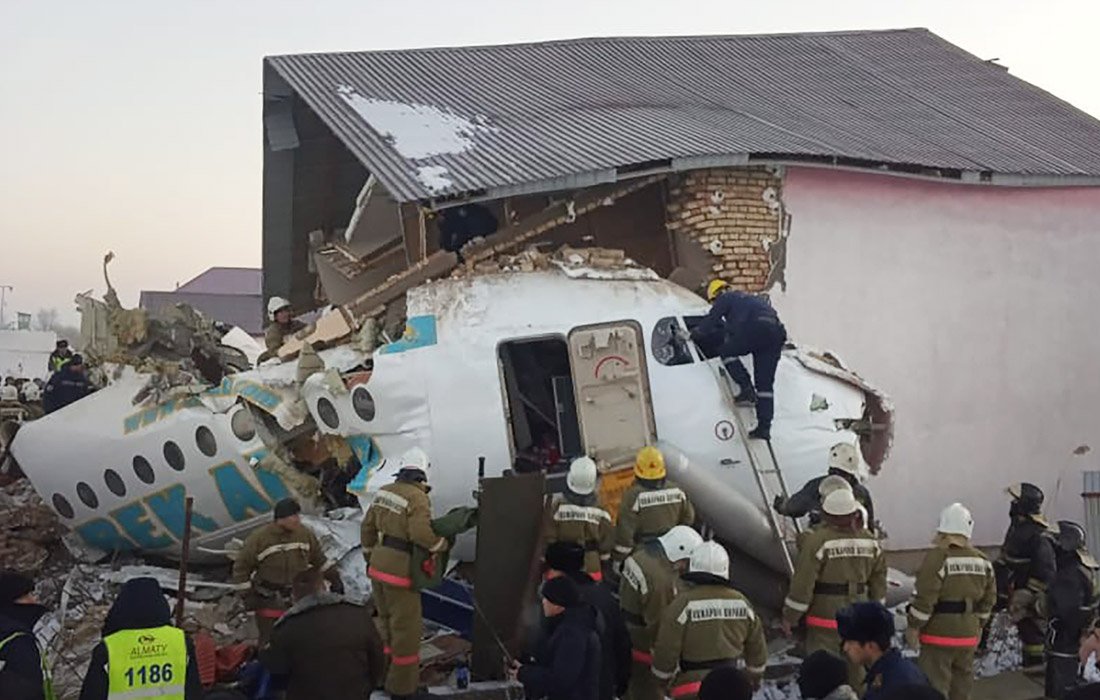
Rescuers at the crash site. Photo by the press service of the Ministry of Emergency Situations of Kazakhstan
K: Mistakes or violations, they are what brought us to this courtroom. Let’s continue. At earlier hearings, experts who served on the crash commission were questioned — Nurlan Akkulov and Yerbol Osanov. Were they previously your subordinates?
Zh: When I worked at the Civil Aviation Committee as an adviser to the chairman from 2002 to 2006, Akkulov was not directly under me; he worked in another department. I knew him then, as the aviation community is very close-knit, everyone knows each other.
Later, when I became head of the department for air accident investigation, he was already working there as a specialist. He was under my supervision for about a year and a half. As for Osanov, I first met him in 1994, when I was serving in the Presidential Security Service, providing special transport for the head of state. Yerbol Osanov was then the President’s chief pilot. Naturally, I was in contact with him. I have been in aviation for 36 years.
K: Mr. Zhumasultanov, pilots Damekov and Temir worked for your company. They did not undergo retraining in the flight program. Yet you told the court that you sent their documents to the Civil Aviation Committee (CAC), which then granted them flight clearance. The case files contain evidence that the airline forged certificates of successful retraining for a certain type of aircraft. These documents were then sent to the Ministry of Infrastructure Development to add a qualification mark to the pilots’ certificates, allowing them to fly multi-engine aircraft. How did it happen that Bek Air forged these certificates?
At that moment, one of the representatives of the injured party tried to comment from the floor.
But Zhanetta Kameleva cut him off mid-sentence, telling him not to interfere.
She asked Judge Dastan Almagambetov to reprimand him for disrespecting the participants, and the judge complied. At the same time, he demanded that Zhumasultanov answer Kameleva’s question.
Zh: If there are documents proving Bek Air forged certificates, then show them to me. If Damekov or Muldakulov forged them personally, show that too! — Zhumasultanov demanded.
K: This fact is in the case materials. I believe your lawyers know what I mean. That’s why I’m asking you. Don’t dodge the question. The investigative bodies have already proven this fact.
Zh: Usually, it’s the issuer who forges documents, not the recipient.
K: Currently, the injured parties’ representatives, Derzhavets and Khalikov, are present in this trial. Mr. Zhumasultanov, explain to the court: Did you or Bek Air ever give them powers of attorney to act in cases on the airline’s behalf?
I ask because the case materials contain a power of attorney issued by Bek Air to Mr. Khalikov. The case also contains correspondence between Derzhavets and you from the time of the pre-trial investigation. Respected court, I do not understand how these two suddenly became defenders of the victims, if they are essentially rooting for Bek Air and the pilots now!
Zh: I cannot imagine how I could have given them such a document. I cannot answer for the airline, because I am no one there. Moreover, Bek Air is not even a party to this process! — Zhumasultanov retorted.
K: You can stop. Everything is clear with you!
The reaction of Sergey Derzhavets, one of the victims’ representatives, was immediate. He openly expressed outrage at the accusations against him and asked the judge for the floor to explain. The judge refused.
Lawyer Beibit Kendirbayev, representing the deceased pilots, noted that the case materials contain no evidence of forged certificates. According to him, Kameleva’s claim is baseless and borders on a criminal offense.
The judge did not respond to his remark and announced a lunch break.
Our journalists will continue covering this high-profile trial.
Original Author: Zhanar Kusanova
Latest news
- Seasonal Truck Restrictions to Take Effect in Kazakhstan on March 23
- Kazakhstanis Are the Happiest in Central Asia: New Results in the Global Ranking
- Large-Scale Health Ministry Inspections Shut Down 174 Dental Clinics
- "Descendants Will Not Forgive Missed Opportunities": Tokayev on the Future of Kazakhstan and the Role of Science
- Tokayev Urges Shift From Humanities to Science and Technology
- Tokayev Criticized the Effectiveness of Science Funding in Kazakhstan
- Kazakhstan Breaks Into The World’s Top 40 Economies By PPP GDP
- Kazakhstan May Allow Dombras in Aircraft Cabins
- Kazakhstan To Assess Airlines’ Costs for Evacuating Citizens From the Middle East
- International Criminal Group Exported 88 Tons of Artemia From Kazakhstan
- Kazakh Ambassador to Russia Speaks About the Russian Language After the Referendum
- Kazakhstan May Introduce Drug Testing, Mortgage Perks, And New Restrictions For Civil Servants
- Who Paid the Most Taxes in Kazakhstan’s Trade Sector
- Kazakhstan Plans School-to-Civil Service Pipeline to Boost Youth Recruitment
- School Textbooks To Be Rewritten Again In Kazakhstan
- Suspect In Serial Fraud Case Extradited To Kazakhstan From Russia
- The National Bank Will Be Less Likely To Inform Kazakhstanis About Inflation
- Kazakhstan Extends Toll Road Payment Deadline
- Kazakhstan’s Industry Fell 3.1% In January–February Despite February Growth
- From Utilities to Security, Kazakhstan Approves New Smart Cities Methodology
