

Electricity in Exchange for Crypto: Kazakhstan’s New Mining Strategy Explained
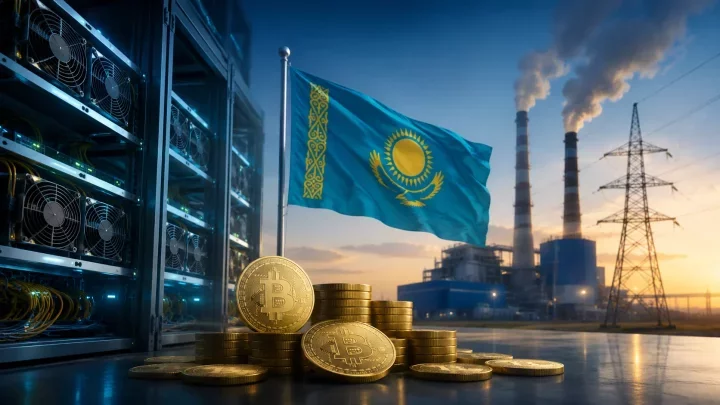 AI-generated illustration
Kazakhstan plans to use cryptocurrency mining to build its state crypto reserve for the first time. Large mining companies will be offered electricity at capped rates for ten years in exchange for transferring part of their mined assets to the state at no cost, Orda.kz reports.
The arrangement is set out in new rules for strategic digital mining. Rather than imposing another tax on the industry, the government is proposing a new partnership model for the country’s largest mining companies.
Miners will receive long-term electricity quotas directly from power plants. In return, they will transfer part of their mined cryptocurrency to the Astana Hub fund each month.
The assets will then be placed under the management of the National Investment Corporation of the National Bank and used to replenish Kazakhstan’s strategic crypto reserve.
In effect, the state is offering large miners predictable access to electricity in exchange for a share of their cryptocurrency.
How Much Crypto Will the State Receive?
The state will not take 10% of a company’s total output.
Expenses for electricity, power transmission, balancing services and use of the national grid will first be deducted from the value of the mined assets. The state will then receive 10% of the remaining amount.
The cryptocurrency must be transferred at no cost, meaning miners will not receive money or other compensation in return.
Companies will have to send the assets to Astana Hub every month, no later than the 25th of the following month. They must also create a separate crypto wallet for strategic mining.
The fund will be able to compare company reports with mining pool data and blockchain transactions. If an audit finds a shortfall, the miner will have 30 days to transfer the missing assets. Any excess payment may be credited toward the following month.
Only for Industry Giants?
Not every mining company will qualify for the program. One of the main requirements is ownership of a data center with a capacity of at least 150 MW.
Each mining device must have a computing power of at least 150 TH/s. Companies will also need two independent communication lines, their own service center, qualified specialists and technical specifications for connection to the power grid.
Applicants must have no outstanding tax debt or assets under seizure or pledged as collateral. The program is therefore designed primarily for a small number of large companies capable of making substantial infrastructure investments.
Companies may continue conventional mining alongside strategic mining. However, the cryptocurrency they produce and the electricity they consume under each model must be accounted for separately.
Who Will Supply the Electricity?
Initially, the only approved supplier will be the Bulat Nurzhanov Ekibastuz GRES-1 power plant. The total electricity quota for strategic mining will be 300 MW.
Electricity will be supplied under direct ten-year contracts. The price must not exceed the maximum tariff established for the power plant.
A special commission will allocate the quotas after reviewing company documents and available capacity. If a miner uses at least 5% less electricity than agreed for reasons within its control, its quota may be reduced.
The model resembles Kazakhstan’s agreements with mining and energy companies: businesses receive long-term access to a resource, while the state receives a share of what they produce. This time, however, cryptocurrency rather than oil, gas or metals will enter the state reserve.
Original author: Alexander Smolin
Read also:
- Kazakhstan Plans Large Energy Storage Systems For Wind And Solar Power
- More Than 16 Billion Tenge to Be Allocated to Astana’s Utility and Energy Infrastructure
- Kazakhstan Pauses Planned Electricity Tariff Increase
Latest news
- Orda.kz Editorial Team to Cease Operations on September 1
- The Price of a Degree: How Students in Kazakhstan Pay for University
- Second Przewalski’s Horse Foal Born as Species Returns to Kazakhstan
- Kazakh Mining Companies Can Recalculate Purchases if Tenge Weakens
- Kazakhstan Names First Vice President in Three Decades
- What Almaty’s Bus Shelters Are Missing
- 400-Truck Queue Builds at Kazakh–Kyrgyz Border
- Kazakhstan Ready to Help Feed and Rebuild Gaza
- Tokayev Establishes New Presidential Security Body
- Almaty Takes Back Its Nearly Century-Old Hippodrome
- No More Guesswork on Savings: Kazakhstan Tightens Energy Audits for Businesses
- Public Money Could Be Used to Rescue Failing Kazakh Banks
- Third Kazakh Woman Reported Missing in Nepal-China Flood Zone
- Falconer Convicted Over 35 Protected Birds, Spared Punishment Under Amnesty
- Kazakh Citizen Detained in Yakutia in Phone Fraud Case
- Yuan Instead of Dollars? KazMunayGas Draws Record Demand in Asia
- China Gains Oil-Market Influence as OPEC+ Weakens
- Kazakhstan to Divide Smartphones Into White, Gray and Black Lists
- Kazakhstan’s Government Formally Resigns as First Kurultai Session Opens
- Rare Lynx Sighting Recorded in Northern Kazakhstan
