

Kazakhstan’s Power Deficit Complicates Its AI Ambitions
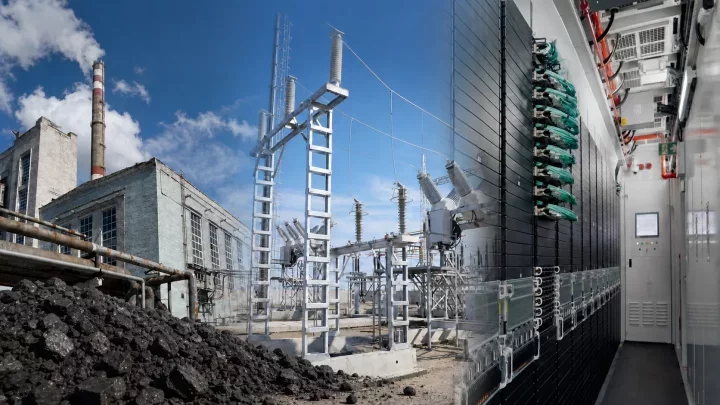 Illustration: Orda.kz
Kazakhstan wants to turn Ekibastuz into a Data Center Valley and attract billions of dollars in artificial intelligence infrastructure. But the project will require enormous amounts of electricity at a time when the country still produces less power than it consumes.
The first data centers are expected to open in 2027, while the Energy Ministry does not expect a stable power surplus until 2029.
Whether the project becomes a flagship of Kazakhstan’s industrial and technological development will depend on the country’s ability to coordinate the construction of data centers, power plants and electricity networks.
Orda.kz examined the project’s prospects and risks with Zhakyp Khairushev, managing director of Kazakhstan’s Atameken National Chamber of Entrepreneurs.
Modern artificial intelligence has one easily overlooked feature: it is highly physical.
Behind chatbots, image generators and language models are thousands of servers. They require microchips, buildings, cooling systems, water, communications infrastructure and enormous amounts of electricity. The global AI race is therefore also becoming an industrial race.
This connection is especially clear in the Data Center Valley project. Coal from local open-pit mines already supplies Ekibastuz’s power plants. Under the project, electricity generated there will travel along dedicated lines to server complexes.
AI models will be trained on the installed processors, while computing services will be sold to customers around the world.
A Valley Beside the Power Plant
The Data Center Valley will be built near Ekibastuz GRES-1. Investors are being offered prepared sites, access to water and telecommunications, and the possibility of connecting directly to the power plant.
One of the project’s main selling points is electricity costing around 2.5 cents per kilowatt-hour. Investors may also receive tax incentives and 10- to 20-year take-or-pay contracts, under which reserved capacity must be paid for regardless of actual consumption.
The project is expected to begin with 300 MW and later expand to one gigawatt, although the government previously identified 250 MW as its initial capacity.
Some of the world’s largest technology companies have already expressed interest. President Kassym-Jomart Tokayev said Amazon and the UAE’s G42 had begun taking their places within the project’s ecosystem. However, the exact form of their participation and potential investment remain undisclosed.
The authorities have also reported preliminary interest from major companies in the United States, China and India.
More concrete agreements have been reached with U.S.-based Firebird, which plans to establish an NVIDIA-powered computing cluster in Ekibastuz. The $10 billion package of agreements provides for the installation of 100,000 advanced GPUs, including NVIDIA GB300 and Vera Rubin chips.
The cluster is expected to generate at least $3 billion in annual export revenue and begin operating in 2027. Orda.kz previously reported that Transtelecom’s data center project alone was valued at almost 400 billion tenge.
NVIDIA Vice President Rev Lebaredian summarized the project’s logic in one sentence:
It all starts with energy.
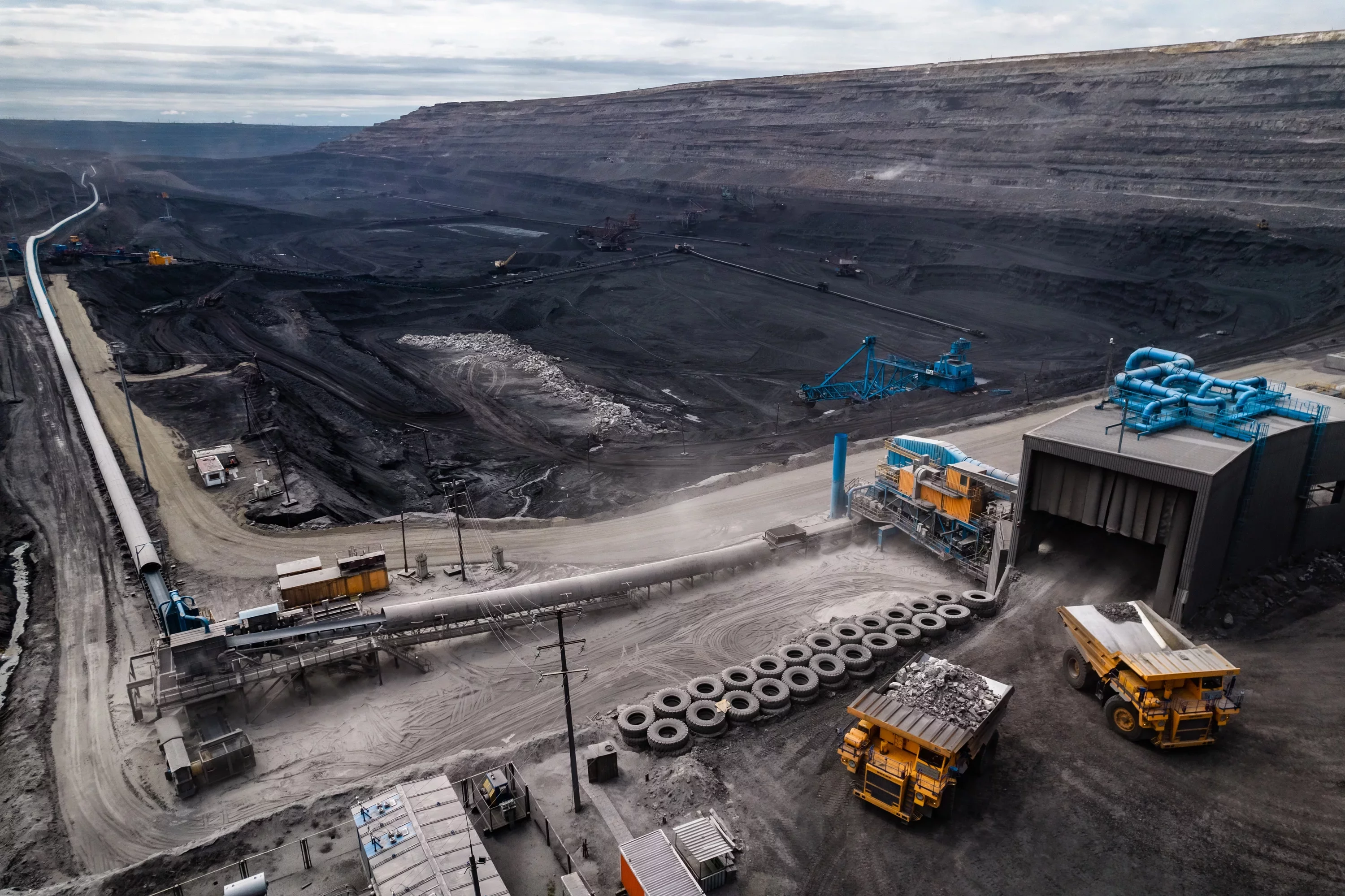
In Ekibastuz, that energy is literally underfoot in the form of coal.
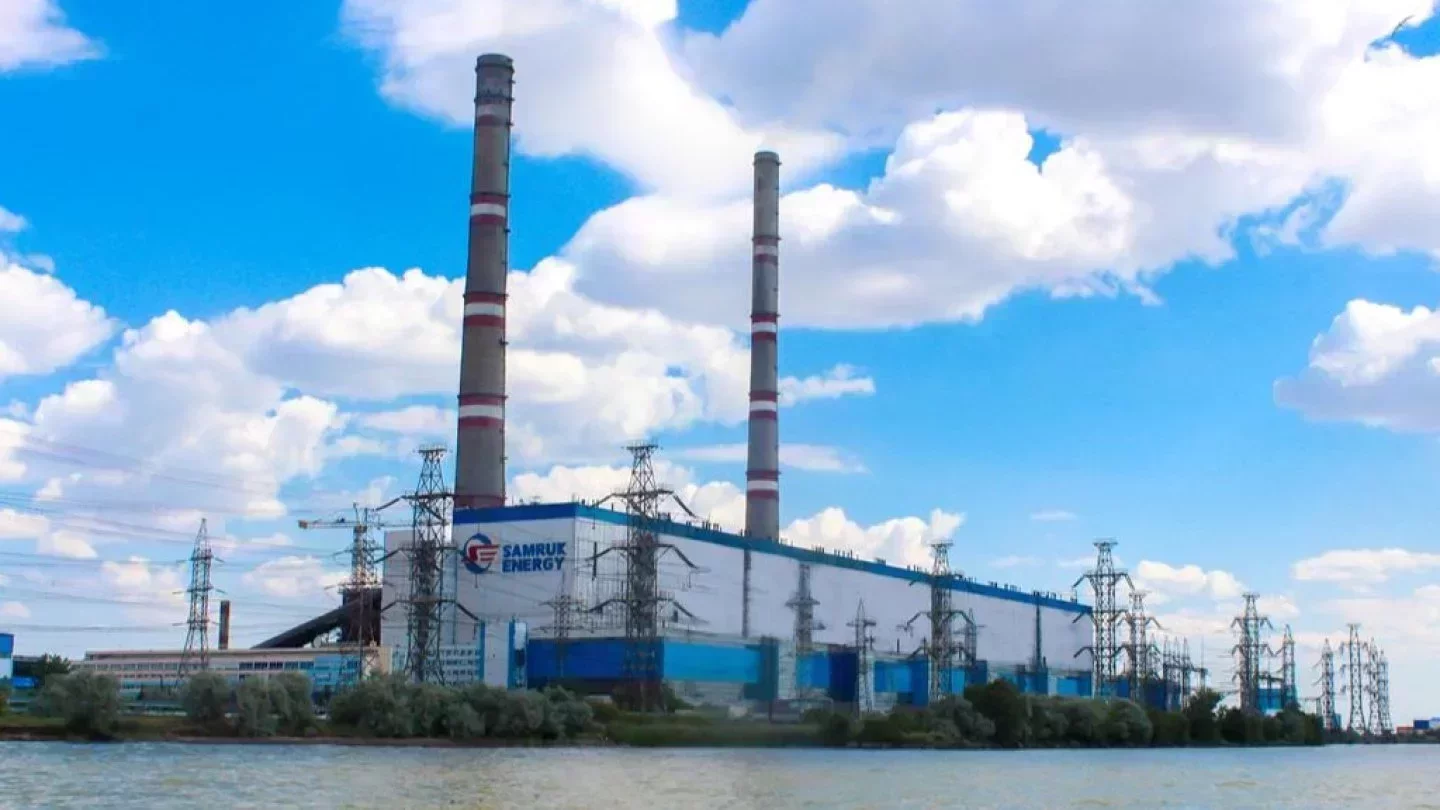 Ekibastuz GRES-1. Photo: Ministry of Energy
Kazakhstan Still Has a Power Deficit
Kazakhstan’s power plants generated a record 123.1 billion kilowatt-hours in 2025. Consumption, however, reached 124.6 billion kilowatt-hours. The country therefore used approximately 1.5 billion kilowatt-hours more than it produced.
Kazakhstan’s power system currently includes 254 energy sources with a total installed capacity of 27.1 GW. Coal-fired plants account for 13.7 GW, gas-fired generation for 7.1 GW and large hydropower plants for 2.5 GW. Another 3.8 GW comes from 172 renewable-energy facilities.
The Energy Ministry expects the balance to change over the next several years. Energy Minister Yerlan Akkenzhanov said Kazakhstan should begin meeting its own electricity demand in 2027 and achieve a stable surplus by 2029.
The government intends to use that future surplus to power large data centers and other energy-intensive AI infrastructure.
Kazakhstan’s energy development plan through 2035 provides for more than 26.3 GW of additional generating capacity.
On paper, this would be enough to cover domestic demand, new industrial projects and large data centers. But the surplus still has to be built and brought online.
Data Centers Could Arrive Before the Surplus
The timelines for the energy and digital projects converge in 2027.
The first data centers are expected to begin operating that year, while major new coal-fired generating facilities will arrive later.
Construction of the 2,640 MW Ekibastuz GRES-3 project has entered its active phase, but its units are expected to be commissioned gradually between 2029 and 2032.
The first phase of the Data Center Valley could therefore begin operating before Ekibastuz’s main new generating capacity becomes available.
Khairushev warned against using the word “surplus” too freely.
Free or unused capacity at an individual power plant does not yet mean that the entire power system has a stable surplus.
Before GRES-3 is commissioned, the 300 MW allocated to the Data Center Valley will have to come mainly from existing generation. Khairushev therefore considers the order in which facilities are launched critical.
If the first data centers begin consuming electricity before new generating capacity comes online, we need to understand how this will affect the power balance, wholesale prices and the operation of the power system during peak demand. If data center development is synchronized with the construction of additional generation, the risks will be significantly lower.
 Section "Eastern". Photo: ERG
How Much Power Will Kazakhstan’s AI Need?
According to Orda.kz’s calculations, a data center operating continuously at 300 MW could consume approximately 2.6 billion kilowatt-hours per year.
That is about 2.1% of all electricity generated in Kazakhstan in 2025 and almost twice the gap between national production and consumption that year.
If the project expands to one gigawatt, annual consumption could approach 8.8 billion kilowatt-hours — more than 7% of Kazakhstan’s current annual generation.
These are approximate figures. Actual consumption will depend on equipment use and the complex’s energy efficiency. It is also unclear whether the announced 300 MW refers to the facility’s total power supply or only to the servers’ computing load.
Khairushev said a connection to a single power plant would not be enough. The data centers will require backup capacity, emergency power sources and reliable network infrastructure.
The project already includes approximately 15 kilometers of transmission lines and 300 MW of step-down substation capacity, with the possibility of later expansion to one gigawatt.
In terms of consumption, this is a large industrial enterprise operating around the clock. It places increased demands on the reliability of the electricity supply,Khairushev said.
He stressed that the cost of serving such a consumer should not be shifted onto households and existing businesses.
The investor must contribute toward network infrastructure, backup capacity, balancing and other system services. These costs must not be quietly distributed among other consumers.
70% for the Investor, 30% for the Power Grid
To provide data centers with new generating capacity, the authorities are proposing a 70/30 model.
After constructing, expanding or modernizing a power plant, an investor would be allowed to direct up to 70% of the new capacity to major consumers. The remaining 30% would enter Kazakhstan’s national power grid.
The model is already being considered for Ekibastuz. The Energy Ministry has reported interest from an investor seeking to build a new power plant in the city under the arrangement.
The plant’s capacity, construction schedule and direct connection to the Data Center Valley have not yet been disclosed.
Khairushev believes this model is more balanced than simply giving investors access to inexpensive electricity.
If an investor uses its own money to build or expand generation, receives long-term access to 70% of the resulting capacity and leaves 30% for the power system, that is a more balanced approach.
However, he cautioned against confusing the 70/30 model with the direct connection of data centers to the existing GRES-1 infrastructure.
The first mechanism involves direct access to the existing infrastructure of the Ekibastuz energy hub and a preferential electricity price. The second involves constructing, modernizing or expanding generation under the 70/30 model.
The published terms of the Data Center Valley do not indicate that major participants will be required to invest in new generation.
The 70/30 model therefore does not yet guarantee that the first data centers will receive electricity from facilities built specifically for them.
How Kazakhstan Can Profit — and What Australia Has to Do With It
Low-cost electricity gives Kazakhstan a genuine advantage, but only if the country uses cheap power to produce something more valuable.
A cheap kilowatt-hour should not become the final product Kazakhstan effectively exports in digital form. It should serve as the foundation for domestic computing services, artificial intelligence, cloud solutions, scientific research and exports of digital services,Khairushev said.
Otherwise, a foreign company could install servers in Ekibastuz, use tax benefits and export computing capacity while retaining the technology and most of the added value.
Khairushev said Kazakhstan should receive new power infrastructure, skilled workers, tax revenue and stable export income alongside foreign investment.
He cited Australia as a possible model. The country does not plan to restrict data center construction, but it wants to prevent the industry’s growth from increasing electricity bills for other consumers.
Australia is developing requirements under which large data centers would have to support new electricity generation, pay their share of grid connection costs, reduce consumption when the power system is under pressure and use water efficiently. The country plans to establish the framework in law in 2027.
This approach goes beyond take-or-pay contracts. Such agreements guarantee payment for reserved capacity but do not determine who will build and pay for the power plants, transmission lines and backup systems needed by a new major consumer.
In my view, a large data center should pay the full cost of its connection, the necessary network upgrades, backup capacity and system services. If its arrival requires new generation, those costs should not be passed on to other consumers,Khairushev said.
Kazakhstan does not necessarily have to copy Australia’s proposed clean-energy requirement. Coal and gas units, future nuclear plants, or renewable facilities combined with storage could all provide the stable, around-the-clock electricity required by data centers.
The basic principle remains the same: a large new consumer should bring a comparable amount of reliable generating capacity with it.
The 70/30 model could make this possible in Ekibastuz. The government must now decide whether investment in new generation will be mandatory for Data Center Valley participants or whether they will first receive access to existing low-cost electricity, with additional capacity built later.
From Coal to Intelligence
Kazakhstan’s national coal-generation project explicitly identifies data centers and artificial intelligence as drivers of future electricity demand.
The new digital industry is not replacing the old industrial economy. Instead, it is creating a new market for it: coal powers plants, plants power servers and servers produce calculations for export.
This relationship does not eliminate the project’s environmental costs. Even modern coal technologies cannot remove emissions completely.
New power units will require flue-gas treatment, desulfurization systems, ash management and water. Data centers will also require efficient cooling. These costs must be considered alongside investment totals and expected export revenue.
If the Data Center Valley brings Kazakhstan new power plants and networks, modern technology, trained engineers and domestic digital products, it could become a flagship of the country’s industrial and technological development.
Ekibastuz coal could then become not merely a symbol of the old economy, but the foundation of Kazakhstan’s new digital industry.
Original author: Alexander Zhdanov
Read also:
Latest news
- Orda.kz Editorial Team to Cease Operations on September 1
- The Price of a Degree: How Students in Kazakhstan Pay for University
- Second Przewalski’s Horse Foal Born as Species Returns to Kazakhstan
- Kazakh Mining Companies Can Recalculate Purchases if Tenge Weakens
- Kazakhstan Names First Vice President in Three Decades
- What Almaty’s Bus Shelters Are Missing
- 400-Truck Queue Builds at Kazakh–Kyrgyz Border
- Kazakhstan Ready to Help Feed and Rebuild Gaza
- Tokayev Establishes New Presidential Security Body
- Almaty Takes Back Its Nearly Century-Old Hippodrome
- No More Guesswork on Savings: Kazakhstan Tightens Energy Audits for Businesses
- Public Money Could Be Used to Rescue Failing Kazakh Banks
- Third Kazakh Woman Reported Missing in Nepal-China Flood Zone
- Falconer Convicted Over 35 Protected Birds, Spared Punishment Under Amnesty
- Kazakh Citizen Detained in Yakutia in Phone Fraud Case
- Yuan Instead of Dollars? KazMunayGas Draws Record Demand in Asia
- China Gains Oil-Market Influence as OPEC+ Weakens
- Kazakhstan to Divide Smartphones Into White, Gray and Black Lists
- Kazakhstan’s Government Formally Resigns as First Kurultai Session Opens
- Rare Lynx Sighting Recorded in Northern Kazakhstan
