

What Could Pashinyan’s Visit to Astana Signal?
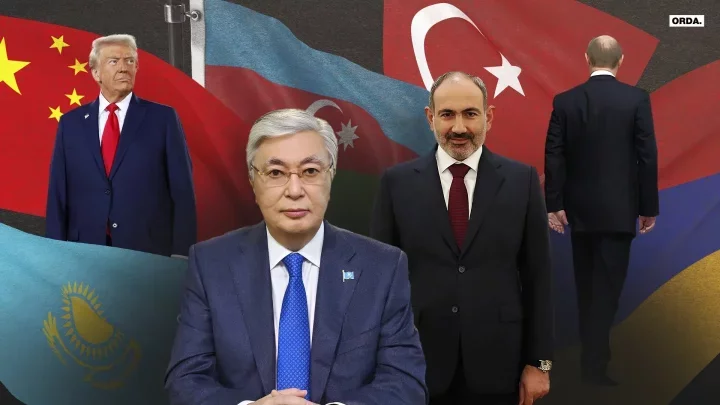 Photo: Orda Collage
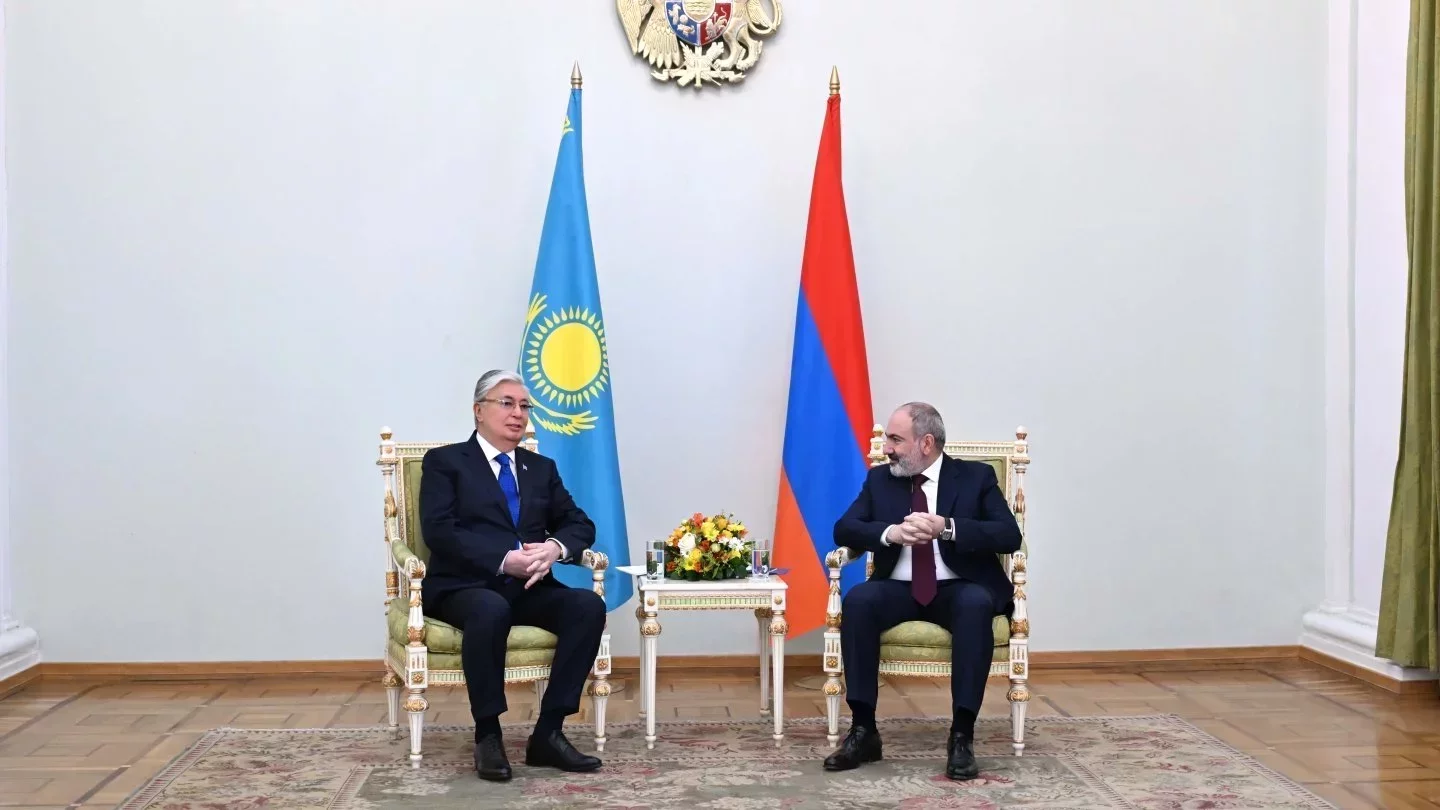
When Armenian Prime Minister Nikol Pashinyan comes to Astana, it is far more than a courtesy visit. Regional events now speak louder than any official communiqué, and this visit is one of them.
Armenia is at a historic turning point: its 30-year-old security system is falling apart, traditional partners are no longer reliable, and the very notion of a “guarantee” is being rewritten. Political scientist and Orda.kz columnist Islam Kurayev examines such visits not as protocol, but as signs of the times.
And Pashinyan’s trip is one of the clearest signals for the region — not just a search for contacts, but a search for a future.
Mid-Flight
Armenia’s foreign policy resembles an attempt to redesign an aircraft mid-flight.
The country is simultaneously:
- Distancing itself from Russian military and economic oversight
- Trying to deepen ties with the West
- Preparing for internal reforms
- Attempting to resolve its security dilemma without traditional anchors
In this situation, Armenia must consider new options — and Kazakhstan is among the most pragmatic.
Why?
Logically, Kazakhstan is connected to every major center of influence — Ankara, Baku, Beijing, Brussels, Washington — yet remains outside the Armenian–Azerbaijani conflict.
For Armenia, Kazakhstan offers access to a region where no one is invested in Armenia’s weakness, but where many are invested in stable transport and economic links.
Astana is also becoming a platform where Armenia can interact with partners without Moscow’s shadow — a important new dynamic.
A Forced Alignment?
Current contact between Astana and Yerevan is not the result of long-term trust. It is the product of a changing world order.
Armenia now finds itself with a traditional ally — Russia — that no longer acts as a guarantor and is sometimes an additional risk factor.
Meanwhile, Yerevan sees Kazakhstan as a state unlikely to exploit Armenia’s vulnerability.
For Kazakhstan, Armenia’s stability matters. A crisis in Armenia would instantly become a crisis along the Trans-Caspian route involving Baku and Ankara — a route critical to all regional actors.
This is not diplomatic romance; it is the cold logic of mutual necessity.
Armenia in Eurasian Transitions: Not Just Corridors
There is constant talk about the Zangezur Corridor. But logistics alone do not explain the deeper shifts.
For the first time in years, Armenia has a chance to stop being a dead end. Not because the corridors already function, but because multiple versions of them now exist.
Armenia has become an object of competing interests:
- Türkiye, seeking normalization through economics
- Azerbaijan, aiming to finalize the post-Karabakh regional order
- Kazakhstan, prioritizing corridor stability
- The United States, viewing Armenia as a regional conduit
- China, seeing the South Caucasus as the western flank of its Eurasian routes
Kazakhstan’s interest fits into this multilayered picture. It is not simply about roads — it is about creating new entry points and integration opportunities for Armenia in global economic and political systems.
Food and Resource Security
Armenia’s shift to new food and resource suppliers is not tactical. For decades, the country depended on Russia for grain, fuel, fertilizer, and basic goods. This dependence is now a political liability.
Kazakhstan can offer:
- Stable supplies of wheat, flour, and feed
- Access to oil products and gas through regional partners
- Support in modernizing Armenia’s agricultural sector, irrigation, and engineering
- Grain hubs for Kazakh supplies
- Storage and processing technologies via cooperation with Türkiye and the UAE
Azerbaijan can offer:
- Stable transit independent of Russia
- Electricity
- Joint energy projects
- Access to infrastructure Armenia previously lacked
Türkiye can offer:
- Processing technologies
- Investment in food industries
- Access to major logistics hubs
- Cheaper consumer goods
This is not merely a food system. It is a new model.
The U.S. sees Armenia as:
- A way to counter Russian influence
- A reform platform
- A hub for tech and cybersecurity projects
- A strategic balancing point in the South Caucasus
China sees Armenia as:
- A market for infrastructure investment
- A western node of its Eurasian corridors
- A partner free of Russian pressure
- A platform for digital, industrial, and logistics projects
Kazakhstan is unique: it is the only actor that speaks to both Washington and Beijing while retaining trust from both — something Armenia is aware of.
The Armenian–Turkish Border
If reopened, even partially, the border with Türkiye would:
- Reduce prices
- Attract investment
- Expand market access
- Change Armenia’s psychological map, ending decades of isolation
This step would benefit all regional stakeholders.
Having a weaker influence over Armenia, Moscow no longer sees Yerevan as an asset.
But Azerbaijan is another story: Baku is building routes bypassing Russia, strengthening ties with Türkiye, and working directly with the EU and U.S.
Russia now tries to restrain Azerbaijan to preserve its remaining leverage in the Caspian.
Armenia, by distancing itself from Moscow, paradoxically gains room to maneuver. Kazakhstan gains new space for independent diplomacy.
Prospects and Risks
Prospects:
- Economic opening to East and West
- Food and energy security
- Investments in industry, IT, and processing
- Participation in Chinese initiatives
- Reduced tensions in the South Caucasus
- Greater political stability
- Involvement in Central Asian projects via Kazakhstan
Risks:
- Internal instability
- Attempts to drag Armenia into conflicts
- Pressure from external actors
- Fragile Armenia–Azerbaijan dynamics
- Infrastructure limitations
Bottom Line
Pashinyan’s visit to Astana is part of a larger transition. Armenia is leaving the old world behind, but the new one is not yet formed.
Kazakhstan, Azerbaijan, and Türkiye may become a support system helping Armenia through this transition. Yet this means confronting historically burdened relationships between Ankara, Baku, and Yerevan.
If the structure works, Armenia could pursue a more independent foreign policy for the first time in its modern history.
If not, it risks returning to closed borders and decisions made elsewhere.
The prospects may seem almost too optimistic — like the heart emojis Pashinyan sends to his Instagram followers — but they are real. They simply require political will, time, and favorable circumstances.
For now, Astana awaits both the outcomes of these negotiations — and the next song and heart gesture from the Armenian prime minister.
Original Author: Islam Kurayev
Latest news
- Orda.kz Editorial Team to Cease Operations on September 1
- The Price of a Degree: How Students in Kazakhstan Pay for University
- Second Przewalski’s Horse Foal Born as Species Returns to Kazakhstan
- Kazakh Mining Companies Can Recalculate Purchases if Tenge Weakens
- Kazakhstan Names First Vice President in Three Decades
- What Almaty’s Bus Shelters Are Missing
- 400-Truck Queue Builds at Kazakh–Kyrgyz Border
- Kazakhstan Ready to Help Feed and Rebuild Gaza
- Tokayev Establishes New Presidential Security Body
- Almaty Takes Back Its Nearly Century-Old Hippodrome
- No More Guesswork on Savings: Kazakhstan Tightens Energy Audits for Businesses
- Public Money Could Be Used to Rescue Failing Kazakh Banks
- Third Kazakh Woman Reported Missing in Nepal-China Flood Zone
- Falconer Convicted Over 35 Protected Birds, Spared Punishment Under Amnesty
- Kazakh Citizen Detained in Yakutia in Phone Fraud Case
- Yuan Instead of Dollars? KazMunayGas Draws Record Demand in Asia
- China Gains Oil-Market Influence as OPEC+ Weakens
- Kazakhstan to Divide Smartphones Into White, Gray and Black Lists
- Kazakhstan’s Government Formally Resigns as First Kurultai Session Opens
- Rare Lynx Sighting Recorded in Northern Kazakhstan
