

Traffic Is Driving Almaty’s Air Pollution Crisis
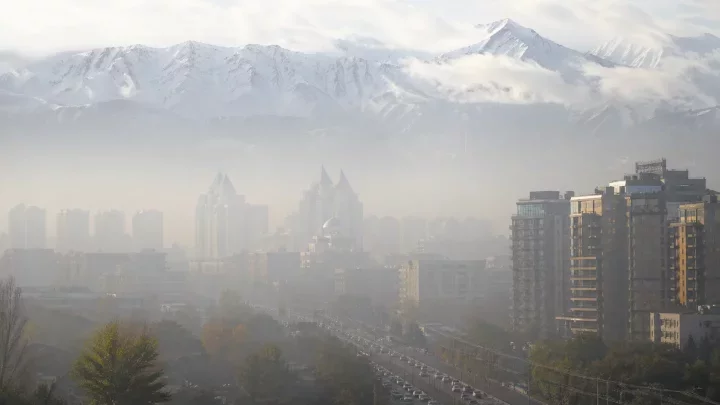 AI-generated illustration
Almaty recorded 52 days with high air pollution in the first four months of 2026, while only 19 days were considered clean, Orda.kz reports. Cars were named the city’s main source of pollution.
Zhuldyz Saulebekova, director of the Almaty Air Initiative, presented the results of public air monitoring. The average PM2.5 concentration in January-April was 44.5 micrograms per cubic meter, above recommended levels. The foundation has installed 170 sensors across the city, and their data is published in real time.
Saulebekova separately highlighted the role of transport. About 55% of cars in Almaty are more than 10 years old. Vehicles with low environmental standards account for up to 80% of emissions. At the same time, trucks make up only 3% of total mileage, but generate up to 64% of particulate matter emissions.
The ‘one city, one strategy’ approach, based on real sources of pollution, is proving effective. Among the key measures are the transition to cleaner energy sources, lower transport emissions, and phased regulation.Saulebekova said.
Serik Adilbayev, head of the Almaty ecology department, confirmed that motor vehicles remain the main problem. They account for about 60% of all emissions, or around 113,000 tons a year. Total emissions in the Almaty agglomeration reach 225,000 tons. The second-largest source is the energy sector at about 24%, followed by business and the private sector at about 16%.
According to Adilbayev, the authorities are already taking action. Gasification of the private sector has reached 99.6%. The planned conversion of CHPP-2 and CHPP-3 to gas is expected to reduce emissions by 92% by 2027. Since the beginning of the year, oversight of bus fleets and municipal equipment has been tightened, and 110 small and medium-sized businesses have switched to cleaner fuel or installed purification systems.
International experience shows that a systematic environmental policy can bring results. In particular, China has reduced air pollution in recent years through a policy of sustainable development and stricter environmental regulation. It is now being cited as an example for other countries.
Original author: Daria Malkova
Read also:
Latest news
- Orda.kz Editorial Team to Cease Operations on September 1
- The Price of a Degree: How Students in Kazakhstan Pay for University
- Second Przewalski’s Horse Foal Born as Species Returns to Kazakhstan
- Kazakh Mining Companies Can Recalculate Purchases if Tenge Weakens
- Kazakhstan Names First Vice President in Three Decades
- What Almaty’s Bus Shelters Are Missing
- 400-Truck Queue Builds at Kazakh–Kyrgyz Border
- Kazakhstan Ready to Help Feed and Rebuild Gaza
- Tokayev Establishes New Presidential Security Body
- Almaty Takes Back Its Nearly Century-Old Hippodrome
- No More Guesswork on Savings: Kazakhstan Tightens Energy Audits for Businesses
- Public Money Could Be Used to Rescue Failing Kazakh Banks
- Third Kazakh Woman Reported Missing in Nepal-China Flood Zone
- Falconer Convicted Over 35 Protected Birds, Spared Punishment Under Amnesty
- Kazakh Citizen Detained in Yakutia in Phone Fraud Case
- Yuan Instead of Dollars? KazMunayGas Draws Record Demand in Asia
- China Gains Oil-Market Influence as OPEC+ Weakens
- Kazakhstan to Divide Smartphones Into White, Gray and Black Lists
- Kazakhstan’s Government Formally Resigns as First Kurultai Session Opens
- Rare Lynx Sighting Recorded in Northern Kazakhstan
