

Government Reviews Tax Relief Measures for Businesses Amid Growing Administrative Pressure
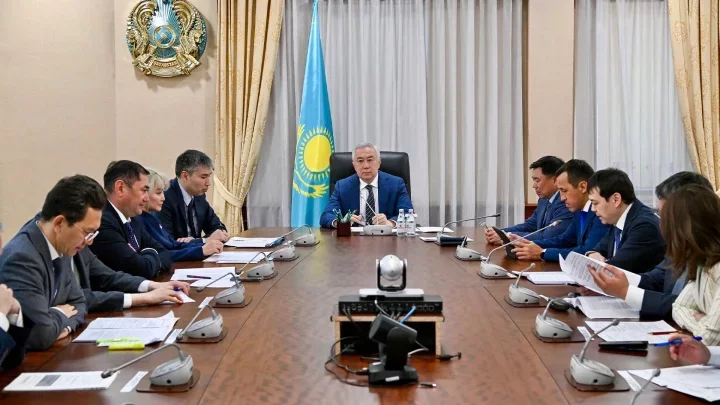 Photo: primeminister.kz
The government is again discussing relaxations for business against the background of growing workload and problems for small businesses, Orda.kz reports.
At the next meeting on the implementation of the new Tax Code, chaired by Minister of National Economy Serik Zhumangarin, officials, the National Bank and tax authorities discussed advance payments on the CIT, VAT rates for medicine and small business reporting.
One of the main topics was Form 200 — tax reporting which companies with employees are obliged to submit. At the meeting, officials said that even small companies today have to spend money on accounting and risk receiving fines due to complex reporting.
Representatives of the State Revenue Committee (KGD) reported that the state is not ready to simply abandon control. According to them, the form is needed to account for social payments and protect employees. At the same time, the committee cited alarming statistics: of the 1.2 million taxpayers who submitted a simplified declaration in February, about 800,000 were in arrears on social payments.
Officials also reminded that the current special tax regime (SNR) has become much broader than before. Now the threshold of application of the SNR reaches 2.6 billion tenge of turnover, and companies can work without VAT with an annual turnover of up to 103.8 million tenge.
The single VAT rate for the healthcare sector was also in question. Now there is a preferential rate for medicines and medical products: 5% from 2026 and 10% from 2027. Some medical services and drugs are generally exempt from VAT under state healthcare programs (GOBMP and OSHI). The government believes that the mixed system creates too many problems for tax administration.
At the same time, the authorities are discussing changes in corporate income tax for money market participants. The National Bank said that the current mechanism artificially overestimates advance payments under the CIT, although the preferential regime has already ceased to operate in 2026.
Following the meeting, Serik Zhumangarin instructed officials to further study whether it makes sense to keep Form 200 for small and medium-sized businesses, and to separately calculate what a single VAT rate should be and how it will affect the country’s economy.
Original author: Alexander Zhdanov
Read also:
- EAEU Eases Freight Restrictions On Key Transport Corridors
- Businesses Warn Unfinished Cargo Document System Could Lead To Unfair Fines
- Kazakhstan To Mine More Coal Despite Green Energy Pledges
Latest news
- Orda.kz Editorial Team to Cease Operations on September 1
- The Price of a Degree: How Students in Kazakhstan Pay for University
- Second Przewalski’s Horse Foal Born as Species Returns to Kazakhstan
- Kazakh Mining Companies Can Recalculate Purchases if Tenge Weakens
- Kazakhstan Names First Vice President in Three Decades
- What Almaty’s Bus Shelters Are Missing
- 400-Truck Queue Builds at Kazakh–Kyrgyz Border
- Kazakhstan Ready to Help Feed and Rebuild Gaza
- Tokayev Establishes New Presidential Security Body
- Almaty Takes Back Its Nearly Century-Old Hippodrome
- No More Guesswork on Savings: Kazakhstan Tightens Energy Audits for Businesses
- Public Money Could Be Used to Rescue Failing Kazakh Banks
- Third Kazakh Woman Reported Missing in Nepal-China Flood Zone
- Falconer Convicted Over 35 Protected Birds, Spared Punishment Under Amnesty
- Kazakh Citizen Detained in Yakutia in Phone Fraud Case
- Yuan Instead of Dollars? KazMunayGas Draws Record Demand in Asia
- China Gains Oil-Market Influence as OPEC+ Weakens
- Kazakhstan to Divide Smartphones Into White, Gray and Black Lists
- Kazakhstan’s Government Formally Resigns as First Kurultai Session Opens
- Rare Lynx Sighting Recorded in Northern Kazakhstan
