

Smog Persists in Oskemen, Authorities Name Reasons
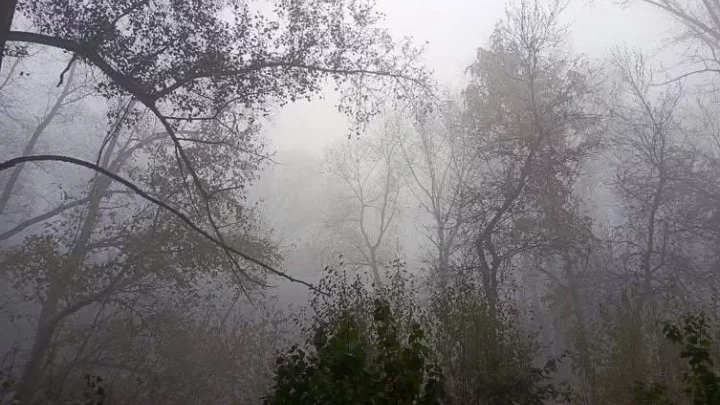 Photo: Elena Medvedeva, Orda.kz
Oskemen Residents continue to complain on social media about the heavy smog hanging over the city, Orda.kz reports.
For more than a week, the city has been experiencing adverse weather conditions (AWC) that have trapped harmful emissions in the air.
On October 26, data from Kazhydromet showed that concentrations of hazardous substances had exceeded permissible limits. Locals reported symptoms such as sore throats, coughing, and headaches, and called for schools to close. In response, authorities moved students to distance learning.
Before Republic Day, a briefing was held for journalists with environmental experts, community activists, and representatives of the city administration, including Akim Almat Akyshov.
Indeed, there are excess levels of sulfur dioxide and hydrogen sulfide in the air. We inspected the sources but found no violations. Why the excess? Because there’s no wind and there are sharp day-night temperature drops — pollutants accumulate in the city,
explained Asset Suleimenov, head of the Department of Ecology.
Following public complaints, major industrial enterprises announced temporary emission reductions.
Kazzinc reported that output at its metallurgical complex had been cut by 20%, and by up to 50% at the zinc plant, due to scheduled maintenance. However, residents say they have seen little difference — videos of smoking chimneys continue to circulate online.
According to environmental authorities, the main sources of pollution are vehicles and household coal heating.
That’s 36,000 small chimneys releasing smoke at residential level. The population used to consume 120,000 tons of coal — now it’s 250,000 tons,
said Akim Akyshov.
He added that there are now 132,000 registered vehicles in the city, compared to 43,000 in the early 2000s.
Air quality remains poor.
On the morning of October 22, the city was shrouded in a thick “fog” that turned out not to be a natural weather event — sulfur dioxide levels were nearly three times above normal.
Original Author: Elena Medvedeva
Latest news
- Orda.kz Editorial Team to Cease Operations on September 1
- The Price of a Degree: How Students in Kazakhstan Pay for University
- Second Przewalski’s Horse Foal Born as Species Returns to Kazakhstan
- Kazakh Mining Companies Can Recalculate Purchases if Tenge Weakens
- Kazakhstan Names First Vice President in Three Decades
- What Almaty’s Bus Shelters Are Missing
- 400-Truck Queue Builds at Kazakh–Kyrgyz Border
- Kazakhstan Ready to Help Feed and Rebuild Gaza
- Tokayev Establishes New Presidential Security Body
- Almaty Takes Back Its Nearly Century-Old Hippodrome
- No More Guesswork on Savings: Kazakhstan Tightens Energy Audits for Businesses
- Public Money Could Be Used to Rescue Failing Kazakh Banks
- Third Kazakh Woman Reported Missing in Nepal-China Flood Zone
- Falconer Convicted Over 35 Protected Birds, Spared Punishment Under Amnesty
- Kazakh Citizen Detained in Yakutia in Phone Fraud Case
- Yuan Instead of Dollars? KazMunayGas Draws Record Demand in Asia
- China Gains Oil-Market Influence as OPEC+ Weakens
- Kazakhstan to Divide Smartphones Into White, Gray and Black Lists
- Kazakhstan’s Government Formally Resigns as First Kurultai Session Opens
- Rare Lynx Sighting Recorded in Northern Kazakhstan
