

Russia and Central Asia – How Relations and Elites are Changing
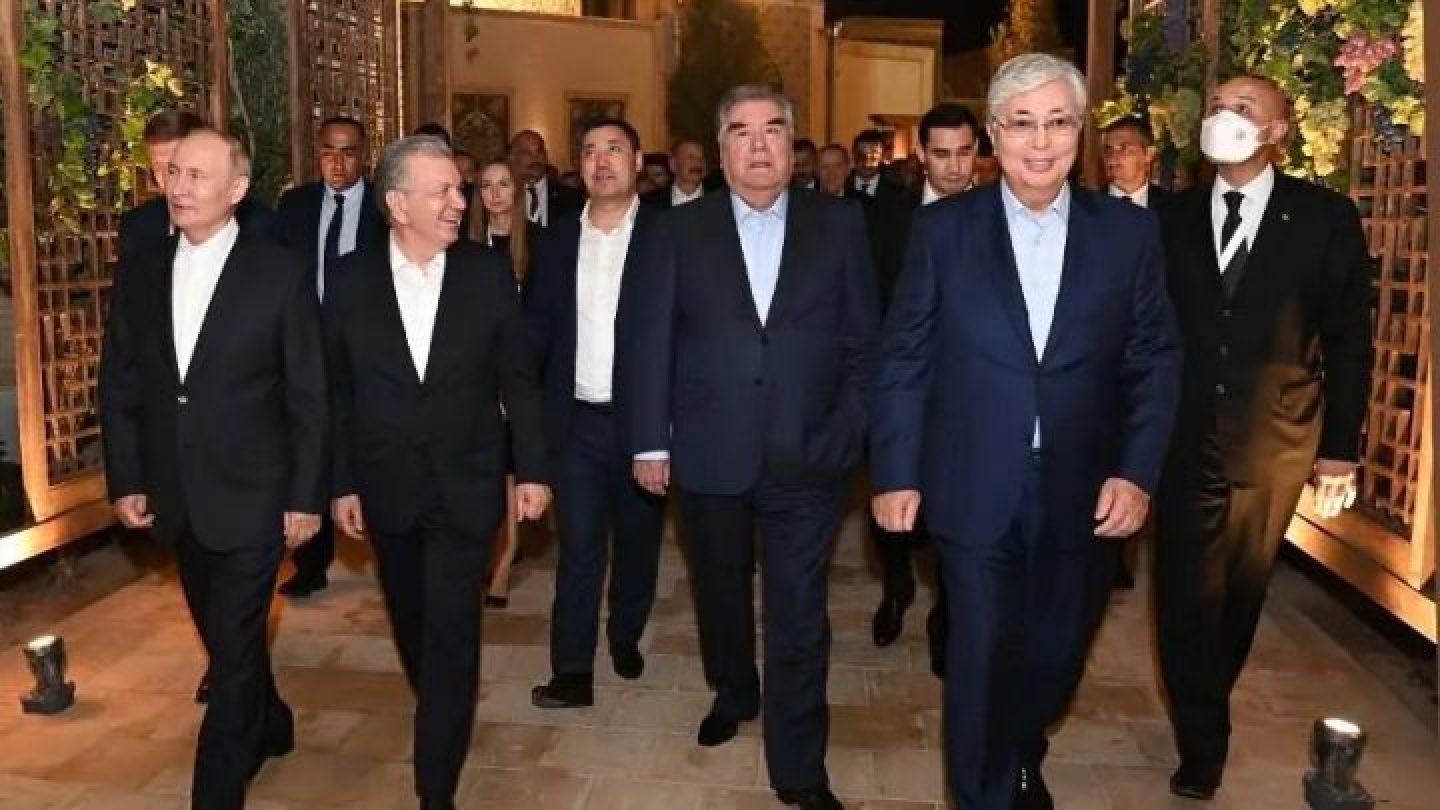 photo caa-network.org
Russian political scientist Arkady Dubnov gave an interview with the Analytical Network of Central Asia (CAAN). The expert discusses how regional elites, regimes and their relations with Moscow have changed in the 30 years since the collapse of the Soviet Union
The independent political scientist believes that stable patron-client relations have developed in the region. This terminology comes from Ancient Rome. The rich and influential were called patrons, while their close associates, dependent on them, but at the same time also influential, were called clients. It should be added that in our Central Asian realities, these relationships often occur within a family or clan, i.e., between relatives.
For 30 years, the government has changed in all Central Asian countries except Tajikistan. Nevertheless, it is premature to talk about individual freedom and freedom of speech in the region. According to Dubnov, there are several reasons for this.
The political scientist claims that the process of the collapse of the Soviet Empire is ongoing. At the same time, the Central Asian states, unlike the Baltic republics, did not fight for independence, but received it "on a silver platter". Nazarbayev, according to Dubnov, delayed signing the declaration of independence until the last moment, as he hoped to get the post of head of the USSR government, which Gorbachev offered him.
"It's time to stop creating any illusions that the Central Asian republics could expect, or the advanced educated part of their population, the intelligentsia, the creative class, as they say, could expect that the development of these republics would follow some kind of democratic path. And why would that be?! There were practically no prerequisites anywhere for progressing along such a path,"
says Dubnov.
There was a youth movement in Kazakhstan that in 1986 opposed the appointment of Gennady Kolbin to the post of head of the republic. Yet the youth had no desire to gain power or govern the country. Power in Kazakhstan passed from Chairman Nazarbayev to President Nazarbayev.
There was a bloody civil war in Tajikistan, between the "conditionally Islamic-democratic opposition, and the post-Soviet Popular Front, which, of course, was supported by Russia." Emomali Rahmon eventually took charge of the country. He has been in power since 1994.
"Kyrgyzstan was the luckiest of all. A year before that, before the collapse, an absolutely non-party leader, Askar Akayev, the former president of the Academy of Sciences, who was put in Frunze, now Bishkek, by Gorbachev, was in power. Please note that none of the other leaders of the Central Asian countries were directly dismissed or appointed from Moscow. Either the old ones remained there, or they were flesh of the former nomenklatura representatives of the old communist hierarchy,"
the independent political scientist believes.
A medieval feudal state eventually developed in Turkmenistan. Where, even despite the change of leaders, the system remains very rigid. The Turkmen authorities suppress any criticism and dissent, and block social networks. This state exists only thanks to huge reserves of natural resources.
Dubnov believes that significant changes can occur only with the arrival of a new generation to power, which would not be strongly connected to Moscow and the Soviet Union.
What are The Main Characteristics of The Elites in Central Asia Now
"They are becoming not so much nationalistic as national. This is connected with the desire to revive the most important attributes of a national state. Such as, for example, language. This happened in all the countries of Central Asia: somewhere more successfully, somewhere less, depending on how much society was ready for it."
Most of all, the Russian language, according to Dubnov, retains a role in Kyrgyzstan. The most expressive change of elites is now taking place in Kazakhstan. Not so much because of the age of politicians, but because of the change at the top.
"You see, yes, that's the whole Kazakh elite. During these 30 years, it could be called the Nazarbayev clan or the Nazarbayev oligarchy. And all those who tried to get out of this circle were either destroyed or driven out."
In Tajikistan, the power belongs in the same way to the family of Emomali Rahmon and the entrepreneurship associated with him, "which is not very developed due to the country's poverty." At the same time, the president's son, Rustam Emomali, is still not ready to rule the country built by his father, although this authority is planned to be passed down to him. Ozoda's daughter, who manages the president's office, is not suitable for the role of heiress due to the traditional characteristics of the region.
The most deplorable situation is in Turkmenistan, where gas, and consequently the dependence of many countries on it, does not allow interference with the existing regime.
"This is a traditional feudal society, which for many years will have no prospects of breaking out of this vicious circle. Because it is supported by the outside world,"
says Dubnov.
Russia has been building their "Russian world" for the last 10 years and considers parts of the former Soviet Union as its “property”. Moscow’s invasion of Ukraine confirms this. The Central Asian countries, on the other hand, have other goals, as they are building nation–states.
"What characterizes this policy of Russia? The fact that it is increasingly turning into a rogue state, and the last year has shown this when ties with Russia become toxic for a significant part of the civilized or technologized West. What is left in this situation for the countries of Central Asia, which have diametrically directed goal–setting, building nation-states and for which the vision of this Russian world is absolutely destructive, if not more dangerous?",
the expert believes.
At the same time, in an effort to cooperate with the Western technological world, the Central Asian countries remain somewhat dependent on Russia and cannot completely break off relations with it. China is also nearby, which traditionally scares the states of the region even more than their northern neighbour. Meanwhile, Moscow has now reoriented its foreign policy towards the Central Asian countries, including with the help of the notorious "gas union", the goal of which is to export gas to China through Central Asia, while gaining control over their gas transportation system.
Despite the shortage of natural gas, especially in Uzbekistan, Astana and Tashkent turned this offer down, as they saw another attempt to pull them into Moscow's orbit. Kazakhstan, which has the longest land border in the world with Russia, senses a particular danger.
"I cannot, and no one can guarantee, what is going on in the minds of the Kremlin leaders. After all, one of the main goals of Russia's current policy, for example, in Ukraine, is, of course, imperialistic. But there is still, of course, a very painful attitude towards Ukraine. Putin cannot imagine that Ukraine will cease to be part of a large Slavic community. Therefore, it seems organic for him to return this part of the Eurasian territory of Europe. As for Kazakhstan, by and large, the Kremlin can perfectly imagine that Russia can remain within its current borders, preserving the territories of northern Kazakhstan as part of Kazakhstan, provided that Kazakhstan behaves more than loyally to Russia's interests."
How has the balance of power changed because of the war in Ukraine? Will the Central Asian countries seek to limit relations with Moscow and strengthen regional integration?
"Will Central Asia be able to resist, creating its own structures, and be truly independent from Russia? I would not be in a hurry to make any predictions. Again. A lot will depend on the development of the situation on the fields of military events in Ukraine. Therefore, today at this stage it is too early to determine any features and guidelines for the future state of relations between Central Asia and Russia."
For the expert, Russia's attempt to get into all regional unions and formats in Central Asia is obvious in order not to lose influence in the region.
Orignal Author: Maksim Skopin
DISCLAIMER: This is a translated piece. The text has been modified, the content is the same. Please refer to the original document in Russian for accuracy.
Latest news
- Kazakh Activist Sentenced In Electoral Rights Case
- Kazakhstan Signs Extradition Agreements With Hong Kong And Macau
- Kazakhstan Plans Six Air Taxi Vertiports By 2028
- Why Kazakhstan Is Looking For Belgian Businessman Frank Monstrey
- Government Rejects Higher Markups For Rural Food Stores
- Kazakhstan Prepares Local Suppliers For Nuclear Power Plant Construction
- Akimats Turn To Stock Exchange To Fund Housing Projects
- Kazakhstan To Expand Digital Biometric Records System
- Kazakhstan Farmers Face Contract Blocks Over Irrigation Water Debt
- Former Priest Iakov Vorontsov To Be Sent To Psychiatric Hospital
- Astana Woman Jailed For Visa Fraud Worth Nearly 900 Million Tenge
- Foreign-Plated Car Owners Protest Police Raids In Atyrau
- Kazakhstan Wasted Almost 650 Billion Tenge In 2025, Auditors Say
- Almost 90% Of Kazakh Businesses Still Operate Without Innovation
- Demolition, Resettlement And A New Design Code: How Astana Will Be Rebuilt By 2030
- Kazakhstan Plans Large Energy Storage Systems For Wind And Solar Power
- Authorities Consider LRT From Almaty To Alatau, But Metro Extension Is Not Planned Yet
- Kazakhstani Military Personnel To Receive Expanded Social Guarantees
- Kazakhstan’s Banks Are Still Making Billions, But Profit Growth Is Slowing
- Astana Court Allows Ukraine’s Naftogaz To Recover $1.4 Billion From Gazprom
