

Mausoleum, Necropolis and Rare Trade Artifacts Found in Northern Kazakhstan
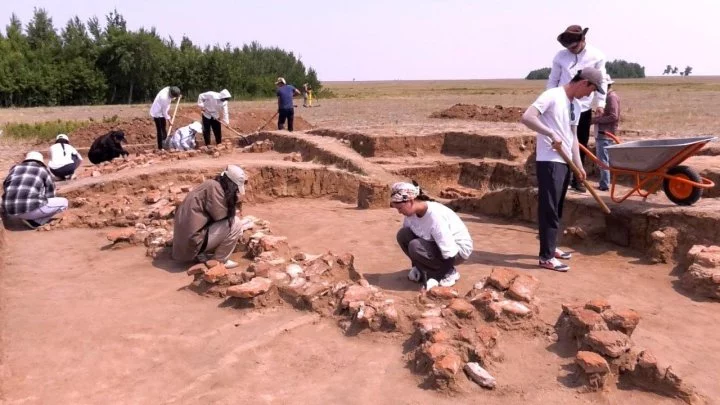 Photo: Ministry of Science and Higher Education of Kazakhstan
Archaeologists have discovered a mausoleum from the Golden Horde era, a medieval necropolis and rare artifacts in northern Kazakhstan. The finds point to trade links between the Great Steppe and other regions, Orda.kz reports, citing the Ministry of Science.
Scientists and students from Margulan University are studying archaeological sites from the Golden Horde period. The expedition is working in Pavlodar, North Kazakhstan and Akmola regions, with special attention paid to the Zhantai tract.
One of the main finds was traces of a large structure.
Archaeologists found fragments of burnt bricks in the tract. Studies showed that they match the so-called Golden Horde standard — 25 by 25 centimeters. Such bricks were used to build palaces, mosques and mausoleums. According to preliminary data, the architectural complex may have been a mausoleum of steppe nobility from the 14th–15th centuries. A large necropolis from the same period was found nearby.
During the excavations, archaeologists also found decorative clothing plates and a set of beads. The ornaments are made of a complex bronze alloy, which points to a high level of metallurgy in the Irtysh region during the Golden Horde era.
An unexpected find was a cowry shell, which comes from the Indian Ocean. Scientists believe it reached the Kazakh steppe through trade routes that connected the region with South Asia.
The beads were also imported. According to archaeologists, this confirms that the inhabitants of the Great Steppe actively traded and maintained ties with distant territories of Eurasia.
Original author: Raushan Korzhumbekova
Read also:
- How Journalists and Archaeologists Searched for the Treasures of an Ancient State — and What They Found
- How the First Central Kazakhstan Expedition Changed Archaeology in the Steppe
- Traces Of An Unknown Civilization Discovered In Kazakhstan
Latest news
- Orda.kz Editorial Team to Cease Operations on September 1
- The Price of a Degree: How Students in Kazakhstan Pay for University
- Second Przewalski’s Horse Foal Born as Species Returns to Kazakhstan
- Kazakh Mining Companies Can Recalculate Purchases if Tenge Weakens
- Kazakhstan Names First Vice President in Three Decades
- What Almaty’s Bus Shelters Are Missing
- 400-Truck Queue Builds at Kazakh–Kyrgyz Border
- Kazakhstan Ready to Help Feed and Rebuild Gaza
- Tokayev Establishes New Presidential Security Body
- Almaty Takes Back Its Nearly Century-Old Hippodrome
- No More Guesswork on Savings: Kazakhstan Tightens Energy Audits for Businesses
- Public Money Could Be Used to Rescue Failing Kazakh Banks
- Third Kazakh Woman Reported Missing in Nepal-China Flood Zone
- Falconer Convicted Over 35 Protected Birds, Spared Punishment Under Amnesty
- Kazakh Citizen Detained in Yakutia in Phone Fraud Case
- Yuan Instead of Dollars? KazMunayGas Draws Record Demand in Asia
- China Gains Oil-Market Influence as OPEC+ Weakens
- Kazakhstan to Divide Smartphones Into White, Gray and Black Lists
- Kazakhstan’s Government Formally Resigns as First Kurultai Session Opens
- Rare Lynx Sighting Recorded in Northern Kazakhstan
