

Kazakhstan: Nuclear Energy to Be Equated with Renewable Energy
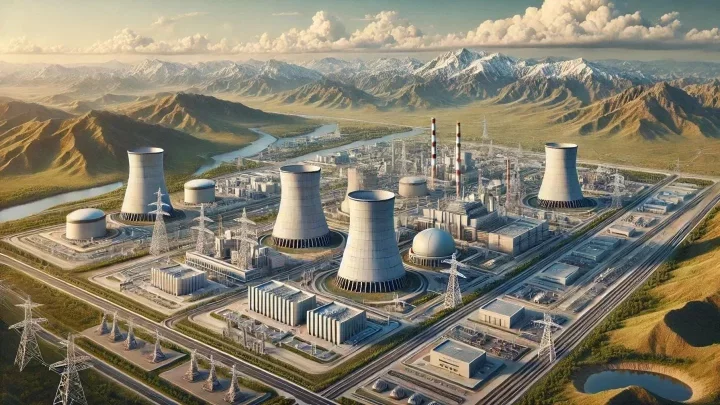 Photo: DALL-E
The same preferences that apply to renewable energy sources will be extended to nuclear energy in Kazakhstan. Orda.kz reports that such a clause is in the advisory document to a draft law posted on the Open NPA portal.
The advisory document to the draft law "On Amendments and Supplements to Certain Legislative Acts of the Republic of Kazakhstan on the Development of Alternative Energy Sources" was published on October 18.
Its public discussion will last until November 11. It lists the issues that must be overcome to develop alternative energy sources in Kazakhstan and analyzes international practice.
Those who drafted it note that for 2023, the share of renewable energy sources in total generation amounted to 6.72 billion kilowatt-hours. This figure is more than a third higher than the 2022 one, but renewable sources still provide only about six percent of electricity production in Kazakhstan. The country began to generate more energy from wind turbines and solar panels but less from other alternative sources.
Meanwhile, greenhouse gas emissions are only growing. Kazakhstan is among the top 30 countries polluting in this regard. In 2021, the emissions were estimated at 290 million tons per year; in 2022, they were already at 320 million tons. Thus, alternative energy sources and stimulation at the legislative level are introduced actively via preferential tariffs, tax breaks, grants, and subsidies.
According to the authorities' plans, the builders of Kazakhstan's first nuclear power plant will also be able to receive such benefits and subsidies in the future. One problem noted in the document above is "the lack of a definition of nuclear energy as an alternative energy source and corresponding preferences."
Kazakhstan plans to follow the European Union's example, where nuclear power plants have been classified as "green" and climate-friendly energy sources since 2022.
We consider it appropriate to adopt this experience in Kazakhstan in connection with plans to develop the nuclear industry, as well as the general obsolescence of basic energy capacities and the need to replace them, the document says.
Another industry is the production of "green hydrogen." This is the only category of alternative energy for which the document's drafters foresee significant risks: a possible water resource shortage.
Original Author: Nikita Drobny
Latest news
- Orda.kz Editorial Team to Cease Operations on September 1
- The Price of a Degree: How Students in Kazakhstan Pay for University
- Second Przewalski’s Horse Foal Born as Species Returns to Kazakhstan
- Kazakh Mining Companies Can Recalculate Purchases if Tenge Weakens
- Kazakhstan Names First Vice President in Three Decades
- What Almaty’s Bus Shelters Are Missing
- 400-Truck Queue Builds at Kazakh–Kyrgyz Border
- Kazakhstan Ready to Help Feed and Rebuild Gaza
- Tokayev Establishes New Presidential Security Body
- Almaty Takes Back Its Nearly Century-Old Hippodrome
- No More Guesswork on Savings: Kazakhstan Tightens Energy Audits for Businesses
- Public Money Could Be Used to Rescue Failing Kazakh Banks
- Third Kazakh Woman Reported Missing in Nepal-China Flood Zone
- Falconer Convicted Over 35 Protected Birds, Spared Punishment Under Amnesty
- Kazakh Citizen Detained in Yakutia in Phone Fraud Case
- Yuan Instead of Dollars? KazMunayGas Draws Record Demand in Asia
- China Gains Oil-Market Influence as OPEC+ Weakens
- Kazakhstan to Divide Smartphones Into White, Gray and Black Lists
- Kazakhstan’s Government Formally Resigns as First Kurultai Session Opens
- Rare Lynx Sighting Recorded in Northern Kazakhstan
