

Kazakhstan Moves Forward with Second Phase of Northern Aral Sea Project
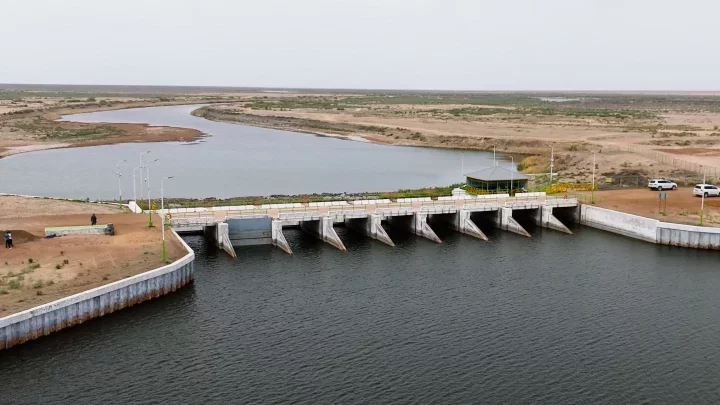 Photo: RK MinWat
To help preserve the Northern Aral Sea, Kazakhstan will reconstruct the Kokaral Dam and build a hydroelectric complex near the village of Amanotkel in the Qyzylorda region, Orda.kz reports, citing the Ministry of Water Resources and Irrigation.
A grant from the World Bank for Europe and Central Asia has been allocated for the development of the project’s feasibility study. The Ministry has called it the “environmental project of the century.”
This marks the second phase of the Northern Aral Sea conservation effort. The first phase resulted in a 42% increase in the sea’s water volume, a nearly fourfold decrease in salinity, an annual fishery yield of 8,000 tons, and the flooding of 870 square kilometers of previously dry seabed.
The feasibility study for the second phase is nearing completion. It includes plans to reconstruct the Kokaral Dam and raise the sea level to 44 meters according to the Baltic system. The hydroelectric complex near Amanotkel is intended to stabilize water resources in the Aqshatau and Qamystybas lake systems in the Aral district of the Qyzylorda region.
Once completed, the water surface area of the Northern Aral is expected to reach 3,913 square kilometers, with a volume of 34 cubic kilometers. Officials estimate it will take 4–5 years to reach these levels.
The choice of this option for preserving the sea is based on the results of the analysis and assessment of the average annual volumes of water inflow in the Syr Darya River basin from 1913 to 2019, as well as on the physical parameters of the reservoirs,
the Ministry stated.
Several project options were reviewed in consultation with local residents. Authorities say the selected approach offers the most realistic timeline and reflects current water availability in the Syr Darya basin.
World Bank Regional Director for Europe and Central Asia Sameh Wahba affirmed the Bank’s interest in continuing to support the effort:
The Northern Aral Sea conservation project is very important for us, as it shows the whole world an example of restoring an entire ecosystem.
The Ministry expects to receive an expert opinion on the feasibility study by December 2025.
Previously, the Ministry acknowledged that a complete restorationof the Aral Sea is not possible, according to scientific assessments, but emphasized Kazakhstan’s ongoing commitment to expanding the water area and improving the ecosystem’s condition.
Original Author: Oksana Matvienko
Latest news
- Orda.kz Editorial Team to Cease Operations on September 1
- The Price of a Degree: How Students in Kazakhstan Pay for University
- Second Przewalski’s Horse Foal Born as Species Returns to Kazakhstan
- Kazakh Mining Companies Can Recalculate Purchases if Tenge Weakens
- Kazakhstan Names First Vice President in Three Decades
- What Almaty’s Bus Shelters Are Missing
- 400-Truck Queue Builds at Kazakh–Kyrgyz Border
- Kazakhstan Ready to Help Feed and Rebuild Gaza
- Tokayev Establishes New Presidential Security Body
- Almaty Takes Back Its Nearly Century-Old Hippodrome
- No More Guesswork on Savings: Kazakhstan Tightens Energy Audits for Businesses
- Public Money Could Be Used to Rescue Failing Kazakh Banks
- Third Kazakh Woman Reported Missing in Nepal-China Flood Zone
- Falconer Convicted Over 35 Protected Birds, Spared Punishment Under Amnesty
- Kazakh Citizen Detained in Yakutia in Phone Fraud Case
- Yuan Instead of Dollars? KazMunayGas Draws Record Demand in Asia
- China Gains Oil-Market Influence as OPEC+ Weakens
- Kazakhstan to Divide Smartphones Into White, Gray and Black Lists
- Kazakhstan’s Government Formally Resigns as First Kurultai Session Opens
- Rare Lynx Sighting Recorded in Northern Kazakhstan
