

Georgia’s Security Service Says No Evidence of “Kamit” After BBC Report
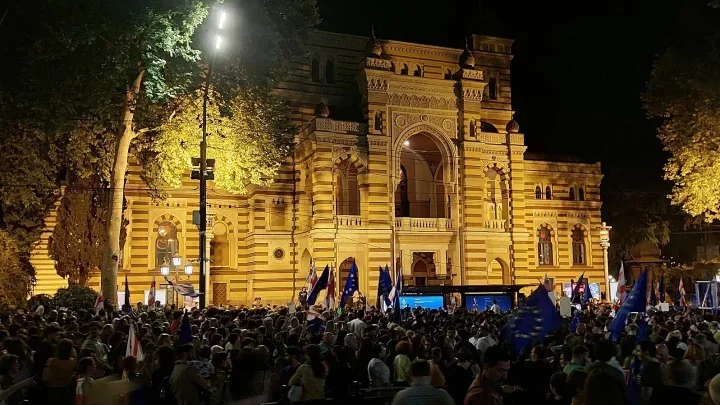 Photo: Ill. Purposes, Photo: Georgian pro-democracy protests in Tbilisi, 2024. Date: 28 April 2024, 21:50:30 Source: Own work Author: Kober
Georgia’s State Security Service (SSG) has stated that it found no evidence of the chemical agent “kamit” allegedly used during the dispersal of protests in late 2024, Orda.kz reports, citing The Caucasian Knot.
Relatives of political prisoners gathered outside parliament, calling on authorities to disclose the names of any substances used against demonstrators. The protests have now entered their 374th day, following the government’s decision to suspend EU accession talks.
According to Lasha Magradze, the SSG’s first deputy head, the Ministry of Internal Affairs never purchased “kamit” — a substance last known to be used during World War I. He said an examination had been conducted on materials seized from law enforcement agencies.
Magradze noted that more than 160 investigative actions have been carried out, and 93 people questioned, including current and former Interior Ministry staff, doctors, experts, respondents featured in the BBC report, and NGO representatives.
Documents were also seized from the Interior Ministry and the Revenue Service’s customs department.
Tests confirmed that the chemical powder acquired by the Interior Ministry and used for crowd control over the years is chlorobenzylidene malononitrile, he said, referring to a common tear gas agent.
Background
Opposition parties, activists, and student groups previously announced a large march on December 6, demanding an international probe into the alleged use of chemical agents during the November–December 2024 crackdown.
The SSG launched an inquiry after a BBC investigation suggested that harmful substances may have been deployed at anti-government rallies in Tbilisi. Authorities strongly rejected the report, with Prime Minister Irakli Kobakhidze calling it a “planned provocation,” accusing foreign intelligence services of attempting to reignite protests and undermine the government.
Daily protests have continued for two years with demands for new parliamentary elections and the release of detainees. After police blocked attempts to close Rustaveli Avenue in November, pro-EU demonstrators shifted to daily marches through central Tbilisi.
Despite the SSG announcing that the “kamit” claim is closed, Kobakhidze said the government would continue investigating what he called “the provocation” surrounding the BBC report.
Latest news
- Orda.kz Editorial Team to Cease Operations on September 1
- The Price of a Degree: How Students in Kazakhstan Pay for University
- Second Przewalski’s Horse Foal Born as Species Returns to Kazakhstan
- Kazakh Mining Companies Can Recalculate Purchases if Tenge Weakens
- Kazakhstan Names First Vice President in Three Decades
- What Almaty’s Bus Shelters Are Missing
- 400-Truck Queue Builds at Kazakh–Kyrgyz Border
- Kazakhstan Ready to Help Feed and Rebuild Gaza
- Tokayev Establishes New Presidential Security Body
- Almaty Takes Back Its Nearly Century-Old Hippodrome
- No More Guesswork on Savings: Kazakhstan Tightens Energy Audits for Businesses
- Public Money Could Be Used to Rescue Failing Kazakh Banks
- Third Kazakh Woman Reported Missing in Nepal-China Flood Zone
- Falconer Convicted Over 35 Protected Birds, Spared Punishment Under Amnesty
- Kazakh Citizen Detained in Yakutia in Phone Fraud Case
- Yuan Instead of Dollars? KazMunayGas Draws Record Demand in Asia
- China Gains Oil-Market Influence as OPEC+ Weakens
- Kazakhstan to Divide Smartphones Into White, Gray and Black Lists
- Kazakhstan’s Government Formally Resigns as First Kurultai Session Opens
- Rare Lynx Sighting Recorded in Northern Kazakhstan
